Elephant Ear Care (Colocasia esculenta Royal Hawaiian® Maui Gold)

Also known as: Taro

About Elephant Ear

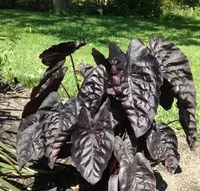
Colocasia esculenta Royal Hawaiian® Maui Gold is a tropical, rhizome-forming foliage plant grown mainly for its bold, upright leaves. It is part of the elephant ear group, valued for a strong architectural presence in gardens and containers.

This cultivar typically shows golden to chartreuse leaves with sturdy, upright petioles, creating a bright accent in shaded or partially shaded spaces. It originates from wet, warm regions in Asia but is now widely cultivated in ornamental landscapes.

The plant grows best in consistently moist, rich soil and warm conditions, so it suits outdoor beds, ponds edges, or large patio pots in mild climates. Understanding how to care for Elephant Ear focuses mainly on warmth, moisture, and protection from strong drying winds.

Main Plant Requirements

Care Difficulty

Moderate Care

Light Preference

Partial Sun

Water Requirements

Keep Soil Moist

Temperature Preference

Tropical / Frost Sensitive

Hardiness Zone

8–11

Soil Texture

Loamy, Silty, Organic-rich

Soil pH

Acidic (5.5–6.5), Slightly acidic (6.5–7.0)

Soil Drainage

Moist but well-drained

Fertilization

Moderate (every 2–4 weeks)

Get Personalized Care Plan

Scan your plant to receive care tips personalized for your specific plant

Available on iOS and Android

How to Care for the Elephant Ear

This cultivar prefers bright outdoor conditions with strong but not harsh sun.

  • Provide 4–6 hours of direct morning sun plus bright filtered light the rest of the day for best leaf color and sturdy growth.
  • Tolerates light or partial shade (about 2–4 hours sun), but leaves may grow larger and paler with longer, thinner petioles in lower light.
  • Avoid intense, unfiltered afternoon sun in hot climates, which can scorch Elephant Ear foliage; give some dappled shade in midsummer.

This plant has high moisture needs and prefers consistently damp soil without drying out fully.

  • Keep soil evenly moist so the top 1–2 cm stays just barely damp; do not allow deep cracks or pulling away from the edges, which signal underwatering.
  • In warm growing months, increase watering frequency as evaporation rises; in cooler weather, reduce slightly but prevent the root zone from drying out.
  • Use rich, organic soil that drains slowly yet does not stay soupy; yellowing, limp leaves can indicate waterlogged roots, while drooping, crisp edges suggest drought stress in Colocasia esculenta Royal Hawaiian® Maui Gold.

This tropical cultivar grows best in warm, frost-free conditions.

  • Aim for 70–85°F (21–29°C) during active growth; stable warmth supports large leaves and vigorous rhizome development.
  • Plant outdoors only after nights stay above 55°F (13°C); growth slows below this, and foliage is damaged or killed near 32°F (0°C).
  • Tolerates brief heat up to about 95°F (35°C) if soil stays consistently moist; in hot, dry spells, mulch the root zone and avoid reflected heat from pavement.

This cultivar prefers high humidity to maintain large, healthy foliage.

  • Aim for 60–80% humidity; it tolerates brief dips but prolonged air below 40% leads to stress.
  • Watch for rolled, browning leaf edges and crispy tips as signs of low humidity for this Elephant Ear.
  • Increase humidity with grouped plants, a nearby humidifier, or placing the pot on a pebble tray that never lets the base sit in water.

This plant thrives in consistently moist, rich, slightly acidic to neutral soil.

  • Use a loose, loamy mix with high organic matter, such as 2 parts peat or coco coir, 1 part compost, and 1 part perlite or fine bark.
  • Ensure slow but steady drainage; the mix should stay evenly damp but not form standing water around the roots.
  • Target pH around 6.0–7.0, which supports nutrient uptake and stable leaf color in Colocasia esculenta Royal Hawaiian® Maui Gold.
  • Improve aeration by mixing in perlite or pine bark and avoid heavy clay or pure garden soil that compacts in containers.

This species is well suited to container growing outdoors on patios or terraces.

  • Choose a wide, heavy container to stabilize the tall foliage and prevent tipping in wind or heavy rain.
  • Select a pot deep enough for thick, fleshy roots, leaving extra depth so water sits below the root zone after heavy watering.
  • Opt for non-porous materials like glazed ceramic or plastic in hot, sunny locations to slow evaporation and support its high moisture demand.

This cultivar responds well to steady feeding during the warm growing season for strong leaf and tuber development.

  • Use a balanced, water-soluble fertilizer (around 10-10-10 or 20-20-20) diluted to 1/2 strength every 2–4 weeks in active growth.
  • For in-ground plants, incorporate compost or a slow-release granular fertilizer in spring to support growing Elephant Ear foliage.
  • Always water before and after applying soluble fertilizer to prevent root burn and ensure even nutrient uptake.
  • Reduce feeding to once every 6–8 weeks, or stop entirely, during cool dormant periods or when growth slows markedly.

Pruning Colocasia esculenta Royal Hawaiian® Maui Gold focuses on hygiene and keeping the clump tidy rather than shaping.

  • Best time for cleanup is during active growth or early fall, avoiding very cold or wet spells.
  • Remove yellowing, torn, or diseased leaves at the base with clean, sharp pruners or a knife.
  • Cut out weak, crossing, or crowded stems to improve airflow and reduce fungal problems around the foliage.
  • Disinfect tools between plants with alcohol or a 10% bleach solution to limit disease spread.

Container-grown plants benefit from periodic repotting, while garden-grown clumps are best moved during warm, active growth.

  • Look for roots circling the pot, drying out quickly, or reduced leaf size as signals to move to a larger container.
  • Repot or transplant in late spring to early summer, when soil is warm and new growth is underway.
  • Shift up only 1–2 in pot size, using rich, moisture-retentive soil and handling tubers gently to limit root damage.
  • Water thoroughly after moving, provide shade for 3–5 days, and keep soil evenly moist to reduce transplant shock.

Colocasia esculenta Royal Hawaiian® Maui Gold is most reliably multiplied by division of tubers or offsets rather than by seed.

  • Divide clumps in late spring when new shoots are emerging and soil is warm.
  • Lift the plant, gently separate tubers or side offsets, ensuring each section has at least 1–2 healthy buds and roots.
  • Plant divisions into rich, moist soil, setting tubers just below the surface and spacing for future spread.
  • Maintain high moisture, warmth (70–80°F), and bright indirect light to encourage fast reestablishment.

Cold sensitivity means this cultivar needs specific winter care in regions with frost or freezing temperatures.

  • In USDA zones 9–11, plants usually overwinter in the ground with minimal protection aside from a 5–8 cm mulch layer.
  • In colder zones, dig tubers after frost blackens foliage, trim stems, and store dry in peat or vermiculite at 45–55°F.
  • For containers, move indoors before nights drop below 45°F, keeping soil just barely moist and growth slow or dormant.

Care Tips

Container size strategy

Use a wide, heavy container with at least 5–10 gal volume to support fast rhizome growth and reduce the risk of the plant becoming top-heavy and tipping over in wind.

Rhizome division timing

Divide crowded clumps in late spring when soil is warming, cutting cleanly between rhizomes and replanting divisions at the same depth to maintain vigor and manage plant size.

Edge moisture management

In containers, sink a shallow saucer or tray into the soil surface and keep it topped with water so it slowly seeps into the root zone, mimicking the consistently moist margins this plant prefers without fully flooding the pot.

Wind and leaf support

In exposed spots, place the plant near a windbreak or use discreet stakes to support the main petioles, reducing tearing of the large leaves during storms and strong gusts.

Seasonal lift and store

In cold climates below USDA zone 8, lift the rhizomes after frost blackens foliage, dry them for a few days in a shaded, airy place, then store in barely moist peat or coco coir at 45–55°F to preserve them for next season and simplify caring for Elephant Ear in winter.

Common Pests and Diseases

Taro leaf blight

This disease causes rapidly spreading brown lesions with water-soaked edges on leaves, often with a yellow halo and ragged, collapsing tissue. Symptoms include quick defoliation in warm, humid, rainy conditions.

Solution

Remove and discard heavily infected leaves promptly and avoid overhead watering to keep foliage dry. Improve spacing and airflow, water at soil level in the morning, and in high-pressure outdoor areas use a copper-based fungicide labeled for edible aroids according to label directions.

Pythium root and corm rot

This disease leads to soft, brown, water-soaked roots and corms, with plants wilting or yellowing despite wet soil. Symptoms include a foul smell from the potting mix and stunted, collapsing growth in poorly drained or overwatered conditions.

Solution

Discard severely affected plants and do not reuse the saturated, contaminated soil; for mild cases, unpot, trim off all soft tissue, and replant into fresh, sharply draining mix. Prevent recurrence by using containers with ample drainage, avoiding standing water, and letting the top of the soil dry slightly between deep waterings when practicing Colocasia esculenta Royal Hawaiian® Maui Gold plant care.

Aphids

These insects cluster on tender stems and leaf undersides, sucking sap and causing curling, distortion, and sticky honeydew that can lead to sooty mold. This pest is often attracted to soft new growth during warm weather or after high nitrogen feeding.

Solution

Spray plants with a strong stream of water to dislodge colonies, then treat remaining clusters with insecticidal soap or neem oil, coating both upper and lower leaf surfaces. Monitor weekly and repeat treatments as needed, reducing excess nitrogen fertilizer that encourages very soft, aphid-prone growth.

Spider mites

This pest creates fine webbing on the undersides of leaves and around petioles, causing stippled, dull, or bronzed foliage. Symptoms include leaf edge drying and premature leaf drop, especially in hot, dry indoor or patio conditions.

Solution

Rinse foliage thoroughly with lukewarm water, including leaf undersides, to remove mites and webs, then apply insecticidal soap or horticultural oil on all leaf surfaces. Increase ambient humidity, keep the plant well hydrated, and inspect regularly so small populations are treated before heavy webbing forms.

Leaf spot (bacterial or fungal)

This disease produces scattered brown to black spots on leaves, sometimes with yellow halos or concentric rings, starting on older foliage. Symptoms include spots merging into larger patches and premature yellowing or tearing of affected areas under warm, wet conditions.

Solution

Remove and dispose of most affected leaves, disinfecting cutting tools between plants, and avoid splashing water onto foliage. Improve airflow, water at soil level in the morning, and if spots continue to spread outdoors, use an appropriate fungicide labeled for leaf spots on ornamentals, following all label instructions.

Interesting Facts

Gold-toned leaf veins

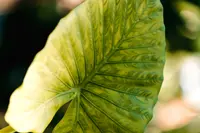
This cultivar shows a distinct golden flush and lighter venation on its leaves compared with typical green Colocasia esculenta forms, a result of targeted selection in the Royal Hawaiian breeding program for enhanced ornamental contrast.

Compact landscape habit

It was bred to remain shorter and more compact than many traditional elephant ear cultivars, making it suitable for smaller gardens, containers, and controlled landscape designs without losing the bold leaf effect.

Modern ornamental selection

Royal Hawaiian Maui Gold is a relatively recent introduction developed primarily for decorative use, representing a shift from the species’ long history as a food crop (taro) toward specialized ornamental lines with stable, predictable foliage traits.

FAQs about Elephant Ear

Brown edges or tips usually come from low humidity, salt buildup from fertilizer, or inconsistent moisture. Flush the pot occasionally, keep soil evenly moist but not soggy, and raise humidity to reduce new damage.

Grow Healthy Plants with Botan Care

Keep your plants happy and healthy with plant identification, disease detection, and easy care guidance.

Botan plant care app — identify plants on mobile

Explore More Plants