Rhizome Planting Depth
Set rhizomes 5–8 cm below the soil surface in containers or beds, then mound an extra 2–3 cm of soil over them to stabilize new shoots and reduce heaving from watering or rainfall.

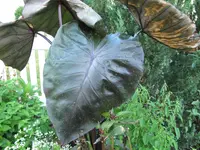
Colocasia esculenta Royal Hawaiian Black Coral is a tropical perennial grown mainly for its dramatic, nearly black, heart-shaped leaves. It forms bold clumps that give an architectural, upright look in containers or garden beds.
In nature, Colocasia species occur in warm, humid regions of Asia and the Pacific, often near water. This background explains its preference for consistently moist soil and sheltered, bright conditions.
The plant grows fairly fast in warm weather but can struggle in cool, dry, or drafty spots. Once its needs are understood, it is relatively straightforward to care for Elephant Ear.
It suits growers who can provide ample moisture, rich soil, and protection from strong, drying winds or intense midday sun.

Care Difficulty
Moderate Care

Light Preference
Partial Sun

Water Requirements
Keep Soil Moist

Temperature Preference
Tropical / Frost Sensitive

Hardiness Zone
8–11

Soil Texture
Loamy, Silty, Organic-rich

Soil pH
Acidic (5.5–6.5), Slightly acidic (6.5–7.0)

Soil Drainage
Moist but well-drained

Fertilization
Moderate (every 2–4 weeks)
Scan your plant to receive care tips personalized for your specific plant
Available on iOS and Android
This colocasia develops its darkest foliage when given abundant but managed light.
This plant prefers consistently moist conditions and handles brief saturation better than dryness.
Stable warmth is essential for strong growth and large leaves.
This colocasia prefers high ambient humidity to maintain large, healthy foliage.
This plant thrives in consistently moist, rich, slightly acidic to neutral soil with strong structure.
This colocasia is well suited to container culture outdoors on patios or near ponds.
This colocasia responds well to steady nutrition during its active growing season.
Pruning Colocasia esculenta Royal Hawaiian Black Coral is light and mainly focused on leaf cleanup.
Container-grown plants benefit from occasional repotting to support strong leaf production.
This cultivar is commonly propagated by division of tubers or offsets rather than by seed.
Cold management is important, as this colocasia is not reliably hardy in freezing climates.

Plant Health Check
Not sure what's wrong with your plant? Check your plant's health inside the app.
The almost black foliage color results from very high concentrations of anthocyanin pigments layered over green chlorophyll, which can help protect the leaves from intense light and UV radiation while still allowing photosynthesis.
This cultivar stays more compact than many green-leaved taro types, typically forming dense clumps with upright, sculptural leaves that were specifically selected to provide a bold, architectural look in smaller gardens and container plantings.
It originates from selective breeding of Colocasia esculenta, a species historically cultivated as taro, but this ornamental form has been bred for leaf color and landscape performance rather than for edible corm production.

Among elephant ear ornamentals, this cultivar is noted for holding its dark leaf coloration even in relatively high light and warm outdoor conditions, where many other dark-leaved forms tend to fade to greener tones over the growing season.
Brown edges or tips usually come from low humidity, underwatering, salt buildup from fertilizer, or wind scorch. Check soil moisture, flush the pot occasionally, protect from strong drafts, and increase ambient humidity for healthier foliage.
Keep your plants happy and healthy with plant identification, disease detection, and easy care guidance.

-200x133.webp)