Use row covers
Apply lightweight floating row covers at sowing and remove at flowering to protect young plants from pea leaf miner, aphids, and early frost without hindering growth.

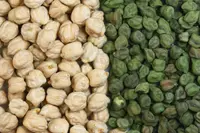
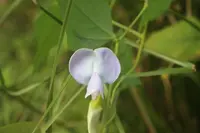
Chick pea, Cicer arietinum, is an annual legume grown for its edible seeds and nitrogen-fixing roots. It has a bushy, branching habit with fine, fern-like leaves. Small, pea-like flowers develop into short pods containing the familiar beige or colored chickpeas. The plant likely originated in the Mediterranean and southwestern Asia and is now cultivated in many warm, semi-arid regions. It prefers full sun, moderate moisture, and well-drained, rather light soils. Once established, chick pea is relatively drought-tolerant, which makes it appealing for low-input gardens. Understanding how to care for chick pea mainly involves providing enough light and avoiding waterlogged soil.

Care Difficulty
Moderate Care

Light Preference
Full Sun

Water Requirements
Moderate Water

Temperature Preference
Warm Climate

Hardiness Zone
3–11

Soil Texture
Sandy, Loamy, Silty

Soil pH
Acidic (5.5–6.5), Slightly acidic (6.5–7.0)

Soil Drainage
Well-drained

Fertilization
Minimal (feed rarely)
Scan your plant to receive care tips personalized for your specific plant
Available on iOS and Android
Chick pea prefers bright, direct sun in cool to mild conditions for sturdy growth.
Cicer arietinum prefers moderately moist, well-drained soil and is sensitive to both drought and waterlogging.
This crop thrives in cool seasons and struggles with both hard frost and intense heat.
Humidity is not a major factor for chick pea, which prefers dry to moderately dry air.
Cicer arietinum prefers light, free-draining mineral soils that prevent waterlogging around the root zone.
This species can be grown in containers if the pot is deep and drainage is carefully managed.
Cicer arietinum is a light feeder, so focus on soil health rather than heavy fertilization.
Cicer arietinum needs only minimal pruning, mainly to maintain plant health and airflow.
Chick pea is usually direct-sown outdoors, but careful transplanting is possible when handled gently.
Cicer arietinum is propagated almost exclusively by seed rather than vegetative methods.
Cicer arietinum is an annual that usually finishes its life cycle before hard winter conditions arrive, so extensive winter care is not needed.

Plant Health Check
Not sure what's wrong with your plant? Check your plant's health inside the app.
Genetic studies show that cultivated chickpea was domesticated once from the wild species Cicer reticulatum in southeastern Turkey, making its global diversity surprisingly narrow compared to many other crops.
Chickpea flowers usually self-pollinate before they open, which helps maintain stable traits in traditional landraces but limits natural genetic mixing in the field.
Chickpea roots form nodules with Rhizobium bacteria that convert atmospheric nitrogen into forms the plant can use, reducing the need for synthetic nitrogen fertilizer in crop rotations.

Archaeological remains show chickpea seeds in Neolithic sites across the Fertile Crescent, and the crop was already widely cultivated by the Bronze Age, making it one of the earliest grain legumes domesticated for human agriculture.
Yes, this species is grown mainly for its edible seeds. They are eaten fresh, dried, sprouted, or processed into flour and spreads. Raw, uncooked seeds are hard to digest and should be thoroughly cooked first.
Keep your plants happy and healthy with plant identification, disease detection, and easy care guidance.