


Mulch For Roots
Apply a 5–8 cm layer of pine bark or pine needle mulch around the shrub, keeping it a few cm away from the stems, to keep roots cool, conserve moisture, and maintain a slightly acidic surface layer.

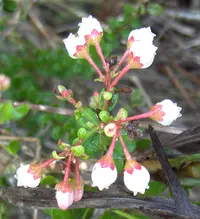
Shiny blueberry (Vaccinium myrsinites) is a low, bushy evergreen shrub native to the southeastern United States, especially Florida and nearby coastal areas. It naturally forms dense, spreading mats and is often used as a compact groundcover in suitable climates.
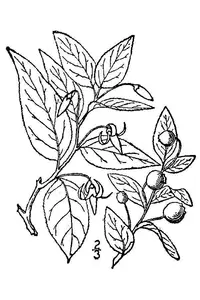
The plant has small, glossy dark green leaves and produces tiny white to pinkish urn-shaped flowers, followed by dark blue to almost black edible berries. Its tough, fibrous root system and tolerance of sandy, acidic soils make it adaptable in well-drained sites.
It prefers sun to light shade and steady soil moisture but does not like standing water. These traits make it relatively easy to care for shiny blueberry in gardens that match its native conditions.

Care Difficulty
Moderate Care

Light Preference
Full Sun

Water Requirements
Moderate Water

Temperature Preference
Warm Climate

Hardiness Zone
8–10

Soil Texture
Sandy, Loamy, Organic-rich

Soil pH
Strongly acidic (4.5–5.5), Acidic (5.5–6.5)

Soil Drainage
Moist but well-drained

Fertilization
Minimal (feed rarely)
Scan your plant to receive care tips personalized for your specific plant
Available on iOS and Android
This low shrub prefers consistent sun exposure to produce dense growth and fruit.
This species prefers evenly moist, acidic, sandy soil without staying saturated.
This evergreen shrub is adapted to warm-temperate to subtropical climates with mild winters.
This species handles typical outdoor humidity but benefits from moderately moist air in hot, exposed sites.
Vaccinium myrsinites prefers acidic, well-drained, sandy soil with consistent moisture but no waterlogging.
This species can be grown successfully in containers outdoors when moisture and acidity are carefully managed.
Vaccinium myrsinites is a low-nutrient, acid-loving shrub that benefits from light, targeted feeding in poor soils.
Vaccinium myrsinites needs only light structural pruning to stay compact and productive.
This species is usually grown in the ground, so focus on careful transplanting and only occasional container repotting.
Vaccinium myrsinites is most often propagated vegetatively to maintain desired traits and uniform growth.
Vaccinium myrsinites is generally cold hardy in its native range and needs minimal winter care in the ground.

Plant Health Check
Not sure what's wrong with your plant? Check your plant's health inside the app.
This species often survives low-intensity wildfires by resprouting from underground stems, helping it quickly re-cover sandy pineland and scrub habitats in the southeastern United States.
Its foliage serves as a larval food source for several native hairstreak butterflies, making it an important component of local insect and pollinator food webs.
It naturally grows on acidic, nutrient-poor, well-drained sands and can thrive where many other shrubs struggle, which is central to Vaccinium myrsinites care in native landscaping projects.

Genetic studies show that this shrub frequently hybridizes with closely related blueberry species in Florida, creating natural hybrid swarms that blur species boundaries and contribute to high local genetic diversity.
The berries are edible and usually safe for people, though they are small and seedy. Flavor ranges from mildly sweet to bland. Avoid eating fruit from areas exposed to pesticides, roadway runoff, or other chemical contamination.
Keep your plants happy and healthy with plant identification, disease detection, and easy care guidance.

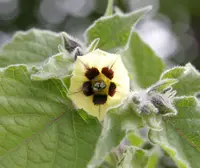
Cape gooseberry
Physalis peruviana
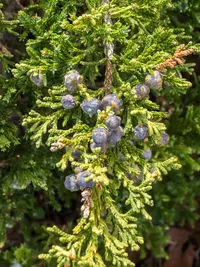
Sargent Juniper
Juniperus chinensis var. sargentii
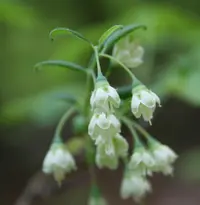
deerberry
Vaccinium stamineum
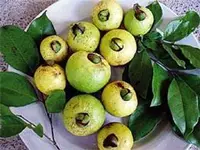
wild guava
Psidium friedrichsthalianum
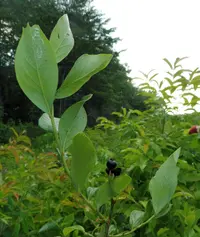
black highbush blueberry
Vaccinium fuscatum
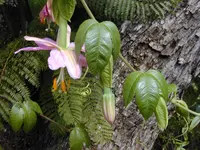
Banana passionfruit
Passiflora tarminiana
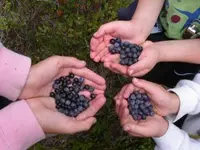
Cascade bilberry
Vaccinium deliciosum
southern mountain cranberry
Vaccinium erythrocarpum