Banana passionfruit Care (Passiflora tarminiana)

Also known as: banana poka
Banana passionfruit

About Banana passionfruit

Banana passionfruit, Passiflora tarminiana, is a vigorous, evergreen climbing vine grown for its tubular pink flowers and elongated, banana-shaped edible fruits. It typically scrambles over supports, fences, or trees and can cover large areas in mild climates.

This species is native to the cool, highland regions of the Andes in South America, where it grows in moist, frost-free environments. In suitable climates it can be fast-growing and quite hardy, but it may become invasive outdoors in some regions.

Understanding how to care for Banana passionfruit starts with its preference for bright light, evenly moist but well-drained soil, and regular structural support for its climbing habit.

Main Plant Requirements

Care Difficulty

Moderate Care

Light Preference

Full Sun

Water Requirements

Regular Water

Temperature Preference

Tropical / Frost Sensitive

Hardiness Zone

10–11

Soil Texture

Loamy, Sandy, Organic-rich

Soil pH

Acidic (5.5–6.5), Slightly acidic (6.5–7.0)

Soil Drainage

Moist but well-drained

Fertilization

Light (every 4–6 weeks)

Get Personalized Care Plan

Scan your plant to receive care tips personalized for your specific plant

Available on iOS and Android

How to Care for the Banana passionfruit

Passiflora tarminiana grows best with strong light but some protection from intense midday sun.

  • Provide 6–8 hours of direct sun daily, with morning sun and light afternoon shade ideal for flowering and fruiting in Banana passionfruit.
  • In hot climates, give filtered or dappled light from about 12–3 pm to prevent leaf scorch and drying of young shoots.
  • In cooler or cloudy regions, choose the brightest, south-facing or west-facing site available, as low light reduces blooms and fruit set.

Passiflora tarminiana prefers evenly moist, well-drained soil that never stays waterlogged.

  • Water when the top 3–5 cm of soil feel dry, soaking the root zone deeply rather than giving frequent shallow splashes.
  • Use soil rich in organic matter with good drainage; persistent puddling, sour smell, or yellowing lower leaves indicate overwatering and poor aeration.
  • In hot, windy, or peak growing seasons, expect faster drying and closer monitoring; wilting at midday that does not recover by evening suggests underwatering.

This species thrives in mild, frost-free conditions with stable warmth through the growing season.

  • Aim for 65–80°F (18–27°C) for active growth; flowering and fruiting are most reliable in this range with consistent moisture and light.
  • Avoid frost, as tissue damage occurs close to 32°F (0°C); sustained temperatures below 28°F (-2°C) can kill stems and young plants.
  • In hotter climates, plants tolerate short periods up to about 90–95°F (32–35°C) if roots are mulched, soil stays moist but drained, and vines receive some afternoon shade.

This species prefers moderate to high humidity but usually adapts to typical indoor levels.

  • Aim for 50–70% humidity for vigorous growth of Banana passionfruit vines and flowers.
  • Tolerates short periods at 30–40%, but prolonged dry air can cause leaf curl, crispy tips, and bud drop.
  • Increase humidity with grouped plants, a nearby humidifier, or a pebble tray, avoiding misting that keeps foliage wet for long periods.

This species performs best in deep, well-aerated, moisture-retentive yet free-draining soil.

  • Use a loamy mix with 40–60% organic matter such as compost plus 20–30% perlite or coarse sand for drainage.
  • Aim for slightly acidic to neutral pH around 6.0–7.0 to support nutrient uptake in Passiflora tarminiana.
  • In heavy clay, create raised beds or large mounds and mix in coarse sand and fine bark to improve aeration.
  • Avoid compacted, waterlogged, or very saline soils, which quickly lead to root rot and nutrient imbalances.

This species grows well in large containers if provided with adequate support and root space.

  • Choose a container at least 45–60 cm deep to accommodate its vigorous, fast-extending root system without severe restriction.
  • Use a heavy, stable pot or weight the base so the tall, climbing vine and trellis do not tip in strong winds.
  • Select thick-walled terracotta or similar materials if faster drying is needed in wet climates, or glazed containers to retain moisture in hot, dry areas.

Passiflora tarminiana responds well to steady, moderate nutrition during the warm growing season.

  • Use a balanced NPK fertilizer (such as 10-10-10) at 1/2 strength every 4–6 weeks from spring through late summer.
  • In rich garden soil, supplement with a thin layer of mature compost around the root zone instead of frequent liquid feeding.
  • For containers, apply a slow-release, balanced granular fertilizer at planting, following label rates, then top up midseason.
  • Reduce or stop feeding in late fall and winter, when growth slows, to avoid soft, frost-tender growth on Banana passionfruit.

Passiflora tarminiana benefits from thoughtful pruning to manage size and encourage flowering wood.

  • Carry out main pruning in late winter or very early spring before vigorous new growth starts.
  • Remove dead, diseased, or storm-damaged stems first, then thin crowded, tangled vines to improve light and air flow.
  • Shorten excessively long shoots to keep the vine within its support structure and maintain an even, manageable shape.
  • Use clean, sharp bypass pruners, cutting just above a healthy bud or side shoot to direct future growth.

This vigorous climber is usually grown in the ground, but young plants and container specimens need timely transplanting.

  • Transplant or up-pot in spring once frost risk passes and roots begin active growth.
  • Look for roots circling the pot, dense root balls, or slowed top growth as indicators that a larger container or ground planting is needed.
  • Move to a pot 1–2 sizes larger, or into well-drained garden soil, keeping the root ball intact and planting at the same depth.
  • Water thoroughly after transplanting, shade for a few days if conditions are hot, and keep soil evenly moist while roots re-establish.

Passiflora tarminiana is commonly propagated from both seeds and softwood or semi-ripe cuttings.

  • Sow fresh seeds in late winter to spring in a warm (70–80°F), bright location using a sterile, free-draining seed mix.
  • Lightly scarify or soak seeds 12–24 hours before sowing to help break dormancy and improve germination rates.
  • Take 8–12 in softwood or semi-ripe cuttings in late spring to summer, removing lower leaves and any flowers or buds.
  • Insert cuttings into moist, well-drained medium, provide high humidity and bottom warmth, and expect rooting in several weeks.

This species is frost-tender and needs protection in regions with cold winters, especially when grown outside its warm native range.

  • In-ground plants tolerate only very light frost; in colder areas, grow Passiflora tarminiana as a container vine.
  • Before expected freezes, cut back weak growth and mulch the root zone with 5–10 cm of straw, leaves, or bark.
  • Move container plants indoors or into a frost-free greenhouse, providing bright light and slightly reduced watering.
  • In mild climates, leave established plants outside but monitor for cold snaps and cover the vine temporarily with frost cloth.

Care Tips

Sturdy trellis setup

Install a strong, rust-resistant trellis or wire system before planting so the vigorous vines can be tied in as they grow, preventing stem breakage and improving air circulation around the foliage.

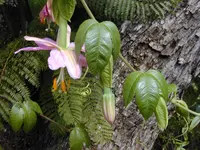
Fan training stems

Train main stems horizontally along wires or fencing and then allow side shoots to hang down, which increases flowering sites and makes harvesting fruit easier and safer.

Pollination support

In areas with few pollinators, hand-pollinate flowers in the morning by gently brushing pollen from one flower’s anthers onto another flower’s stigmas to increase fruit set when growing Banana passionfruit.

Mulch root zone

Apply a 5–8 cm layer of coarse organic mulch around the root zone, keeping it a few cm away from the stem, to stabilize soil moisture and protect the relatively shallow roots from heat stress.

Cold protection measures

In marginal climates, wrap the main stem base with breathable frost cloth and add extra mulch over the root area before expected frosts to reduce damage and help the plant reshoot in spring.

Common Pests and Diseases

Passionvine hopper

This pest feeds on sap from young stems and leaves, causing yellowing, distortion, and sticky honeydew that can lead to sooty mold. Symptoms include reduced vigor and poor flowering or fruiting.

Solution

Prune and destroy heavily infested shoots, then hose down plants to remove nymphs and adults from stems and leaf undersides. If needed, apply a targeted insecticidal soap or horticultural oil in the early nymph stage, repeating at 7–10 day intervals while monitoring for beneficial insects.

Fruit fly infestation

These insects lay eggs in developing fruits, leading to soft spots, internal tunneling, premature fruit drop, and rapid rotting. Symptoms include small sting marks on the skin and liquefied pulp inside otherwise intact fruits.

Solution

Collect and destroy all infested or fallen fruits promptly to break the life cycle, and use fine mesh fruit bags or netting to exclude adults from ripening fruit. In outdoor plantings, place baited traps around the crop area and avoid leaving ripe fruit on the vine for extended periods when growing Banana passionfruit in regions with known fruit fly pressure.

Fusarium wilt

This disease causes progressive yellowing, leaf drop, and wilting that does not recover with watering, often starting on one side of the plant. Symptoms include brown discoloration in the vascular tissue inside stems and roots when cut open.

Solution

Remove and destroy affected vines, including as much root material as possible, and avoid replanting passionfruit in the same spot for several years. Improve soil drainage, avoid overwatering, and choose clean planting material; in container culture, discard infected potting mix and disinfect pots before reusing.

Brown spot (Alternaria)

This disease produces small dark leaf spots with pale or yellow halos that can merge into larger dead patches, especially in cool, humid weather. Symptoms include premature leaf drop and blemishes on green stems and sometimes on fruit rinds.

Solution

Prune to open the canopy and improve air circulation, and avoid wetting foliage when watering. Remove and discard infected leaves from the plant and ground, then apply a copper-based fungicide or other labeled foliar fungicide at the first sign of spotting if conditions remain wet or humid.

Spider mites

These pests thrive in hot, dry conditions and feed on leaf undersides, causing fine speckling, bronzing, and eventual leaf drop. Symptoms include delicate webbing between leaves and stems and a general dull, dusty appearance of the foliage.

Solution

Rinse foliage thoroughly, focusing on leaf undersides, and repeat every few days to knock back populations. Increase humidity around the plant and, if needed, use insecticidal soap or horticultural oil, applying in the early morning or late afternoon and avoiding treatment during high heat to prevent leaf burn.

Interesting Facts

High-elevation specialist

This species is naturally adapted to cool, misty Andean climates and often occurs at higher elevations than many other passionfruits, tolerating lower temperatures but not extreme heat.

Distinctive banana-like fruit

Its elongated yellow fruits resemble small bananas in shape, with aromatic pulp that is widely used in Andean regions for juices, desserts, and fresh eating.

Invasive in mild climates

Outside its native range, especially in mild, frost-free regions such as parts of New Zealand and Hawaii, it can become invasive, smothering native vegetation with dense, fast-growing vines.

Botan icon

Did you know?

In parts of the Andes, this species is cultivated on trellises and living fences not only for its fruit but also as a nectar resource that supports local pollinators such as large bees and hummingbirds, which are able to access its relatively deep, tubular flowers.

FAQs about Banana passionfruit

Lack of flowers usually comes from insufficient light, low temperatures, or pruning at the wrong time that removes flowering wood. Poor nutrition, especially low potassium, or using high-nitrogen fertilizer can also delay buds and reduce flowering.

Grow Healthy Plants with Botan Care

Keep your plants happy and healthy with plant identification, disease detection, and easy care guidance.

Botan plant care app — identify plants on mobile

Explore More Plants