southern mountain cranberry Care (Vaccinium erythrocarpum)

Also known as: bearberry, mountain cranberry, highbush cranberry, arando, dingleberry
southern mountain cranberry

About southern mountain cranberry

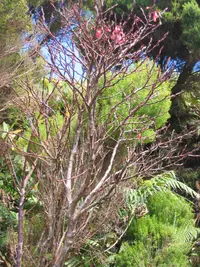
Southern mountain cranberry, Vaccinium erythrocarpum, is a small deciduous shrub in the heath family, related to blueberries and true cranberries. It usually forms loose clumps with arching stems and fine-textured foliage.

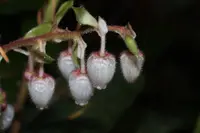
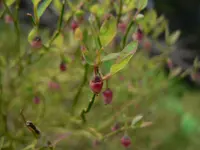
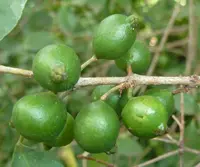
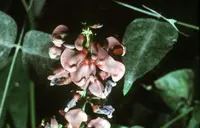
This species is native to cool, higher-elevation forests of the southern Appalachian Mountains, where it grows in filtered light under larger trees. It bears small, urn-shaped flowers followed by bright red berries that add ornamental interest.

The plant prefers acidic, humus-rich, consistently moist but well-drained soil and does poorly in heavy, alkaline ground. It is moderately challenging for beginners because it needs stable moisture, cool roots, and the right soil chemistry to stay healthy.

Gardeners who learn how to care for southern mountain cranberry often treat it similarly to highbush blueberries, adjusting conditions to match its woodland origins.

Main Plant Requirements

Care Difficulty

Moderate Care

Light Preference

Partial Shade

Water Requirements

Regular Water

Temperature Preference

Cool Climate

Hardiness Zone

6–8

Soil Texture

Loamy, Peaty, Organic-rich

Soil pH

Strongly acidic (4.5–5.5), Acidic (5.5–6.5)

Soil Drainage

Moist but well-drained

Fertilization

Minimal (feed rarely)

Get Personalized Care Plan

Scan your plant to receive care tips personalized for your specific plant

Available on iOS and Android

How to Care for the southern mountain cranberry

This shrub prefers bright, cool light conditions similar to an open woodland edge.

  • Provide 3–5 hours of direct morning sun with light or dappled shade from midday onward to protect the leaves.
  • Tolerates partial shade, but flowering and fruiting of southern mountain cranberry decline if it receives less than about 3 hours of direct light.
  • In hotter regions, avoid harsh afternoon sun that can scorch foliage; use overhead tree cover or filtered light, especially in late spring and summer.

This species needs consistently moist but not saturated soil, especially during the growing season.

  • Water when the top 2–4 cm of soil feel slightly dry, aiming for evenly damp soil down to root depth, not soggy conditions.
  • Increase monitoring in late spring and summer; drooping, dull leaves suggest underwatering, while yellowing foliage and constantly wet soil point to overwatering or poor drainage.
  • Ensure acidic, well-drained, humus-rich soil so water moves through steadily; avoid standing water around Vaccinium erythrocarpum roots at any time.

This shrub is adapted to cool, mountain-type climates with distinct seasonal changes.

  • Optimal growth occurs around 60–75°F (16–24°C), with good vigor during cool springs and mild summers.
  • Mature plants typically tolerate winter lows near 0–10°F (-18 to -12°C) when fully dormant, provided roots are mulched and soil drains well.
  • In hot climates, prolonged temperatures above 85°F (29°C) can stress plants; provide afternoon shade and mulch to cool the root zone and reduce heat stress.

This species prefers moderately moist air but tolerates typical outdoor humidity in temperate climates.

  • Aim for 50–70% humidity, avoiding very dry, windy locations that accelerate leaf moisture loss.
  • Dry air stress shows as marginal leaf browning, rolling, and slower shoot growth, especially in hot weather.
  • Increase humidity outdoors by mulching 5–8 cm deep and grouping shrubs, which helps retain near-ground moisture around southern mountain cranberry.

This species performs best in consistently moist, acidic, well‑drained soil with high organic content.

  • Use a loose, humus‑rich mix such as 50–70% peat or fine pine bark with the rest sharp sand or perlite for structure.
  • Maintain acidic conditions at pH 4.5–5.5; avoid lime or alkaline amendments that disrupt Vaccinium erythrocarpum nutrient uptake.
  • Ensure drainage is rapid, with no standing water; raised beds or mounded planting help prevent root suffocation in heavy ground.
  • Improve aeration in compact soils by incorporating coarse bark and perlite, avoiding fine composts that collapse and hold excess water.

This species can be grown in containers if moisture, acidity, and root space are managed carefully.

  • Choose a tall, narrow container to provide deep rooting space and reduce lateral drying of the root zone.
  • Use a thick, stable pot material such as glazed ceramic to buffer temperature swings and moisture loss from the sides.
  • Elevate the pot slightly on feet or bricks so drainage holes stay clear and excess water exits quickly after heavy rainfall.

Vaccinium erythrocarpum benefits from light, targeted feeding in acidic soil but does not need heavy fertilization.

  • Use an acid-forming, slow-release fertilizer or organic compost with a low to moderate balanced NPK, such as 10-10-10 formulated for blueberries.
  • Feed lightly once in early spring and again in late spring while growth is active, avoiding mid-summer and late-season applications.
  • Apply at half the label strength for container or young plants, and water thoroughly afterward to prevent root burn.
  • Reduce or stop feeding in fall and winter when growth slows and the shrub enters dormancy.

Pruning Vaccinium erythrocarpum focuses on maintaining an open, healthy framework that supports flowering and fruiting.

  • Carry out main pruning in late winter to very early spring, before new growth starts.
  • Remove dead, damaged, crossing, or very weak stems with clean, sharp bypass pruners.
  • Thin crowded interior branches to improve light penetration and air flow, which supports better flowering and fruit quality.
  • Shorten overly long shoots lightly to maintain a balanced, natural shape without heavy cutting.

This shrub is usually grown in the ground, so transplanting into suitable acidic soil is more important than frequent repotting.

  • Transplant in early spring or early fall, when temperatures are mild and moisture is more consistent.
  • Look for signs such as roots circling the pot, slow growth, or frequent drying if it is container grown.
  • Move into a hole or container 1.5–2 times wider than the root ball, using well-drained, acidic soil rich in organic matter.
  • Handle roots gently, keep the original soil level at the same height, water deeply, and mulch to limit stress after transplanting.

Propagation of Vaccinium erythrocarpum is achievable but somewhat slow, mainly through cuttings and seeds.

  • Take semi-ripe stem cuttings in late spring to midsummer, 8–10 cm long, from healthy, non-flowering shoots.
  • Insert cuttings into a moist, well-drained, acidic medium, and keep humidity high with bright, indirect light.
  • Sow fresh seeds in fall or after a cold stratification period, using an acidic mix and very light seed cover.
  • Maintain cool to mild temperatures and consistent moisture; rooting and germination can take several weeks to months.

This species is generally cold hardy in suitable climates but benefits from simple winter care, especially when young or container grown.

  • Tolerates typical winter lows in many temperate regions but young plants can be more sensitive to severe freezes.
  • Apply a 5–8 cm layer of organic mulch around the root zone in late fall, keeping it off the stems.
  • In very cold or exposed sites, use burlap or a breathable wrap to shield stems from drying winds and ice.
  • Move containers into a sheltered, unheated but frost-moderated area, and water lightly so the root ball does not fully dry.

Care Tips

Mulch For Root Cool

Apply a 5–8 cm layer of pine needles or shredded bark around the root zone each spring to keep roots cool, suppress weeds, and maintain the acidic surface conditions this shrub prefers.

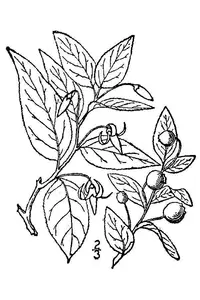
Understory Placement

Plant in the light shade of taller shrubs or small trees to mimic its native woodland understory, which reduces heat and wind stress and helps keep soil moisture more stable through summer.

Mycorrhiza Support

Avoid disturbing the root zone and minimize high-phosphorus fertilizers so the plant’s natural mycorrhizal fungi can thrive and improve nutrient uptake in acidic, low-fertility soils.

Berry Protection Netting

Install fine bird netting over a simple hoop or frame as berries begin to color to prevent loss to birds while still allowing air flow and light penetration.

Leaf Litter Management

Let a thin layer of leaf litter remain under the shrub over winter to insulate roots and feed soil life, then remove only thick, matted, or diseased leaves in early spring as part of caring for southern mountain cranberry.

Common Pests and Diseases

Mummy berry

This disease causes young shoots and leaves to wilt and die back, and developing berries shrivel into hard, pale, mummified fruits. Symptoms include tan leaf spots with brown margins and misshapen berries that dry and drop prematurely.

Solution

Remove and destroy all mummified berries and blighted shoot tips during and after fruiting, and keep the area under the shrubs free of old fruit and leaf litter. Maintain good airflow with light pruning, avoid overhead watering during bloom, and in areas with a known history of mummy berry, apply a labeled fungicide at bud break and early bloom following local extension guidance for Vaccinium erythrocarpum care.

Phytophthora root rot

This disease leads to poor vigor, stunting, and foliage that turns dull, reddish, or bronze, often followed by sudden collapse in warm, wet conditions. Symptoms include dark, decayed roots and poor new growth even when soil seems moist.

Solution

Improve drainage by planting on a mound or raised bed, avoid heavy and waterlogged soils, and do not allow pots or planting holes to sit in standing water. Remove severely affected plants and surrounding wet soil, then replant only in well-drained, acidic soil; in high-risk sites, use a soil drench or systemic fungicide specifically labeled for Phytophthora on blueberries as a preventive treatment.

Blueberry maggot

This pest is the larval stage of a fly that lays eggs in developing berries, leading to soft fruits with small white maggots inside. Symptoms include prematurely soft, collapsing berries and poor fruit quality at harvest.

Solution

Use yellow sticky cards and baited traps to monitor adult fly activity from early fruit development, and remove and discard all infested berries before they drop to the ground. In areas with a known problem, apply an appropriate insecticide timed to adult fly emergence and egg laying, and maintain good sanitation by clearing fallen fruit every few days during the season.

Blueberry leaf rust

This disease produces yellow spots on the upper leaf surface and orange to rust-colored pustules on the underside, often causing premature leaf drop. Symptoms include thinning foliage late in the season and reduced vigor over time.

Solution

Rake and remove fallen leaves in autumn, and prune to promote good air circulation through the canopy. Avoid overhead irrigation, especially late in the day, and in wet or high-pressure areas use a labeled fungicide for rust on blueberries, applied according to local extension recommendations and timed to new leaf growth.

Scale insects

These insects appear as small, immobile bumps on stems and sometimes leaves, feeding on plant sap and causing yellowing, reduced growth, and branch dieback in heavy infestations. This pest often produces sticky honeydew that can support sooty mold growth on nearby surfaces.

Solution

Inspect stems regularly and prune out heavily infested twigs, disposing of them away from the planting area. For light infestations, scrub stems with a soft brush and soapy water; for larger problems, use horticultural oil during the dormant season and a lighter summer oil spray when crawlers are active, ensuring thorough coverage of stems and branch crotches.

Interesting Facts

Southern Appalachian specialist

This shrub is native to high-elevation forests of the southern Appalachian Mountains in the US, where it grows on cool, moist, acidic slopes and ravines, often under hemlock and rhododendron canopies.

Late-ripening berries

Its bright red berries typically ripen later in the season than many other native blueberries, sometimes persisting into fall, providing a food source for birds and mammals after other fruits have declined.

Showy autumn foliage

The leaves often turn vivid red to orange-red in fall, making this species one of the more ornamental native blueberries in its natural range and in gardens focused on growing southern mountain cranberry.

Botan icon

Did you know?

Unlike many commercial blueberry species that prefer more open, sunny habitats, this species is naturally adapted to cool, shaded montane forests and can form small, scattered colonies in deep leaf litter over acidic, rocky substrates.

FAQs about southern mountain cranberry

The berries are edible and valued for their tart flavor. They are usually cooked or processed into jams, sauces, or baked goods rather than eaten fresh, since the raw fruits can be quite sharp-tasting.

Grow Healthy Plants with Botan Care

Keep your plants happy and healthy with plant identification, disease detection, and easy care guidance.

Botan plant care app — identify plants on mobile

Explore More Plants