Santol Care (Sandoricum koetjape)

Santol

About Santol

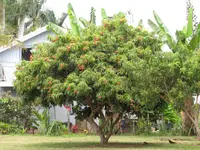
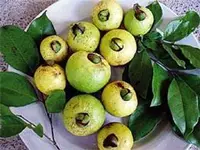
Santol (Sandoricum koetjape) is a tropical fruit tree from Southeast Asia, commonly grown in home gardens and small orchards. It forms a medium to large tree with a rounded canopy and thick, glossy leaves.

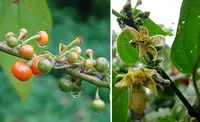
The plant produces yellow to reddish round fruits with a thick rind and soft, aromatic pulp around large seeds. It thrives in warm, humid climates and does best in full sun and evenly moist, well-drained soil.

In suitable climates it is generally robust, but sensitivity to cold and prolonged drought can make it challenging in marginal areas. Understanding how to care for Santol mainly involves providing warmth, good light, and consistent moisture without waterlogging.

Main Plant Requirements

Care Difficulty

Moderate Care

Light Preference

Full Sun

Water Requirements

Regular Water

Temperature Preference

Tropical / Frost Sensitive

Hardiness Zone

11–12

Soil Texture

Sandy, Loamy, Organic-rich

Soil pH

Acidic (5.5–6.5), Slightly acidic (6.5–7.0)

Soil Drainage

Moist but well-drained

Fertilization

Minimal (feed rarely)

Get Personalized Care Plan

Scan your plant to receive care tips personalized for your specific plant

Available on iOS and Android

How to Care for the Santol

Sandoricum koetjape prefers strong, stable light to support healthy growth and fruiting.

  • Provide 6–8 hours of full sun daily, ideally with morning sun and light afternoon shade in hot climates to prevent leaf scorch.
  • Young trees tolerate partial shade (around 3–4 hours direct sun) but growth and fruiting improve as exposure increases over time.
  • In rainy or cloudy seasons, ensure open exposure by avoiding shade from buildings or taller trees, as prolonged low light leads to weak, leggy shoots.

This tropical fruit tree needs consistently moist but not saturated soil.

  • Water when the top 3–5 cm of soil feels dry, applying a deep soak that moistens the root zone rather than frequent light sprinkling.
  • Use well-drained soil; pooling water or a sour smell around the roots suggests overwatering and risk of root rot, while dull, curling leaves often indicate underwatering.
  • In hot, dry seasons increase frequency, while in cool or rainy periods reduce watering to avoid prolonged saturation, especially in heavy clay soils.

This species thrives in warm, frost-free climates with stable temperatures.

  • Aim for average growth temperatures of 75–90°F (24–32°C), where Sandoricum koetjape maintains vigorous foliage and flowering.
  • Avoid exposure below 40°F (4°C); light frost can damage young shoots, and temperatures near 32°F (0°C) may kill small trees.
  • During heat waves above 95°F (35°C), provide extra mulch and irrigation, as root-zone cooling helps reduce stress and leaf scorch.

This tropical fruit tree prefers fairly humid air to support steady growth and healthy foliage.

  • Aim for 50–70% humidity; it tolerates brief dips lower but sustained very dry air slows growth and browns leaf edges.
  • Watch for curling leaves, crispy margins, and stalled new shoots as signs of humidity stress in Santol.
  • Increase humidity with grouped plants, a nearby humidifier, or a wide pebble tray under the pot, keeping roots out of standing water.

Sandoricum koetjape prefers deep, well-aerated, moisture-retentive but free-draining soil for strong root and canopy development.

  • Use a loamy mix combining roughly 50% garden loam or store-bought topsoil, 30% coarse sand, and 20% compost for structure and nutrients.
  • Ensure fast drainage so water does not pool; water should infiltrate quickly and exit the bottom of the planting area within a few minutes.
  • Keep pH slightly acidic to neutral, around 6.0–7.0, avoiding very alkaline sites that can cause nutrient lockout and leaf yellowing.
  • Improve aeration and drainage in heavy clay by incorporating coarse sand, fine gravel, or crushed bark into the top 20–30 cm before planting.

This species can be grown in containers when kept pruned and root-restricted, especially in warm climates with limited ground space.

  • Choose a large, deep, heavy container to stabilize the top-heavy canopy and reduce tipping in wind.
  • Use a fast-draining tree mix, such as composted bark, coarse sand, and perlite, to prevent waterlogging in the confined root zone.
  • Elevate the pot slightly on feet or bricks so drainage holes stay clear and excess water exits quickly after irrigation.

Nutrient-rich soil supports steady Sandoricum koetjape growth and fruiting, especially in warm, rainy climates.

  • Use a balanced granular or slow-release NPK fertilizer, or well-rotted compost, at the start of the growing season.
  • Feed every 2–3 months during active growth, adjusting rates based on tree vigor and soil fertility.
  • Apply fertilizer at half the label strength for young trees to avoid root burn and excessive soft growth.
  • Reduce or stop feeding in cooler months or dry rest periods, as nutrient demand drops significantly.

Thoughtful pruning helps Sandoricum koetjape maintain a strong framework and safe, manageable size.

  • Carry out main pruning in late dry season or just before active growth, avoiding heavy cutting during flowering or fruiting.
  • Remove dead, diseased, crossing, or storm-damaged branches first to improve air flow and reduce pest entry points.
  • Thin crowded inner shoots to open the canopy, encouraging better light penetration and fruit quality.
  • Use clean, sharp bypass pruners or a pruning saw, making smooth cuts just outside the branch collar.

This tree is usually field-grown, so focus on careful transplanting of young Sandoricum koetjape rather than long-term container culture.

  • Plan transplanting for late dry season to early rainy season, when heat stress is lower and soil moisture improves establishment.
  • Shift nursery plants once roots circle the pot base or growth slows, typically every 1–2 years while young.
  • Water deeply before and after moving, keeping as much of the root ball intact as possible to limit root disturbance.
  • Plant at the same soil level, backfill with well-drained soil, then mulch 5–8 cm away from the trunk to reduce moisture loss.

Sandoricum koetjape is most commonly propagated from seed, with some use of vegetative methods in orchards.

  • Collect fully ripe fruits, clean seeds, and sow fresh in warm conditions around 75–85°F for best germination.
  • Use a loose, well-drained seed mix and keep it evenly moist, not waterlogged, until seedlings establish.
  • For semi-hardwood cuttings, take healthy shoots in warm months, apply rooting hormone, and place in high-humidity conditions.
  • Provide bright, indirect light and stable warmth, avoiding temperature swings that slow rooting and seedling growth.

This tropical tree has low frost tolerance and needs protection in climates with cool winters or occasional freezes.

  • In-ground trees in marginal areas benefit from 5–10 cm of organic mulch over the root zone, kept away from the trunk.
  • Wrap young trunks with breathable horticultural fleece or similar material during expected cold snaps.
  • Move container-grown plants indoors or into a heated greenhouse before temperatures approach 40°F.
  • Reduce watering in cool conditions to prevent root rot while the plant is semi-dormant and growth slows.

Care Tips

Strong wind management

Install a temporary windbreak such as shade cloth or a slatted fence on the windward side for the first 2–3 years to reduce branch breakage and leaf scorch while the young tree establishes.

Structural branch training

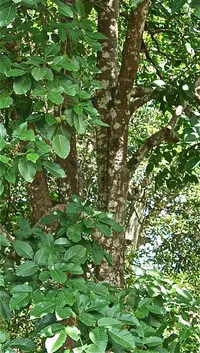
In the first 3–5 years, select 3–5 well-spaced main branches and remove steep, crossing, or low suckering shoots to create a strong open canopy that can safely carry heavy fruit loads.

Fruit thinning practice

When fruit clusters are pea-sized, thin them so that only 1–3 fruits remain per cluster, which helps reduce limb stress and improves final fruit size and quality.

Calcium and boron monitoring

In areas with very sandy or highly leached soils, test leaf tissue every 1–2 years and supplement calcium and boron only if deficient, to support good fruit set and reduce internal fruit disorders.

Mulch and trunk gap

Apply a 5–8 cm ring of organic mulch under the canopy but keep a 10–15 cm mulch-free gap around the trunk to reduce risk of collar rot and discourage rodents from damaging the bark when growing Santol.

Common Pests and Diseases

Fruit borer

This pest tunnels into developing fruits, causing premature fruit drop, internal feeding damage, and contamination with frass. Symptoms include small dark entry holes and shriveled or rotting fruit on the tree or ground.

Solution

Collect and destroy infested fallen fruits regularly, prune and remove any heavily affected fruit clusters, and use fine mesh bags on developing clusters where practical. In orchards, monitor moth activity with light or pheromone traps and apply targeted Bacillus thuringiensis (Bt) or other selective treatments at early fruit development following local Sandoricum koetjape plant care guidance.

Leaf miner

These insects feed between the upper and lower leaf surfaces, producing winding, pale tunnels that reduce photosynthesis and weaken young growth. Symptoms include distorted, blotched, or prematurely dropping leaves, especially on young plants or new flushes of growth.

Solution

Prune and dispose of heavily mined leaves to reduce larval populations, and encourage natural predators by avoiding broad-spectrum insecticides. For young or high-value trees, apply a systemic insecticide labeled for leaf miners or use horticultural oil on new flushes, following label directions and avoiding spraying in strong sun or high heat.

Mealybugs

This pest appears as white, cottony clusters on young shoots, leaf axils, and fruit stalks, sucking sap and excreting honeydew that promotes sooty mold. Symptoms include distorted new growth, sticky surfaces, and black fungal coating on leaves and fruit.

Solution

Inspect twigs and leaf joints regularly, then wipe or wash colonies off with a strong water spray or a cloth dipped in mild soapy water. For heavier infestations, apply horticultural oil or an insecticidal soap thoroughly to all plant surfaces, repeating at 7–10 day intervals until populations decline, and control ants that protect mealybugs.

Anthracnose

This disease causes dark, sunken lesions on young leaves, twigs, and fruit, often starting at the tips or margins and expanding under warm, humid conditions. Symptoms include leaf blight, dieback of small twigs, and blemished, cracked fruit that may drop early.

Solution

Prune and destroy infected shoots and mummified fruits, improve canopy airflow by thinning dense growth, and avoid overhead watering that keeps foliage wet. In humid regions, protect young flushes and developing fruit with copper-based or other labeled fungicides, applying preventively at leaf or flower flush and after heavy rain when following Santol care instructions in orchards.

Sooty mold

This disease is a black, powdery fungal growth that develops on leaves and fruit surfaces growing on honeydew excreted by sap-sucking insects such as mealybugs and scale. Symptoms include a dull, black coating that reduces photosynthesis and can interfere with normal fruit ripening.

Solution

Focus on controlling underlying honeydew-producing insects through washing, pruning infested parts, and using horticultural oils or insecticidal soaps where needed. Once insect populations are reduced, gently wipe or hose off affected leaves and fruit, and maintain good airflow and light penetration in the canopy to limit mold buildup.

Interesting Facts

Dual-textured fruit pulp

The fruit has a thick, spongy outer pulp that is usually sour to tart, surrounding a central segment of soft, translucent pulp that is notably sweeter and clings tightly to the seeds.

Latex-rich tissues

The bark, leaves, and unripe fruit exude a white, sticky latex, a common trait in the mahogany family (Meliaceae), which helps seal wounds and can deter some herbivores.

Large evergreen canopy

In suitable tropical climates the tree develops a dense, rounded crown and can reach 15–30 m, providing significant shade and microhabitat for insects, birds, and small mammals in home gardens and mixed orchards.

Botan icon

Did you know?

Historical records indicate that the santol is not originally native to all of Southeast Asia; it is thought to have originated in the Indochina–Malay region and was later spread widely through human cultivation, becoming naturalized and often semi-wild in many tropical areas.

FAQs about Santol

Yellowing leaves usually result from water stress, root problems, or nutrient imbalance. Check for poor drainage, compacted soil, or soggy roots, and adjust watering. A balanced fertilizer and good aeration often restore healthy green foliage.

Grow Healthy Plants with Botan Care

Keep your plants happy and healthy with plant identification, disease detection, and easy care guidance.

Botan plant care app — identify plants on mobile

Explore More Plants