Timed succession cuts
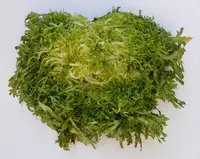
Stagger harvest by cutting only the outer rosettes every 2–3 weeks, leaving the inner crown intact so the plant can keep pushing new, tender shoots instead of exhausting itself at once.

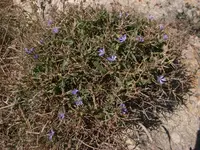
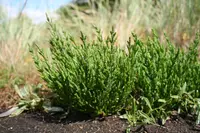
Spiny chicory, Cichorium spinosum, is a compact, perennial herb from the Mediterranean region, often found in dry, rocky coastal areas. It forms low, dense mounds with narrow, dark green leaves and short, spiny shoots.
The plant produces small, pale blue flower heads in summer, attracting pollinators and adding subtle color to an edible or ornamental bed. Its natural adaptation to poor, well-drained soils and dry conditions makes it relatively undemanding once established, though it dislikes waterlogged sites.
Gardeners who want to care for Spiny Chicory should note that it prefers full sun, moderate moisture, and open, well-drained soil to maintain compact, healthy growth.

Care Difficulty
Moderate Care

Light Preference
Full Sun

Water Requirements
Moderate Water

Temperature Preference
Warm Climate

Hardiness Zone
8–11

Soil Texture
Sandy, Loamy, Rocky

Soil pH
Slightly acidic (6.5–7.0), Slightly alkaline (7.0–7.5)

Soil Drainage
Well-drained

Fertilization
Minimal (feed rarely)
Scan your plant to receive care tips personalized for your specific plant
Available on iOS and Android
This Mediterranean perennial prefers bright, open conditions similar to its coastal habitat.
This species prefers dry to slightly moist conditions and is sensitive to waterlogged soil.
This hardy perennial tolerates a wide temperature range but performs best in mild conditions.
This Mediterranean species tolerates a wide humidity range, so ambient outdoor levels are usually adequate.
Cichorium spinosum prefers mineral, free-draining soil that never stays waterlogged.
This species grows reliably in containers when the pot supports its deep, fibrous root system and fast drainage.
This wild Mediterranean perennial needs only light feeding in average to lean soil, so fertilization for Spiny Chicory should remain modest.
Pruning Cichorium spinosum is mainly corrective, keeping plants tidy and encouraging compact, healthy growth.
This species is usually grown in open ground, so transplanting young plants correctly is more important than frequent repotting.
Propagation of Cichorium spinosum is most reliable from seed, with division of older clumps as a secondary method.
This coastal perennial is fairly cold hardy in mild-winter regions and usually needs minimal winter care outdoors.

Plant Health Check
Not sure what's wrong with your plant? Check your plant's health inside the app.
This species forms a very low, dense rosette of deeply divided leaves with stiff spines along the margins, an adaptation that helps protect it from grazing animals in its native Mediterranean habitats.
It is a true coastal halophyte, meaning it tolerates saline soils and sea spray, and often grows just above the high-tide line on rocky or sandy shores in the eastern Mediterranean.
In parts of Greece, especially Crete, the young leaves and shoots are collected as a seasonal wild vegetable and eaten raw or lightly cooked, valued for their mildly bitter taste typical of wild chicories.

Genetic and morphological studies show that this species is closely related to the common chicory Cichorium intybus, yet it has evolved a much more compact, spiny, cushion-like growth form, which is thought to be an adaptation to intense coastal winds, drought, and herbivory pressure in its natural range.
Yes, this species is edible. Young leaves are used raw in salads or lightly cooked; older leaves taste more bitter. Harvest from clean, unsprayed plants only, and rinse thoroughly before eating to remove grit and insects.
Keep your plants happy and healthy with plant identification, disease detection, and easy care guidance.