Staggered Succession Sowing
Sow small patches every 10–14 days over 4–6 weeks to spread flowering and seed maturity, which reduces the risk of losing the entire crop to a single weather event.

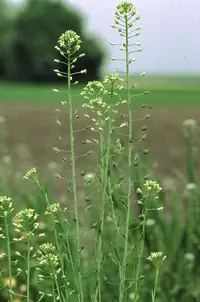
Gold-of-pleasure (Camelina sativa) is a cool-season annual oilseed plant in the mustard family, grown for its small, oil-rich seeds. It forms upright, branching stems with narrow leaves and sprays of tiny pale yellow flowers, followed by round seed pods. The plant is native to Europe and western Asia but is now cultivated in many temperate regions, especially in dryland and low-input systems. It is valued for its tolerance of poor, sandy, or rocky soils and relatively low water needs, which makes it straightforward to care for gold-of-pleasure in many garden or small-farm settings. It generally prefers full sun and well-drained soil.

Care Difficulty
Easy Care

Light Preference
Full Sun

Water Requirements
Moderate Water

Temperature Preference
Cool Climate

Hardiness Zone
4–8

Soil Texture
Sandy, Loamy, Clay

Soil pH
Acidic (5.5–6.5), Slightly acidic (6.5–7.0)

Soil Drainage
Well-drained

Fertilization
Minimal (feed rarely)
Scan your plant to receive care tips personalized for your specific plant
Available on iOS and Android
Camelina sativa performs best with consistent, direct light during its cool-season growth.
Camelina sativa prefers moderate, even soil moisture without prolonged saturation.
This cool-season oilseed crop grows best in mild conditions and tolerates moderate cold.
This species is primarily an outdoor field crop, and humidity plays a minor role in its performance.
Camelina sativa prefers lean, well-drained mineral soils rather than rich, heavy mixes.
This species can be grown in containers for small-scale or trial plantings if moisture and stability are managed carefully.
Camelina sativa is modest in its nutrient needs but responds well to light, balanced feeding on poor soils.
Camelina sativa requires minimal pruning, mainly for cleanliness and harvest management rather than shaping.
This species is usually field-grown, so transplanting young Camelina sativa seedlings is more relevant than repotting mature plants.
Camelina sativa is most commonly propagated from seed, which germinates quickly under suitable conditions.
Camelina sativa is cold tolerant and usually needs little dedicated winter care in temperate climates.

Plant Health Check
Not sure what's wrong with your plant? Check your plant's health inside the app.
This species was widely cultivated in Europe during the Bronze Age and Iron Age as an oilseed, and its seeds are frequently found in archaeological grain samples from that period.
Camelina sativa germinates and grows well at lower temperatures compared to many other oilseed crops, which allows it to be sown very early in spring or grown in cooler regions.
The seed oil has a fatty acid profile suitable for conversion into biodiesel and jet fuel alternatives, and has been studied as a promising low-input energy crop on marginal land.

Genetic and historical evidence shows that this species originated as a weed in flax fields, and was later domesticated as a crop in its own right, making it a relatively rare example of a former crop weed becoming an established oilseed species.
The seeds and seed oil are edible and widely used for culinary oil and animal feed. Only use material from correctly identified, untreated plants. Avoid consuming ornamental or pesticide-treated plants, and introduce any new food in small amounts initially.
Keep your plants happy and healthy with plant identification, disease detection, and easy care guidance.