Control Clump Spread
Every 4–6 years, lift and divide overgrown clumps in early spring or just after flowering to keep plants vigorous and prevent them from crowding out neighboring perennials.

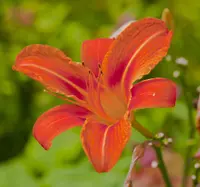
The orange daylily, Hemerocallis fulva, is a hardy herbaceous perennial valued for its trumpet-shaped orange flowers and strappy green leaves. It forms dense clumps and spreads gradually by rhizomes, often creating large, low-maintenance drifts.
This species is native to East Asia but is widely naturalized in many temperate regions, including much of North America. It is commonly seen along roadsides, old gardens, and naturalized in meadows.
Hemerocallis fulva tolerates a wide range of soils and urban conditions, which makes it easy for beginners. It prefers full sun to light shade and moderately moist, well-drained soil. Gardeners often find that learning how to care for orange daylily is straightforward due to its resilience and adaptability.

Care Difficulty
Easy Care

Light Preference
Full Sun

Water Requirements
Moderate Water

Temperature Preference
Cold Hardy

Hardiness Zone
3–9

Soil Texture
Sandy, Loamy, Clay

Soil pH
Acidic (5.5–6.5), Slightly acidic (6.5–7.0)

Soil Drainage
Moist but well-drained

Fertilization
Minimal (feed rarely)
Scan your plant to receive care tips personalized for your specific plant
Available on iOS and Android
This species thrives in full sun but tolerates some shade, with best flowering in open exposures.
This plant prefers evenly moist, well-drained soil but is generally drought-tolerant once established.
This hardy perennial tolerates a wide temperature range but grows best in moderate conditions.
This species tolerates a wide humidity range and rarely needs special humidity management outdoors.
This plant prefers deep, loose, moisture-retentive but free-draining soil for strong clump and root development.
This species can be grown in containers, but large, stable pots are needed to support the spreading clumps.
This vigorous perennial needs only moderate feeding for reliable flowering and healthy foliage.
Pruning Hemerocallis fulva is straightforward and supports clean appearance and continued flowering.
Hemerocallis fulva is usually grown in the ground and benefits from occasional division and transplanting rather than frequent repotting.
Hemerocallis fulva is most commonly propagated by division, which maintains identical flower and growth traits.
This hardy perennial usually needs minimal winter care in most temperate climates.

Plant Health Check
Not sure what's wrong with your plant? Check your plant's health inside the app.
This species often forms dense roadside or ditch colonies not from seeds, but from spreading rhizomes that create large clonal patches genetically identical to the original plant.
Each individual flower typically opens for only a single day, with the bloom expanding in early morning and withering by night, while numerous buds on the same scape keep the plant flowering for weeks.
Wild and garden forms of this common orange daylily are typically triploid, which means they have three sets of chromosomes and rarely produce viable seed, so they spread mainly by vegetative division.

In parts of eastern North America, this species behaves as a vigorous invasive plant, outcompeting native herbaceous species along roadsides, stream banks, and old fields due to its dense rhizome network and high tolerance of poor soils and disturbance.
This species spreads quickly by thick, fleshy rhizomes and can form dense clumps that crowd out neighboring plants. In many regions it is considered invasive, so use root barriers and divide clumps regularly to contain it.
Keep your plants happy and healthy with plant identification, disease detection, and easy care guidance.