Shallow Tray Setup
Place pots in a wide, shallow watertight tray and keep 1–3 cm of water in it so the roots stay constantly moist while the stems and foliage remain above water level to reduce rot risk.

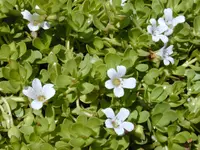
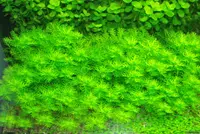
Water hyssop, Bacopa monnieri, is a small, creeping aquatic or semi-aquatic herb often grown at pond edges, in wetlands, or in aquariums. It forms low mats of fleshy, bright green leaves and produces small, pale blue to white flowers. Native to warm, marshy areas in Asia, Africa, and the Americas, it thrives in consistently moist or shallowly submerged conditions. Gardeners value it for its tolerance of wet soils and its ability to spread and cover bare, boggy ground. For those who want to care for Water Hyssop successfully, provide ample moisture, soft light, and nutrient-rich, mud-like or very damp soil.

Care Difficulty
Moderate Care

Light Preference
Partial Sun

Water Requirements
Aquatic

Temperature Preference
Tropical / Frost Sensitive

Hardiness Zone
8–11

Soil Texture
Sandy, Loamy, Silty

Soil pH
Acidic (5.5–6.5), Slightly acidic (6.5–7.0)

Soil Drainage
Waterlogged tolerant

Fertilization
Light (every 4–6 weeks)
Scan your plant to receive care tips personalized for your specific plant
Available on iOS and Android
Bacopa monnieri thrives with consistent light that supports lush, compact growth.
This semi-aquatic species prefers constantly moist to saturated conditions, not intermittent drying.
This plant prefers warm, frost-free conditions for steady vegetative growth.
This semi-aquatic herb prefers consistently high humidity to match its natural wetland habitat.
This species thrives in saturated, fine-textured substrates rather than typical potting soil.
This species is very suitable for container culture, especially in water gardens, bog pots, and shallow trays.
Bacopa monnieri benefits from light, consistent feeding during active growth but does not require heavy fertilization.
Pruning supports compact, leafy growth and continuous flowering in Bacopa monnieri.
This species transplants well when handled gently and kept consistently moist before and after the move.
Bacopa monnieri is commonly multiplied from vegetative pieces rather than seed for consistent growth and quality.
This plant is frost sensitive and needs specific winter care in regions with cold winters.

Plant Health Check
Not sure what's wrong with your plant? Check your plant's health inside the app.
This species is a true amphibious plant that can grow fully submerged, partially submerged, or in very wet soil, forming creeping mats along shorelines and shallow water. Its small fleshy leaves help it tolerate long periods under water without rotting.
Although often found in freshwater, this plant is naturally halophytic, meaning it can tolerate brackish and mildly saline conditions. It colonizes coastal marshes and estuaries where many other freshwater species cannot survive.
Native to wetlands of South Asia, this species has spread across tropical and warm-temperate regions on multiple continents. It now occurs in parts of the Americas, Africa, Australia, and Southeast Asia, often following rice cultivation and other water-based agriculture.

The species has been studied as a bioindicator plant because its tissues can accumulate heavy metals from the water, which allows researchers to monitor contamination levels in wetlands and agricultural waterways.
This species spreads by creeping stems and rooting nodes, forming dense mats in consistently wet or shallow-water sites. In small ponds or bog gardens, it can become dominant, so regular thinning and defined planting areas are recommended.
Keep your plants happy and healthy with plant identification, disease detection, and easy care guidance.