aji Care (Capsicum chinense)

Also known as: aji pepper, yellow lantern pepper, yellow lantern chili, fatalii pepper, Chinese capsicum
aji

About aji

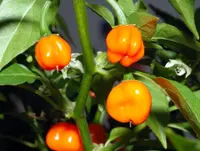
Aji usually refers to a group of hot peppers in the species Capsicum chinense, grown as short-lived perennials or annuals in home gardens. Plants form a bushy habit with many side branches and hang small, elongated or wrinkled fruits in various colors.

In the wild, related forms occur in tropical regions of the Americas, but most aji peppers in cultivation are bred selections. They are moderately demanding because they need steady warmth, strong light, and enough time to mature fruit.

They respond best to bright sun, free-draining soil, and consistent but not excessive moisture. Understanding how to care for aji early in the season greatly improves flowering and fruit set.

Main Plant Requirements

Care Difficulty

Moderate Care

Light Preference

Full Sun

Water Requirements

Moderate Water

Temperature Preference

Tropical / Frost Sensitive

Hardiness Zone

10–11

Soil Texture

Sandy, Loamy, Organic-rich

Soil pH

Acidic (5.5–6.5), Slightly acidic (6.5–7.0)

Soil Drainage

Moist but well-drained

Fertilization

Moderate (every 2–4 weeks)

Get Personalized Care Plan

Scan your plant to receive care tips personalized for your specific plant

Available on iOS and Android

How to Care for the aji

This heat-loving pepper needs strong, consistent light to flower and fruit well.

  • Provide 6–8 hours of direct sun daily; morning sun plus light afternoon shade is ideal in hot summer regions.
  • Tolerates light partial shade (3–4 hours sun), but fruit set and heat level may drop, especially for aji types.
  • In very intense afternoon sun, use mulch and, if possible, light shade cloth to limit leaf scorch and flower drop in midsummer.

This species prefers evenly moist, well-drained soil that never stays soggy.

  • Water when the top 3–5 cm of soil feels dry, using a slow, deep soak to reach the full root zone.
  • In hot, windy weather, expect more frequent watering; in cool or cloudy periods, allow slightly longer drying between waterings.
  • Signs of excess water include yellowing, limp leaves and blackened roots; curling, dull leaves and dry soil indicate underwatering in Capsicum chinense.

Warm, stable temperatures are essential for strong growth and reliable fruiting.

  • Aim for 70–85°F (21–29°C) by day and 65–75°F (18–24°C) by night for best flowering and pod development.
  • Below 55°F (13°C) growth slows sharply; brief dips to 45–50°F (7–10°C) may be survived but can damage leaves and buds.
  • Plants dislike frost and extreme heat; protect from frost entirely and provide light shade and extra water during 95°F+ (35°C+) heat waves.

This species grows best in moderately humid air but adapts to typical indoor levels if watered consistently.

  • Aim for 40–60% relative humidity; values below 30% combined with heat increase leaf stress.
  • Mildly dry air is tolerated, but tips may brown and flowers may drop if heat and drought coincide.
  • If air is very dry, group plants, place trays with water and stones nearby, or run a small room humidifier during heat waves.

This species needs loose, well-drained, nutrient-rich soil to support strong root and fruit development.

  • Use a mix of roughly 40% peat or coco coir, 40% compost, and 20% perlite or coarse sand for structure and drainage.
  • Target a slightly acidic to neutral pH around 6.0–7.0 to support nutrient availability and stable growth.
  • Improve aeration by avoiding compaction, filling pots loosely, and incorporating chunky materials like perlite or fine bark.
  • Avoid heavy clay, waterlogged spots, or mixes rich in un-decomposed manure, which promote root rot and excess vegetative growth in Capsicum chinense.

This species is well suited to container growing when the pot supports its deep, wide-spreading root system.

  • Select a container at least 25–30 cm deep to prevent root circling and maintain stable moisture between waterings.
  • Choose a heavier material like ceramic or thick plastic to keep tall, fruiting plants from tipping in wind.
  • Elevate the pot on blocks or a stand so drainage holes clear the surface and excess water escapes quickly after irrigation.

Capsicum chinense benefits from consistent but moderate feeding during its active growing season.

  • Use a balanced liquid fertilizer (such as 10-10-10 or 20-20-20) at 1/2 strength every 2–3 weeks once growth is strong.
  • In rich soil, supplement with a thin layer of compost around the root zone instead of frequent liquid feeding.
  • Apply a slow-release granular fertilizer at planting or early spring to support flowering and fruiting in aji types.
  • Reduce feeding to once every 4–6 weeks, or stop entirely, when growth slows in cool weather or winter.

Pruning Capsicum chinense helps manage plant size, light penetration, and fruit production.

  • Best time for structural pruning is late winter to early spring before vigorous new growth starts.
  • Use clean, sharp scissors or bypass pruners to remove dead, diseased, or storm-damaged stems at their base.
  • Thin out crowded interior shoots to improve airflow and light, which can reduce fungal problems and improve fruit set.
  • Lightly tip back excessively long branches to keep a compact, sturdy shape that supports heavy fruit loads.

Capsicum chinense in containers or beds benefits from timely transplanting to maintain healthy root growth.

  • Check for roots circling the pot, emerging from drainage holes, or unexplained slow growth as signals to move up a size.
  • Plan transplanting for late spring after frost risk has passed and soil is consistently above 60°F.
  • Repot container plants about once per year into a pot 2–5 cm wider, using fresh, well-draining mix.
  • Minimize root stress by watering well before and after moving, handling the root ball gently, and shading plants for 2–3 days.

Capsicum chinense is most commonly propagated by seeds for predictable growth and yield.

  • Sow fresh seed indoors 8–12 weeks before the last frost date for warm-season planting.
  • Maintain soil temperatures of 75–85°F, consistent moisture, and bright light to support even germination.
  • Cover seeds lightly with fine mix, keep humidity high with a dome or plastic, and ventilate daily to prevent mold.
  • Stem cuttings can root in warm, humid conditions, but seed-based Capsicum chinense plant care is more reliable for most growers.

Capsicum chinense is frost-sensitive and needs protection in regions with cold winters.

  • In climates below 32°F, grow in containers and move plants indoors before nighttime lows drop near 40°F.
  • Indoors, overwinter in bright light at 60–70°F, watering sparingly to keep soil just barely moist.
  • In mild climates, mulch the root zone with 5–8 cm of organic material to buffer temperature swings.
  • Reduce or stop fertilizing in winter to keep growth slow and conserve plant energy until spring.

Care Tips

Early stem support

Install a sturdy stake or tomato cage when plants are 15–20 cm tall so roots can establish undisturbed and stems stay upright once heavy fruit sets.

Selective fruit thinning

Remove some early or overcrowded fruits with clean pruners to direct energy into fewer pods, which often improves size, wall thickness, and uniform ripening.

Heat stress shading

In climates with intense summer sun, use 30–40% shade cloth during the hottest hours to reduce flower drop and sunscald on developing pods.

Targeted blossom pollination

On still days, gently tap flower clusters or run an electric toothbrush against the main stem to vibrate blossoms and improve pollination and fruit set.

Preventive pest scouting

Inspect the undersides of leaves and growing tips 2–3 times per week for aphids, mites, and thrips, and spot-treat early with insecticidal soap or horticultural oil to protect yield when growing aji outdoors or in containers.

Common Pests and Diseases

Broad mites

This pest feeds on young leaves and shoot tips, causing distorted, hardened, and sometimes bronzed new growth, especially on hot pepper types. Symptoms include cupped leaves, stunted plants, and flowers that fail to set fruit.

Solution

Remove and discard heavily distorted shoot tips, then treat remaining foliage with a sulfur-based miticide or insecticidal soap labeled for mites, repeating according to label. Keep plants spaced for airflow, avoid overhead watering on tender new growth, and isolate any affected plants from healthy Capsicum chinense plant care stock to prevent spread.

Pepper mottle virus

This disease leads to mottled, puckered, or blistered leaves, plant stunting, and reduced fruit size and yield. Symptoms include irregular light and dark green patches on foliage and misshapen pods, which are common in hot pepper cultivars.

Solution

Remove and discard infected plants promptly, including fallen leaves and fruits, to reduce virus sources. Control aphids with yellow sticky traps and targeted insecticidal soap, keep weeds down around the growing area, and avoid handling healthy plants after touching suspect plants without washing hands and tools.

Bacterial leaf spot

This disease causes small, water-soaked spots on leaves that enlarge, turn dark, and may develop a yellow halo, often leading to leaf drop. Fruit can also show raised, scabby lesions that reduce quality.

Solution

Prune and dispose of infected leaves and fruit, and avoid working with plants when foliage is wet. Improve spacing and airflow, water at the soil level, rotate out of pepper and tomato crops for 2–3 years, and use a copper-based bactericide preventively when conditions are warm and humid.

Anthracnose fruit rot

This disease produces sunken, circular lesions on ripening pods that may ooze salmon-colored spore masses in humid conditions. Symptoms include rapid fruit decay, especially on mature, colorful aji-type fruits.

Solution

Collect and discard all infected and fallen fruit, then improve airflow and avoid overhead watering. Mulch the soil to reduce splash, rotate with non-solanaceous crops, and apply an appropriate fungicide labeled for anthracnose on peppers at the first sign of fruit symptoms if conditions remain warm and wet.

Aphids

These insects cluster on tender stems and leaves, sucking plant sap and causing curling, yellowing, and sticky honeydew that can lead to sooty mold. Infestations are often heaviest on new growth and flower stems, reducing vigor and fruit set.

Solution

Spray plants thoroughly with a firm stream of water to dislodge colonies, then follow with insecticidal soap or neem oil, ensuring good coverage of leaf undersides and stems. Encourage natural predators like lady beetles by avoiding broad-spectrum insecticides and manage nearby weeds that can harbor aphid populations when growing aji outdoors or in containers.

Interesting Facts

Caribbean domestication center

Genetic and archaeological evidence indicates that this species was domesticated independently in the Caribbean region, particularly around the Yucatán Peninsula and nearby islands, rather than in the same centers as many other cultivated peppers.

Distinct floral traits

Its flowers are typically small, white to greenish, and often have a characteristic light fragrance and recurved petals, features that help distinguish it from many other domesticated Capsicum species.

Extremely pungent cultivars

Many of the world’s hottest chili cultivars, including habanero-type and ghost-pepper–type lines derived through breeding, trace their extreme pungency to genetic backgrounds within or closely related to this species.

Botan icon

Did you know?

The intense heat in many Capsicum chinense cultivars comes mainly from capsaicinoids concentrated in the placental tissues and inner fruit walls, a chemical defense that deters mammalian herbivores while having little effect on many seed-dispersing birds, which lack the same heat receptors.

FAQs about aji

Yellow leaves usually come from nutrient imbalance, especially low nitrogen or magnesium, or from chronic overwatering that limits root oxygen. Check drainage, let the topsoil dry slightly between waterings, and feed with a balanced fertilizer containing micronutrients.

Grow Healthy Plants with Botan Care

Keep your plants happy and healthy with plant identification, disease detection, and easy care guidance.

Botan plant care app — identify plants on mobile

Explore More Plants