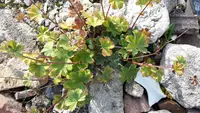
broadleaf wild leek Care (Allium atroviolaceum)

broadleaf wild leek

About broadleaf wild leek

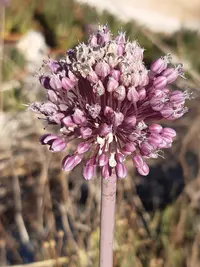
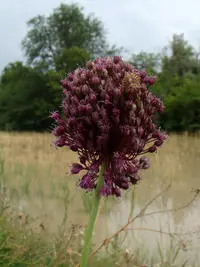
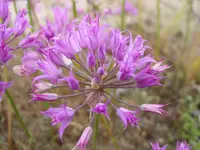
Broadleaf wild leek, Allium atroviolaceum, is a bulb-forming perennial in the onion family, valued for its upright clumps of broad leaves and tall flowering stems. It typically produces spherical, purple to deep violet flower heads that rise above the foliage, giving a strong vertical accent in mixed borders or naturalized areas.

This species is native to parts of southeastern Europe and western Asia, but it is grown ornamentally in many temperate regions. It is generally straightforward to grow where winters are cool enough for bulb dormancy and soils drain well.

It prefers full sun, moderately moist but not waterlogged soil, and benefits from a rest period after flowering, which is important when planning how to care for broadleaf wild leek.

Main Plant Requirements

Care Difficulty

Easy Care

Light Preference

Full Sun

Water Requirements

Moderate Water

Temperature Preference

Cold Hardy

Hardiness Zone

4–9

Soil Texture

Sandy, Loamy, Clay

Soil pH

Slightly acidic (6.5–7.0), Neutral (7.0)

Soil Drainage

Well-drained

Fertilization

Minimal (feed rarely)

Get Personalized Care Plan

Scan your plant to receive care tips personalized for your specific plant

Available on iOS and Android

How to Care for the broadleaf wild leek

This sun-loving bulb thrives in open, bright conditions for strong stems and abundant blooms.

  • Provide 6–8 hours of direct sun daily; morning and midday sun suit flowering, while light afternoon shade helps prevent scorched foliage in hotter regions.
  • Broadleaf wild leek tolerates light partial shade, but flowering density and stem strength decrease if it receives less than about 4–5 hours of direct sun.
  • In cooler climates, full sun all day is ideal; in very hot summers, use filtered light or dappled shade during peak afternoon sun to reduce stress and leaf tip burn.

This bulb prefers evenly moist but not saturated soil, with clear drying periods between waterings.

  • In active growth and flowering, water only when the top 3–5 cm of soil feel dry, focusing on the root zone rather than overhead watering to limit fungal issues.
  • Ensure sharply draining soil; soggy conditions cause yellowing, limp leaves, and bulb rot, while prolonged dryness leads to floppy, browning leaf tips and poor flowering in Allium atroviolaceum.
  • Reduce watering significantly after flowering as foliage dies back; allow soil to dry more deeply between light waterings so dormant bulbs stay firm, not mushy or shriveled.

This hardy bulb tolerates a wide temperature range but responds best to cool to warm conditions.

  • Optimal growth and flowering occur around 55–75°F (13–24°C), typical of cool spring to early summer weather in many temperate regions.
  • Dormant bulbs in the ground usually withstand winter lows down to about 0°F (−18°C) if soil drains well and does not stay waterlogged during freeze–thaw cycles.
  • Established plants handle summer warmth up to about 85–90°F (29–32°C), but prolonged heat above this, combined with drought, speeds foliage dieback and can reduce performance the following year.

This bulb tolerates a wide humidity range and does not usually need special humidity management.

Allium atroviolaceum prefers lean, well-drained soil that prevents waterlogging around the bulbs.

  • Use a sandy or sandy-loam mix with moderate organic matter to keep the structure open and free-draining.
  • Aim for slightly alkaline to neutral pH around 7.0–7.5, avoiding strongly acidic conditions that can weaken growth.
  • Blend coarse sand or fine grit into planting areas to improve aeration and reduce the risk of bulb rot.
  • Avoid heavy clay or compacted soil; if unavoidable, plant on raised beds or mounded rows to improve drainage.

This species is suitable for container growing outdoors when drainage and pot depth are managed carefully.

  • Choose a deep pot, at least 25–30 cm, so bulbs can sit twice their height below the rim with room for roots to extend downward.
  • Use a heavy, stable container material such as ceramic or thick terracotta to prevent tall flowering stems from tipping the pot in wind.
  • Fill the container with a gritty, low-organic mix and slightly elevate the pot on feet so drainage holes stay clear after rain.

This bulb needs only light feeding, as soils rich in organic matter usually provide enough nutrients for broadleaf wild leek.

  • Apply a balanced slow-release fertilizer (around 10-10-10) in early spring as new shoots emerge.
  • Use a low to moderate dose; follow label rates and avoid placing pellets in direct contact with bulbs.
  • Supplement with a thin layer of compost around the clump to support flowering and soil health.
  • Stop feeding after flowering so the plant can enter dormancy naturally without soft, vulnerable growth.

Allium atroviolaceum benefits from simple, seasonal pruning to keep clumps tidy and focus energy on bulbs.

  • In late spring or early summer, deadhead spent flower stalks at the base to limit self-seeding.
  • Remove yellowing or damaged leaves with clean, sharp scissors to reduce disease risk.
  • Leave healthy foliage in place until it naturally withers, allowing energy to return to the bulbs.
  • Avoid heavy cutting during active growth, which can weaken the plant and reduce next year’s blooms.

This ornamental allium is usually grown in the ground, so care focuses on dividing and transplanting crowded clumps.

  • Check for dense, congested bulbs, reduced flowering, or slow growth as signs a clump needs lifting.
  • Divide and transplant every 3–4 years in late summer to early fall, after foliage has died back.
  • Lift bulbs gently with a fork, separate offsets by hand, and discard any soft or diseased material.
  • Replant at the same depth in well-drained soil, water lightly, and avoid heavy disturbance while roots resettle.

This species is most commonly propagated by bulb division, with seed used when larger numbers or breeding are desired.

  • Lift mature clumps in late summer when foliage is fully dormant, then separate firm offsets from parent bulbs.
  • Replant divisions at the same depth, spacing them 10–15 cm apart in free-draining soil.
  • For seed, sow fresh in pots outdoors, allowing natural cold stratification over winter.
  • Keep seed pots evenly moist, not waterlogged, and prick out seedlings once they have a few true leaves.

This hardy bulb generally needs minimal winter care in most temperate climates.

  • Allium atroviolaceum tolerates typical garden frosts once established in well-drained soil.
  • Apply a light mulch layer in late fall in colder regions to buffer freeze–thaw cycles around the bulbs.
  • Avoid heavy, wet mulches directly on top of planting sites to reduce the risk of rot.

Care Tips

Staggered Bulb Planting

Plant bulbs in small groups at slightly different depths (about 1–2 cm variation) to create a longer, more natural flowering period and reduce the chance that a single late frost damages all emerging shoots at once.

Use Low Support Rings

Install low, unobtrusive support rings or short wire grids around clumps in early spring so tall, heavy flower stems stay upright in wind and rain without needing to be tied individually.

Mark Dormant Positions

After foliage dies back, mark bulb locations with durable labels or stones so you do not accidentally damage bulbs during soil cultivation or seasonal planting nearby.

Lift And Divide Clumps

Every 3–5 years, lift and divide overcrowded clumps after foliage has yellowed, replanting only the firm, healthy bulbs to maintain strong flowering and reduce disease buildup in the soil.

Targeted Pest Monitoring

Check foliage and developing buds weekly in spring for onion fly larvae and leaf miners, removing and discarding affected leaves or stems promptly to keep pest populations low when caring for broadleaf wild leek.

Common Pests and Diseases

Allium leaf miner

This pest causes winding, pale tunnels in leaves and can stunt flowering stems. Symptoms include wilting foliage and small pupae or larvae inside hollowed leaves and stems.

Solution

Remove and destroy affected leaves and flower stalks promptly, and avoid composting them. Use fine insect mesh over plants during the adult fly flight periods, and rotate planting areas each year to reduce overwintering populations in the soil.

Leek moth

This pest creates translucent windows and ragged holes in leaves, with greenish caterpillars and frass often found inside folded or mined foliage. Repeated damage weakens bulbs and reduces flowering.

Solution

Hand-remove and destroy mined leaves and visible larvae, especially early in the season. Use floating row covers at night, encourage natural predators by avoiding broad-spectrum insecticides nearby, and tidy plant debris at season’s end to reduce overwintering sites.

Downy mildew

This disease causes pale yellow patches on leaves that develop into gray-purple, fuzzy growth, especially in cool, humid weather. Affected foliage often collapses early, which weakens bulbs and reduces bloom quality.

Solution

Improve air circulation, avoid overhead watering, and water early in the day so foliage dries quickly. Remove and discard infected leaves, and if the problem persists, apply a labeled copper- or phosphonate-based fungicide as a preventative during extended cool, damp periods.

Rust

This disease produces orange to brown powdery pustules on leaves and scapes, often surrounded by yellowing tissue. Severe infections reduce photosynthesis and can cause premature dieback of foliage before bulbs have stored enough energy.

Solution

Remove and discard heavily infected leaves to reduce spore spread, and avoid crowding plants so foliage dries faster. Water at soil level, not over the leaves, and in recurrent cases rotate planting sites and use a sulfur or copper fungicide labeled for rust on Allium if cultural steps are not sufficient.

Onion thrips

These insects rasp leaf surfaces, leading to silvery streaks, tiny black specks of frass, and general loss of vigor. Heavy infestations can distort foliage and diminish flower production.

Solution

Rinse foliage with a firm stream of water to dislodge thrips, focusing on leaf bases and folds, and remove heavily damaged leaves. Use reflective mulches or sticky traps to reduce populations, and if needed apply insecticidal soap or neem oil, ensuring thorough coverage of both sides of the leaves.

Interesting Facts

Origin in Southwest Asia

This ornamental allium is native to parts of Southwest Asia, including Iran and surrounding regions, where it grows in dry, open habitats and steppe-like grasslands.

Distinctive dark umbels

Its flower heads form dense, spherical umbels of many small, dark purple to violet florets on tall, leafless stalks, a feature that makes it popular in cut flower production and dried floral arrangements.

Bulb and leaf timing

The strap-like leaves emerge in spring and usually begin to yellow and wither by the time the flower stalks reach full bloom, a typical seasonal pattern in many ornamental onions but quite pronounced in this species.

Botan icon

Did you know?

The species has become naturalized in some parts of Europe, including the Balkans and central Europe, where it can occasionally be found outside cultivation along disturbed sites, roadsides, and field margins.

FAQs about broadleaf wild leek

This species spreads slowly by bulbs and sometimes self-seeding. In typical garden conditions it forms clumps rather than taking over. In very light soils, lifting and dividing bulbs every few years keeps it contained.

Grow Healthy Plants with Botan Care

Keep your plants happy and healthy with plant identification, disease detection, and easy care guidance.

Botan plant care app — identify plants on mobile

Explore More Plants