Flowering shear timing
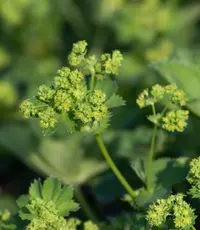
Deadhead spent flower stems as soon as the lime-yellow blooms fade, cutting back to just above a strong leaf to encourage a compact mound and reduce self-seeding into surrounding beds.

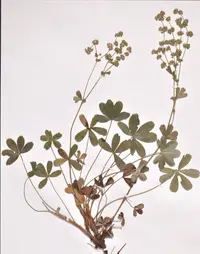
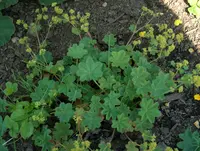
Alchemilla transiens is a small, clumping perennial herb in the rose family, related to the more familiar lady’s mantle. It typically forms low mounds of soft, rounded, lobed leaves that catch dewdrops along their edges, creating a subtle but attractive effect in the garden.
This species is native to parts of Europe, where it grows in cooler climates, often in meadows and open, grassy places. It is generally undemanding, tolerating a range of soils if drainage is reasonable and moisture is consistent.
Gardeners who care for Alchemilla transiens usually find it straightforward, as it copes well with partial sun, moderate moisture, and average garden soils without complex maintenance needs.

Care Difficulty
Easy Care

Light Preference
Partial Shade

Water Requirements
Moderate Water

Temperature Preference
Cold Hardy

Hardiness Zone
4–7

Soil Texture
Loamy, Silty, Organic-rich

Soil pH
Acidic (5.5–6.5), Slightly acidic (6.5–7.0)

Soil Drainage
Moist but well-drained

Fertilization
Minimal (feed rarely)
Scan your plant to receive care tips personalized for your specific plant
Available on iOS and Android
This perennial prefers cool, soft light rather than strong, direct exposure.
This plant prefers consistently moist but not waterlogged soil.
This hardy perennial tolerates a wide range of outdoor temperatures in temperate climates.
This species handles typical outdoor humidity but benefits from slightly moist air in hot, dry sites.
Alchemilla transiens prefers moist, well-drained, moderately fertile soil with a crumbly structure.
This species is suitable for container growing in cool to mild climates.
This species is generally low maintenance and only needs light feeding in modest garden soils.
Light pruning maintains a tidy clump and supports fresh foliage and flowering.
This plant is most often grown in the ground, so focus on dividing and transplanting mature clumps.
Propagation is commonly done by division, with seed used when larger numbers are needed.
This hardy perennial usually needs minimal winter attention in most temperate climates.

Plant Health Check
Not sure what's wrong with your plant? Check your plant's health inside the app.
Alchemilla transiens is considered a nothospecies, meaning it likely arose through natural hybridization between closely related Alchemilla species, which is reflected in its intermediate leaf and fruit characters.
This species has a relatively restricted natural range in parts of Central and Eastern Europe, where it occurs in scattered, often localized populations rather than being broadly widespread.
A. transiens typically grows in cooler, upland or montane grasslands and meadows, where it benefits from relatively moist but well-drained soils and open light conditions compared with woodland Alchemilla species.
This species forms slowly expanding clumps through short rhizomes and self-seeding. It is not usually aggressive in typical garden conditions, but seedlings may appear nearby and can be thinned easily if space is limited.
Keep your plants happy and healthy with plant identification, disease detection, and easy care guidance.