Control Spreading
Grow this plant in a large nursery pot or pond basket sunk into the ground or water to limit aggressive rhizome spread and make future division and relocation easier.

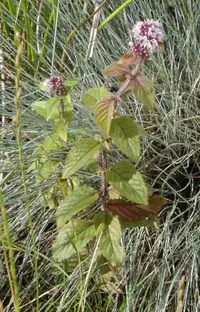
Water mint, Mentha aquatica, is a vigorous perennial herb in the mint family, adapted to wet soils and shallow water. It naturally grows along streams, ponds, and marshy ground across Europe and parts of Asia and Africa.
Plants form dense clumps with square stems, aromatic leaves, and summer flower heads that attract many pollinators. It spreads readily by runners, which makes it useful for naturalistic water edges but requires some control in small spaces.
This species is generally easy to grow if given consistently moist to wet conditions, moderate light, and humus-rich soil, and these traits shape how to care for water mint.

Care Difficulty
Easy Care

Light Preference
Partial Sun

Water Requirements
Aquatic

Temperature Preference
Cold Hardy

Hardiness Zone
5–9

Soil Texture
Loamy, Silty, Organic-rich

Soil pH
Acidic (5.5–6.5), Slightly acidic (6.5–7.0)

Soil Drainage
Waterlogged tolerant

Fertilization
Minimal (feed rarely)
Scan your plant to receive care tips personalized for your specific plant
Available on iOS and Android
This moisture-loving mint prefers bright, gentle light rather than intense heat.
This species is adapted to consistently wet conditions and does not tolerate drying out.
This hardy mint grows best in mild to warm conditions but tolerates a wide temperature range.
This aquatic mint prefers very moist air and thrives in consistently high humidity.
This species prefers saturated, organic-rich soil that mimics shallow pond margins or bog edges.
This species is well suited to container growing, especially in water gardens, ponds, and wet pots.
This moisture-loving mint responds well to modest feeding during the active growing season.
Pruning helps keep Mentha aquatica dense, aromatic, and within bounds.
Transplanting or dividing this vigorous mint keeps growth healthy and prevents overcrowding.
Mentha aquatica is commonly multiplied by division and stem cuttings.
This hardy mint tolerates typical temperate winters with minimal intervention once established.

Plant Health Check
Not sure what's wrong with your plant? Check your plant's health inside the app.
This species develops aerenchyma, a spongy tissue with air spaces in its roots and stems, which allows oxygen to move from the shoot into submerged parts so it can live in saturated or shallowly flooded soils that would suffocate many other herbs.
Water mint is one of the parent species of Mentha × piperita (peppermint), which arose as a natural hybrid between water mint and spearmint and is now widely cultivated for its aromatic oils.
Dense patches in slow-moving streams and pond margins provide shelter and egg-laying sites for aquatic and semi-aquatic insects, including some hoverflies whose larvae live in the surrounding water and mud.

In several European countries, water mint is used as a traditional indicator of good or improving freshwater quality, because it tends to decline in heavily polluted or strongly channelized streams but often returns when natural banks and cleaner conditions are restored.
This species spreads quickly through creeping rhizomes and self-seeding, especially in wet soil. It can become dominant in small ponds or beds, so use containers, edging, or regular division to keep growth under control.
Keep your plants happy and healthy with plant identification, disease detection, and easy care guidance.