Wind-shelter planning
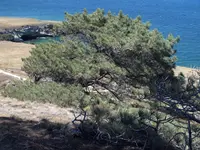
Site young plants near a windbreak or add a temporary fence or shade cloth screen for the first 2–3 years to reduce wind stress and leaf scorch while roots establish.

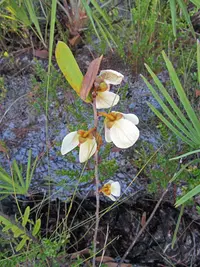
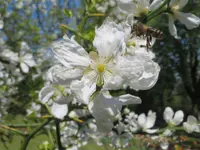
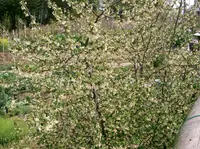
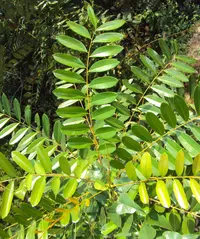
Bigflower pawpaw, Asimina obovata, is a small deciduous tree or large shrub in the custard apple family, native to sandy woodlands of the southeastern United States. It usually forms an open, multi-stemmed shape with leathery, obovate leaves and large, creamy white flowers that are showy at close range.
This species thrives in well-drained, slightly acidic soils and prefers bright filtered light or light shade, similar to its woodland edge habitat. Once established, it is moderately drought tolerant but grows best with steady moisture, which influences how easy it feels to care for bigflower pawpaw.

Care Difficulty
Moderate Care

Light Preference
Partial Shade

Water Requirements
Regular Water

Temperature Preference
Warm Climate

Hardiness Zone
8–10

Soil Texture
Sandy, Loamy, Organic-rich

Soil pH
Acidic (5.5–6.5), Slightly acidic (6.5–7.0)

Soil Drainage
Moist but well-drained

Fertilization
Minimal (feed rarely)
Scan your plant to receive care tips personalized for your specific plant
Available on iOS and Android
This species prefers bright, gentle light similar to an open woodland edge.
Asimina obovata grows best in evenly moist, well‑drained soil that never stays waterlogged.
This pawpaw is a temperate species that handles winter cold yet prefers warm growing seasons.
Humidity plays a minor role for Asimina obovata, which is adapted to typical outdoor air in much of the US.
Asimina obovata prefers moist, well-aerated, slightly acidic to neutral soil that stays evenly damp but never waterlogged.
This species can be grown in containers for the first years, but it is challenging long term due to its deep root system.
Asimina obovata is a slow-growing native tree that needs only light, targeted feeding in average garden soil.
Asimina obovata benefits from minimal structural pruning focused on safety and plant health.
This taprooted tree is sensitive to disturbance, so transplant Asimina obovata only when clearly needed and while still young.
Reproduction of Asimina obovata is usually done from seed, but it is slow and requires attention to dormancy-breaking conditions.
This species is generally cold hardy in its native range and usually needs little special winter care once established in the ground.

Plant Health Check
Not sure what's wrong with your plant? Check your plant's health inside the app.
This species is native to central and northern Florida, where it is closely associated with well-drained, sandy scrub and sandhill habitats that experience periodic fire and drought.
It produces relatively large, creamy white to pale yellow flowers that are unusual within the pawpaw group, contrasting with the darker maroon or purple flowers of many related Asimina species.
As a member of the Annonaceae family, it serves as a larval host plant for the zebra swallowtail butterfly, whose caterpillars feed specifically on Asimina species in their native range.

Asimina obovata forms fleshy, pawpaw-like fruits that are important seasonal food for wildlife such as raccoons and other mammals in Florida scrub ecosystems, aiding seed dispersal in these nutrient-poor sandy soils.
Growth is moderate. In suitable outdoor conditions, this species typically adds 20–40 cm per year and may reach about 3–6 m tall with a similar spread over many years, forming a small understory tree.
Keep your plants happy and healthy with plant identification, disease detection, and easy care guidance.