Early structural training
In the first 2–3 years, remove competing leaders and select a single straight trunk, tying it loosely to a sturdy stake to promote a strong central leader and wind-resistant structure.

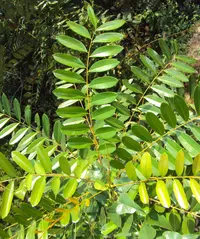
Paradisetree, Simarouba glauca, is a fast-growing evergreen tree valued for its upright, open canopy and glossy, divided leaves. It typically grows with a straight trunk and a light, airy crown.
This species is native to tropical regions of the Americas, especially Central America and the Caribbean, and is often used in reforestation and agroforestry projects. Its deep root system and drought tolerance make it relatively resilient once established.
For home growers, it suits warm climates and larger outdoor spaces more than small gardens or containers. It prefers full sun, well-drained soil, and moderate moisture. Understanding these basic needs helps clarify how to care for paradisetree in suitable regions.

Care Difficulty
Easy Care

Light Preference
Full Sun

Water Requirements
Moderate Water

Temperature Preference
Tropical / Frost Sensitive

Hardiness Zone
10–12

Soil Texture
Sandy, Loamy, Organic-rich

Soil pH
Acidic (5.5–6.5), Slightly acidic (6.5–7.0)

Soil Drainage
Well-drained

Fertilization
Minimal (feed rarely)
Scan your plant to receive care tips personalized for your specific plant
Available on iOS and Android
Simarouba glauca prefers strong light in warm climates and performs best with direct sun exposure.
Simarouba glauca prefers moderately moist but sharply drained soil, especially while young.
This species is a tropical tree that prefers consistently warm conditions and does poorly in cold climates.
Humidity is not a critical factor for Simarouba glauca, which adapts well to typical household and outdoor conditions.
Simarouba glauca prefers light, well-structured soil that drains quickly yet retains moderate moisture.
This species can be grown in containers when managed as a small tree or shrub.
Simarouba glauca benefits from light, balanced feeding to support steady growth, especially in poorer soils.
Pruning Simarouba glauca focuses on structural shaping and removal of weak or unhealthy growth.
Paradisetree is usually field-grown, so care centers on transplanting young trees rather than long-term container culture.
New Simarouba glauca plants are most commonly raised from seed, with attention to warmth and moisture.
This tropical tree is frost sensitive and needs protection in regions with cold winters.

Plant Health Check
Not sure what's wrong with your plant? Check your plant's health inside the app.
The bark and seeds contain quassinoids, a group of intensely bitter compounds that several studies have shown to have insecticidal and anti-feedant effects against crop pests.
This species develops a deep root system and relatively small, thick leaflets, which help it maintain a dense evergreen canopy and remain productive under semi-arid and seasonally dry tropical conditions.
The seeds yield a non-edible oil used experimentally for soap, lubricant, and biodiesel production, while the seed cake, after oil extraction, is studied as a soil amendment and organic input in agriculture.

Simarouba glauca has been widely promoted in parts of India and Central America as a candidate tree for rehabilitating degraded, lateritic, and erosion-prone soils because its litter and root system gradually improve soil structure and organic matter content over time.
Container culture is possible while the plant is young, using a deep, heavy pot and well‑drained mix. Root growth is vigorous, so expect to up‑pot regularly and eventually plant it in the ground for long‑term health.
Keep your plants happy and healthy with plant identification, disease detection, and easy care guidance.