Carolina Hemlock Care (Tsuga caroliniana)

Carolina Hemlock

About Carolina Hemlock

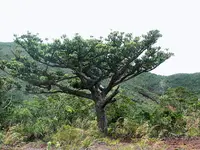
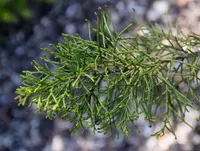
Carolina hemlock, Tsuga caroliniana, is an evergreen conifer native to the Appalachian Mountains of the eastern United States. It forms a narrow, pyramidal tree with finely textured, dark green needles arranged in dense sprays.

This species prefers cool, humid climates, sheltered sites, and well-drained, acidic soil. It grows slowly and can be sensitive to heat, drought, compacted soil, and air pollution, which can make it challenging in urban landscapes.

Understanding how to care for Carolina Hemlock starts with matching its natural woodland conditions as closely as possible, especially protection from drying winds and prolonged summer stress.


Main Plant Requirements

Care Difficulty

Moderate Care

Light Preference

Partial Shade

Water Requirements

Regular Water

Temperature Preference

Cold Hardy

Hardiness Zone

6–7

Soil Texture

Loamy, Sandy, Organic-rich

Soil pH

Strongly acidic (4.5–5.5), Acidic (5.5–6.5)

Soil Drainage

Moist but well-drained

Fertilization

Minimal (feed rarely)

Get Personalized Care Plan

Scan your plant to receive care tips personalized for your specific plant

Available on iOS and Android

How to Care for the Carolina Hemlock

This species thrives in cool, bright conditions with protection from harsh midday sun.

  • Provide 3–5 hours of morning sun with light shade or dappled light in the afternoon, similar to an open woodland edge.
  • Carolina Hemlock tolerates partial shade but becomes thin and sparse if grown in dense shade under large trees.
  • In hot summers, shield from strong afternoon sun to prevent needle scorch; young trees benefit from temporary shade cloth during the first 2–3 years.

Tsuga caroliniana prefers consistently moist, cool soil that is never waterlogged.

  • Aim for soil that feels evenly moist; the top 2–5 cm should not stay bone dry or muddy for long periods.
  • Use deep, infrequent soaking, allowing excess water to drain freely; avoid compacted or heavy clay that holds water around the roots.
  • Increase watering during hot, dry spells and reduce in cool, wet seasons; drooping, dull needles often indicate underwatering, while yellowing and dieback can signal root rot from excess moisture.

This conifer is cold hardy but grows best in cool, temperate climates with moderate summers.

  • Optimal growth occurs around 55–75°F (13–24°C), especially when nights are cooler and soil stays evenly moist.
  • Mature trees tolerate winter lows near -10°F (-23°C), but young plants benefit from mulch to buffer rapid freeze–thaw cycles.
  • Heat over 85°F (29°C), especially with dry wind, can stress foliage; provide extra water and light shade in prolonged hot spells to reduce scorch risk.

This conifer prefers cool, moderately moist air but adapts to typical outdoor ranges.

  • Aim for 40–60% humidity in sheltered garden sites, avoiding hot, exposed, windy positions that dry needles quickly.
  • Tolerates short spells of drier air, but persistent dryness plus heat causes needle browning and tip dieback.
  • Increase local humidity outdoors by using organic mulch over the root zone and planting away from heat-reflecting walls or pavement.

Tsuga caroliniana performs best in cool, moist, well‑drained, acidic soil with high organic content.

  • Use a loamy soil rich in leaf mold or compost, with some coarse sand or fine bark to keep the structure open.
  • Target a slightly acidic pH of 5.0–6.5; avoid liming unless a soil test shows strong acidity below this range.
  • Improve drainage and aeration on heavier sites by incorporating 20–30% coarse sand or fine pine bark into the planting backfill.
  • Do not plant in compacted clay, standing water, or very shallow, drought-prone substrates that dry hard between rains.

This species is only moderately suitable for container growing and is best kept in large, stable outdoor pots for limited years.

  • Choose a deep, heavy container that resists tipping as the plant gains height and develops a fibrous root mass.
  • Use a free‑draining, bark‑based potting mix that stays evenly moist but never waterlogged to prevent root decline.
  • Position the container where wind exposure is reduced, since roots are more prone to temperature swings and desiccation above ground.

Feed Carolina Hemlock lightly, as this species naturally thrives in nutrient-moderate soils.

  • Apply a balanced slow-release fertilizer (around 10-10-10) once in early spring if growth is weak or foliage pale.
  • Use compost or leaf mold as a thin top-dressing to support soil life rather than heavy feeding.
  • Dilute any liquid fertilizer to 1/2–1/4 strength to avoid salt buildup and root burn.
  • Avoid feeding from late summer through winter to prevent tender growth that may suffer cold damage.

Pruning Tsuga caroliniana is usually light and focused on maintaining health and natural form.

  • Plan any structural pruning for late winter to early spring before new growth starts.
  • Remove dead, diseased, or storm-damaged branches first, cutting back to healthy wood with clean bypass pruners or a sharp saw.
  • Thin lightly crowded interior branches to improve air movement without exposing inner foliage too suddenly.
  • Limit tip shortening; follow the natural outline so growth remains dense and the tree keeps its characteristic shape.

Tsuga caroliniana is best transplanted young, as older trees resent root disturbance.

  • Look for roots circling the pot, water running straight through, or slowed growth to decide when container plants need a larger space.
  • Plan transplanting for early spring or early fall, aiming for mild temperatures and consistent soil moisture.
  • Shift up container plants every 2–3 years at most, choosing only 1–2 in wider pots with well-drained, slightly acidic mix.
  • Reduce root stress by watering deeply before and after planting, handling the root ball gently, and mulching to keep roots cool and moist.

Propagation of Tsuga caroliniana is possible but slow and best suited to patient growers.

  • Use semi-ripe cuttings in late summer, taking 7–10 cm shoot tips with a heel of older wood.
  • Dip bases in rooting hormone and place in a sharply drained, slightly acidic medium under high humidity and bright shade.
  • Sow fresh seed in fall in pots outdoors for natural cold stratification, using a free-draining mix.
  • Keep both cuttings and seed pots evenly moist but never waterlogged, and expect rooting or germination to take many months.

This species is cold hardy in much of its range and usually needs only modest winter care once established.

  • In cold regions, apply a 5–8 cm mulch layer over the root zone, keeping mulch a few cm away from the trunk flare.
  • Shield young or container plants from harsh winter wind with a burlap screen to limit desiccation.
  • Move containers to a sheltered, unheated location where roots stay above about 15°F and soil does not freeze solid.

Care Tips

Protect From Salt

Site trees well away from salted roads, driveways, and walkways, since salt spray and runoff quickly scorch needles and weaken roots; if exposure is unavoidable, use physical barriers and flush soil in spring with deep, clean watering to dilute accumulated salts.

Mulch For Cool Roots

Maintain a 5–8 cm layer of composted bark or wood chips over the root zone, keeping mulch a few cm away from the trunk, to keep roots cool, conserve moisture, and reduce weed competition without creating trunk rot.

Monitor Hemlock Woolly Adelgid

Inspect undersides of twigs every late winter and early spring for white, cottony dots; if found, consult a local arborist about systemic treatments, since early intervention greatly improves long‑term success when growing Carolina Hemlock.

Wind Protection Planning

In exposed sites, plant on the leeward side of buildings or windbreaks and use temporary shade or wind cloth for the first 2–3 years to reduce winter desiccation and needle burn while the root system establishes.

Avoid Root Disturbance

Keep construction, soil grading, and heavy foot traffic outside the drip line, and install any needed irrigation or edging before planting, since even moderate trenching or compaction in the rooting zone can stunt growth or cause decline over several years.

Common Pests and Diseases

Hemlock woolly adelgid

This pest feeds on stored sap at the base of needles, causing needle yellowing, premature needle drop, and branch dieback; white cottony masses are visible along the undersides of twigs. Infestations can be lethal over several years if unmanaged, especially in stressed trees.

Solution

Treat light infestations with thorough sprays of horticultural oil, coating the undersides of twigs in late winter or early spring before new growth, and repeat as needed according to label directions. For high‑value landscape trees, consider a systemic insecticide applied by a licensed professional and reduce plant stress with proper watering and mulch to support overall Tsuga caroliniana care instructions.

Elongate hemlock scale

These insects attach to the undersides of needles, forming brownish, oyster‑shaped scales that cause chlorotic (yellow) mottling, needle drop, and overall thinning of the canopy. Symptoms include a dull, off‑color appearance and needles that fall earlier than normal.

Solution

Prune and destroy heavily infested branches to reduce scale populations and improve light penetration into the canopy. Use horticultural oil or labeled systemic products timed to crawler emergence, and maintain tree vigor through correct watering and avoiding excessive nitrogen fertilization, which can favor scale outbreaks.

Hemlock needle rust

This disease is caused by a rust fungus that produces pale yellow spots on needles, followed by orange to yellow pustules on the needle undersides. Symptoms include premature needle drop and a thin, sparse crown on affected branches.

Solution

Remove and destroy severely affected branches to reduce spore sources and improve airflow within the canopy. Avoid overhead irrigation, space trees to increase air movement, and where disease pressure is high on valuable specimens, use a labeled fungicide applied preventively in early spring according to local extension recommendations.

Armillaria root disease

This disease is caused by Armillaria fungi that attack roots and lower stems, leading to crown thinning, yellowing foliage, and gradual decline or sudden death, especially in stressed or poorly sited trees. Symptoms include white fungal mycelium under the bark at the root collar and sometimes clusters of honey‑colored mushrooms at the base in fall.

Solution

Expose and keep the root collar area dry and well aerated, remove severely infected trees including as much of the stump and major roots as possible, and avoid replanting another hemlock in the same exact spot. Improve site drainage, avoid overwatering and soil compaction, and choose the healthiest possible planting stock to lower the risk of infection.

Interesting Facts

Restricted Appalachian range

This species is native to a narrow band of the southern Appalachian Mountains, mainly in North Carolina, Tennessee, Virginia, South Carolina, and Georgia, where it grows on dry, rocky ridges rather than the moist ravines preferred by eastern hemlock.

High genetic vulnerability

Populations are small, scattered, and genetically isolated, which makes the species especially vulnerable to stresses such as the hemlock woolly adelgid, climate change, and habitat disturbance.

Distinctive cone and needle form

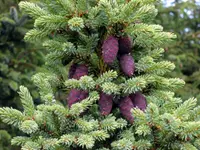
Compared with eastern hemlock, it has slightly larger, more cylindrical seed cones and stiffer, more prominently two-ranked needles, which help trained observers distinguish it in mixed conifer stands.

Botan icon

Did you know?

Carolina hemlock is considered globally vulnerable by major conservation assessments because of its very limited distribution and rapid decline from hemlock woolly adelgid infestations, and some of the remaining stands are now managed as high-priority conservation sites to preserve its unique genetic lineage.

FAQs about Carolina Hemlock

Brown foliage usually results from drought stress, winter windburn, road salt, or root problems. Check soil moisture, mulch the root zone, shield from harsh winter winds, and avoid de-icing salt near the planting area.

Grow Healthy Plants with Botan Care

Keep your plants happy and healthy with plant identification, disease detection, and easy care guidance.

Botan plant care app — identify plants on mobile

Explore More Plants