Scrub Kauri Care (Agathis ovata)

Scrub Kauri

About Scrub Kauri

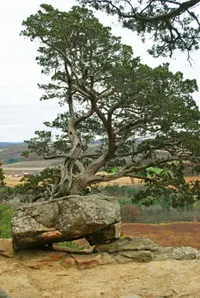
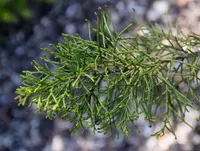
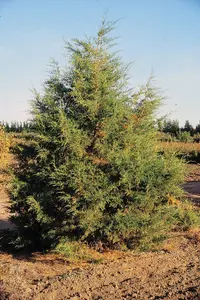
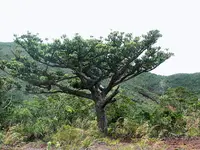
Scrub kauri (Agathis ovata) is a slow-growing coniferous tree from New Caledonia, valued for its compact size and distinctive, rounded crown. Young plants often have dense, bushy growth with stiff, glossy, dark green leaves that create a formal, architectural look.

In nature it grows on poor, often rocky soils and in exposed sites, which makes it relatively tolerant of wind and less-than-ideal ground conditions. It prefers mild climates, steady moisture without waterlogging, and well-drained, slightly acidic soil.

Its slow growth, eventual large size, and need for consistent conditions mean it suits patient growers with space outdoors or very bright, cool conservatories. Understanding how to care for Scrub Kauri helps it remain healthy over many years.

Main Plant Requirements

Care Difficulty

Hard Care

Light Preference

Partial Shade

Water Requirements

Regular Water

Temperature Preference

Tropical / Frost Sensitive

Hardiness Zone

11–12

Soil Texture

Sandy, Loamy, Organic-rich

Soil pH

Strongly acidic (4.5–5.5), Acidic (5.5–6.5)

Soil Drainage

Moist but well-drained

Fertilization

Minimal (feed rarely)

Get Personalized Care Plan

Scan your plant to receive care tips personalized for your specific plant

Available on iOS and Android

How to Care for the Scrub Kauri

This species prefers bright outdoor conditions with protection from harsh midday sun.

  • Provide 4–6 hours of morning sun with light shade or dappled light in early afternoon, especially in warmer climates.
  • Allow taller shrubs or trees to cast partial shade during the hottest part of the day to prevent leaf scorch and pale, dry foliage.
  • In cooler seasons, ensure more open exposure so Scrub Kauri receives enough light; sparse, elongated shoots indicate it needs a brighter site.

This conifer prefers evenly moist, well-drained soil without long periods of saturation.

  • Water when the top 3–5 cm of soil feel dry, aiming for deep soaking rather than frequent light sprinkling to encourage a strong root system.
  • Use free-draining, slightly gritty soil so water moves through within a few seconds; persistent puddling or a sour smell suggests overwatering and poor drainage.
  • Reduce watering in cooler months, watching for drooping, dry tips as a sign of drought stress and yellowing, soft foliage as a sign of excess moisture in Agathis ovata.

This species thrives in mild, frost-free climates with stable temperatures.

  • Aim for 65–80°F (18–27°C) during active growth, as this range supports steady shoot and root development without heat stress.
  • Protect from cold below 40°F (4°C); brief dips to 32°F (0°C) may be tolerated, but repeated frost can damage young shoots and buds.
  • In hot spells above 86°F (30°C), provide mulch to keep roots cooler and light afternoon shade to limit foliage stress and moisture loss.

This species prefers moderate humidity but adapts to typical indoor levels if not kept too warm.

  • Aim for 40–60% humidity, avoiding hot, stagnant rooms where leaves may desiccate at the edges.
  • Tolerates short dry spells, but persistent dry air causes browning tips and a dull, papery leaf surface.
  • Increase humidity with a nearby open tray of water and stones or by grouping Scrub Kauri with other plants, not by misting heavily.

This conifer prefers deep, well‑drained, slightly acidic, moisture-retentive soil with plenty of air spaces around the roots.

  • Use a mix of roughly 50% loam-based compost, 25% fine bark, and 25% coarse sand or perlite for structure and drainage.
  • Keep pH slightly acidic to neutral, around 5.5–7.0, avoiding strongly alkaline mixes that can restrict nutrient uptake.
  • Ensure the mix drains freely yet holds moisture; water should pass through within seconds without pooling on the surface.
  • Avoid heavy clay, compacted ground, or peat-only mixes, which can either suffocate roots or swing rapidly between waterlogged and bone dry.

This tree can be grown in containers for many years if managed as a slow, compact specimen.

  • Choose a tall, heavy pot to counterbalance the gradually top-heavy crown and reduce tipping in wind.
  • Use a deep container to allow a stronger taproot-like system and prevent circling, shallow roots that dry too fast.
  • Select thicker-walled pots, such as clay or concrete, to buffer temperature swings around the root zone outdoors.

Agathis ovata grows slowly and benefits from light, consistent nutrition rather than heavy feeding.

  • Use a balanced slow-release fertilizer (around 10-10-10) or well-rotted compost mixed into the root zone in spring.
  • Feed young or container-grown Scrub Kauri 1–2 times during the warm growing season only.
  • Apply fertilizers at half the labeled strength to avoid root burn and overly fast, weak growth.
  • Stop feeding in late summer so new growth hardens before cooler weather and dormancy.

Agathis ovata needs minimal pruning, mainly to maintain structure and remove problem branches.

  • Carry out light pruning in late winter or very early spring before active growth resumes.
  • Remove dead, diseased, crossing, or storm-damaged branches back to a healthy lateral or the trunk.
  • Limit cuts to small branches to preserve the natural conical form and steady vertical growth.
  • Use clean, sharp bypass pruners or a pruning saw, disinfecting blades between diseased cuts.

This species is usually grown in the ground; transplanting young plants carefully is more important than frequent repotting.

  • Transplant in late winter or early spring when growth is just starting and temperatures are mild.
  • Look for roots circling the container, slow growth, or the pot drying very fast as signs a move is needed.
  • Shift up infrequently, about every 2–3 years in containers, choosing only 1 size larger each time.
  • Handle the root ball gently, loosen only the outer roots, water thoroughly, then shade and shelter for 1–2 weeks to reduce stress.

Agathis ovata is slow and not commonly propagated at home, and success often requires controlled conditions.

  • Collect fresh seeds and sow in late winter to early spring in a well-drained, sterile seed mix.
  • Provide warm temperatures around 70–75°F, bright but indirect light, and consistently moist, not waterlogged, media.
  • Semi-ripe cuttings taken in late summer can root under high humidity and bottom heat, though rates are typically low.
  • Label batches clearly and allow many months for germination or rooting, discarding any material that shows rot.

This warm-temperate conifer dislikes hard freezes and benefits from basic winter protection in cooler regions.

  • In climates with frost, site plants in a sheltered position with some overhead protection from radiative cooling.
  • Apply a 5–8 cm mulch over the root zone in late fall, keeping it away from direct contact with the trunk.
  • Wrap young trunks with breathable horticultural fleece during forecast freezes to reduce bark and cambium damage.
  • Move container plants indoors or into a frost-free greenhouse when temperatures approach 32°F.

Care Tips

Root space planning

Place young plants in deep, wide containers or ground positions with at least 60–90 cm of clear soil around the base to accommodate the strong, spreading root system and reduce future transplant stress.

Early leader training

Select one straight central leader while the plant is small, remove competing upright shoots in late winter, and use a soft tie to a sturdy stake if necessary to establish a stable future trunk.

Wind exposure management

Shelter young trees from strong, drying winds with temporary windbreak netting or strategic placement behind a hedge or fence to prevent leader snapping and uneven crown development.

Mulch ring establishment

Maintain a 5–8 cm deep ring of coarse organic mulch around the root zone, kept 5–8 cm away from the trunk, to stabilize soil moisture and temperature and to protect delicate surface feeder roots.

Preventive health monitoring

Inspect foliage and young stems every 4–6 weeks for scale insects, sooty mold, or dieback, and record observations, since consistent monitoring is one of the most effective tools when caring for Scrub Kauri in managed landscapes.

Common Pests and Diseases

Scale insects

This pest feeds on sap along stems and needles, causing yellowing foliage, sticky honeydew, and sooty mold growth. Infestations often start on sheltered inner branches of young trees and nursery plants.

Solution

Prune and destroy heavily infested twigs, then wash accessible branches with a firm stream of water to dislodge soft scales. For persistent cases, apply a light horticultural oil or insecticidal soap, coating stems and needle bases thoroughly and repeating every 7–14 days while crawlers are active, taking care to spray in the early morning or evening to avoid leaf scorch.

Aphids

These insects cluster on soft new growth and branch tips, sucking sap and causing distorted shoots and sticky honeydew. Symptoms include reduced vigor and an increase in sooty mold on needles and nearby surfaces.

Solution

Spray affected shoots with water to knock aphids off, then treat remaining colonies with insecticidal soap, ensuring full coverage of young shoots and needle bases. Encouraging natural predators such as lady beetles outdoors and avoiding high nitrogen fertilization also helps reduce recurring infestations when growing Scrub Kauri in garden settings.

Phytophthora dieback

This disease results from soil-borne water molds attacking fine roots and lower stems, leading to wilting, bronzing needles, and progressive dieback of branches. Symptoms include poor new growth and sudden decline after periods of waterlogging.

Solution

Improve drainage, avoid overwatering, and never allow containers to sit in standing water; discard heavily affected container plants rather than reusing the soil. In landscape settings, keep the root zone well drained, minimize soil disturbance, disinfect tools and footwear if moving between sites, and consult a local arborist or extension service about registered phosphite or phosphonate treatments where Phytophthora is confirmed.

Needle blight

This disease causes brown or grey lesions on needles, often starting on lower, shaded branches before moving inward. Symptoms include premature needle drop and thin, patchy foliage on affected shoots.

Solution

Prune and remove infected needles and twigs, disposing of them away from healthy plants, and avoid overhead watering that leaves foliage wet for long periods. Increase spacing and airflow around the plant, and if the problem persists, use a copper-based or other registered conifer fungicide applied according to label directions during wet seasons when new infections are most likely.

Interesting Facts

New Caledonia endemic

This species is native only to the ultramafic mountains of southern New Caledonia, where it grows in maquis shrubland and low forest on nutrient-poor, metal-rich soils that many other trees cannot tolerate.

Distinctive cone structure

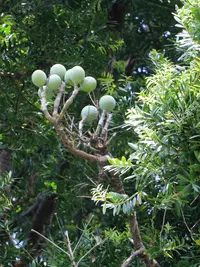
Its female cones are nearly spherical and break apart at maturity to release winged seeds, while the male cones are slender and clustered toward branch tips, typical of the ancient Araucariaceae family.

Critically endangered status

This species is listed as Critically Endangered on the IUCN Red List because of its very restricted range, habitat degradation, and fragmentation of remaining populations.
Botan icon

Did you know?

The species has evolved to survive on ultramafic substrates that are naturally high in heavy metals such as nickel and magnesium, an adaptation that allows it to occupy ecological niches where many competing tree species fail to establish.

FAQs about Scrub Kauri

Container cultivation is possible while the plant is young, using a deep, very well-drained pot and slightly acidic, gritty mix. Root systems become large and strong, so long-term container culture is challenging and eventual ground planting is recommended.

Grow Healthy Plants with Botan Care

Keep your plants happy and healthy with plant identification, disease detection, and easy care guidance.

Botan plant care app — identify plants on mobile

Explore More Plants