Wind-hardening saplings
For young trees, gradually expose them to stronger wind over several weeks by moving containers or reducing shelter, which encourages sturdier trunks and better anchorage before planting out.

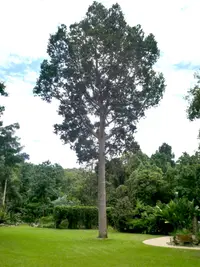
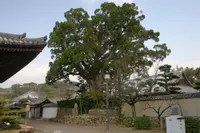
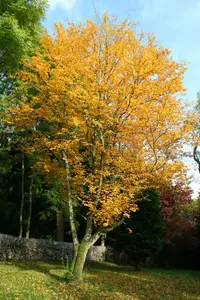
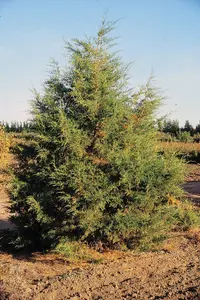
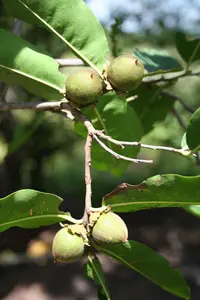
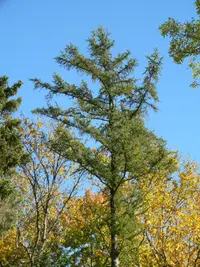
Queensland kauri, Agathis robusta, is a large evergreen conifer tree from subtropical rainforests in eastern Australia. In nature it forms a tall, straight trunk with a rounded, symmetrical crown. The foliage is dense, with smooth, leathery, flat needles that give the tree a clean, architectural look. Its slow to moderate growth and eventual great size make it more suitable for spacious gardens, parks, or as a specialty container specimen when young. It prefers mild climates, steady moisture, and well-drained soil, and it does not tolerate severe frost or very dry air. Understanding how to care for Queensland kauri early helps avoid stress and deformity as it matures.

Care Difficulty
Moderate Care

Light Preference
Full Sun

Water Requirements
Moderate Water

Temperature Preference
Tropical / Frost Sensitive

Hardiness Zone
10–11

Soil Texture
Sandy, Loamy, Organic-rich

Soil pH
Acidic (5.5–6.5), Slightly acidic (6.5–7.0)

Soil Drainage
Moist but well-drained

Fertilization
Minimal (feed rarely)
Scan your plant to receive care tips personalized for your specific plant
Available on iOS and Android
This large conifer prefers bright, gentle light that mimics open forest conditions.
This species prefers steadily moist but not saturated soil, especially while young.
This tree is adapted to warm, frost-free to very light-frost climates.
This species tolerates a fairly wide humidity range but grows best with moderate atmospheric moisture.
This conifer prefers deep, well‑structured mineral soil that drains freely yet retains some consistent moisture.
This tree can be grown in containers for a limited time, mainly when young or as a patio specimen.
Agathis robusta benefits from light, thoughtful feeding, especially when young or container grown.
Agathis robusta needs minimal pruning and is usually shaped naturally by its strong central leader.
In cultivation, Queensland kauri is usually transplanted from containers to the ground while still young to reduce stress.
Agathis robusta is usually propagated by seed and is not commonly multiplied by home growers.
Agathis robusta is frost sensitive and needs protection in regions with cold winters.

Plant Health Check
Not sure what's wrong with your plant? Check your plant's health inside the app.
This species naturally grows as an emergent tree in subtropical rainforests of Queensland, often rising above the main canopy and reaching over 40–50 m in ideal wild conditions.
Its wood is pale, fine-textured, and usually very straight-grained, which made it historically important for high-quality joinery, pattern-making, and specialty plywood before stricter conservation controls.
This tree belongs to the Araucariaceae family, an ancient conifer lineage that was widespread in the age of the dinosaurs, making it a living representative of a once globally dominant group.
In parts of Queensland, some old individuals are formally protected as landmark trees because of their great height, age, and prominence in the landscape, and logging of natural populations is now tightly restricted to conserve remaining wild stands.
Growth is moderate rather than fast. Young trees often add about 30–60 cm per year under good conditions, slowing with age. Container specimens grow more slowly due to restricted root space and limited nutrients.
Keep your plants happy and healthy with plant identification, disease detection, and easy care guidance.