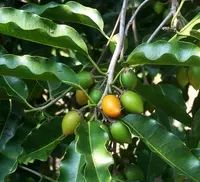
ebony diospyros Care (Diospyros mespiliformis)

Also known as: jackalberry, Monkey Guava, Bush Matome, Ebony Jackalberry, Hill Matome, Rhodesian Ebony, Transvaal Ebony, Wild Ebony
ebony diospyros

About ebony diospyros

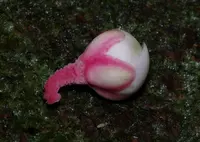
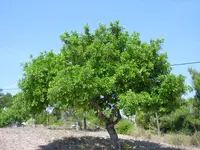
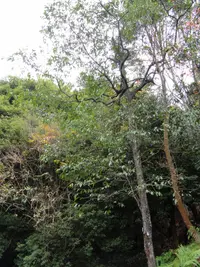
Diospyros mespiliformis, commonly called African ebony or jackalberry, is a long-lived evergreen to semi-evergreen tree valued for its dense wood and edible fruits. It forms a rounded to spreading crown with glossy green leaves and can reach impressive sizes in the wild.

This species is native to savannas and riverine areas across sub-Saharan Africa, where it tolerates seasonal drought and high heat. In cultivation it prefers well-drained soil, moderate moisture, and full sun to bright light. These traits make it resilient but slow growing, so patience is important if you plan to care for ebony diospyros in larger gardens or specialized collections.

Main Plant Requirements

Care Difficulty

Moderate Care

Light Preference

Full Sun

Water Requirements

Moderate Water

Temperature Preference

Tropical / Frost Sensitive

Hardiness Zone

10–12

Soil Texture

Sandy, Loamy, Organic-rich

Soil pH

Acidic (5.5–6.5), Slightly acidic (6.5–7.0)

Soil Drainage

Well-drained

Fertilization

Minimal (feed rarely)

Get Personalized Care Plan

Scan your plant to receive care tips personalized for your specific plant

Available on iOS and Android

How to Care for the ebony diospyros

This African ebony species prefers bright, warm conditions with consistent sun exposure for strong growth.

  • Provide 6–8 hours of direct sun daily, ideally with morning sun and light afternoon shade in very hot, dry climates to prevent leaf scorch.
  • Young trees tolerate partial shade, but long-term shade reduces flowering, fruiting, and trunk density in ebony diospyros.
  • In subtropical areas, allow more winter sun by thinning nearby canopy, while in hot summers use surrounding trees to filter intense midday light.

This species prefers steadily moist, deep soil but does not tolerate standing water around the roots.

  • Allow the top 3–5 cm of soil to dry before watering again; soil should feel cool and slightly moist below the surface, not soggy.
  • In the growing season, water thoroughly when leaves begin to lose slight gloss or curl at the edges, clear signs of mild drought stress in Diospyros mespiliformis.
  • Reduce watering in cooler months as growth slows, but avoid prolonged dryness in heavy clay by improving drainage with coarse sand or organic matter.

This species is adapted to warm climates and is sensitive to prolonged cold or any frost.

  • Optimal growth occurs around 70–90°F (21–32°C), with strongest development in consistently warm, frost-free conditions.
  • Trees can survive brief drops to about 30–32°F (-1–0°C), but repeated cold snaps damage young shoots and may kill seedlings.
  • In hot regions, mature plants tolerate 100°F (38°C) if soil moisture is stable, but young trees need mulch and protection from hot, drying winds in summer.

This species is adaptable and usually handles typical indoor humidity if extremes are avoided.

  • Target 40–60% humidity; it tolerates drier air but grows better with moderate moisture in the air.
  • Ebony diospyros may show humidity stress as browning leaf tips, marginal scorch, and slowed new growth.
  • Increase humidity with a nearby tray of damp pebbles, grouped plants, or a short daily misting away from direct sun.

Diospyros mespiliformis prefers deep, well-drained, moderately fertile soil that still retains some moisture.

  • Use a mix of 50–60% loam or compost, 20–30% coarse sand, and 10–20% perlite or fine bark to balance moisture and aeration.
  • Aim for slightly acidic to neutral pH around 6.0–7.0 for balanced nutrient availability and stable root function.
  • Ensure water drains freely through the profile; avoid compacted or clay-heavy ground that holds water around the roots.
  • Prevent chronic waterlogging by raising planting areas or adding coarse mineral material if the native soil drains slowly.

This tree can be grown in large containers when kept small, but it needs careful root space and stability management.

  • Choose a deep, heavy container that resists tipping as the woody canopy becomes denser and potentially top-heavy.
  • Select a potting mix that drains in seconds yet stays slightly moist, then adjust with extra perlite if water lingers on the surface.
  • Place the container where wind exposure is limited, since tall top growth in a confined root mass is more prone to leaning or blow-over.

This species grows well in reasonably fertile soil but benefits from modest feeding in containers or poor ground when caring for ebony diospyros.

  • Use a balanced slow-release fertilizer (around 10-10-10) or well-rotted compost at the start of the growing season.
  • Feed container plants every 6–8 weeks in spring and summer at half the label rate to avoid salt buildup.
  • Reduce or stop fertilizing in fall and winter when growth slows or stops.
  • Water before and after feeding to protect roots from fertilizer burn.

Pruning Diospyros mespiliformis focuses on safety, structure, and light penetration rather than heavy shaping.

  • Carry out main pruning in late winter or very early spring before active growth resumes.
  • Remove dead, diseased, crossing, or storm-damaged branches first, using clean, sharp bypass pruners or a handsaw.
  • Thin crowded interior shoots to improve airflow and light, encouraging a strong, balanced crown.
  • Avoid severe topping; instead shorten long leaders gradually to guide height and form.

This tree is usually grown in the ground, so focus on careful transplanting rather than frequent repotting.

  • Transplant young trees in late winter to early spring, while still dormant, for faster root establishment.
  • Look for circling roots, slow growth, or plants becoming top-heavy in containers as signs they need a larger space.
  • Move up only 1–2 container sizes or into a wide, well-prepared planting hole with loose, well-drained soil.
  • Water deeply after planting, mulch 5–8 cm thick, and keep soil evenly moist for the first growing season to limit transplant shock.

Propagation of Diospyros mespiliformis is usually done from seed and is slow but reliable under warm, stable conditions.

  • Collect fully ripe seeds, clean the pulp, and sow in late spring when temperatures reach 70–80°F.
  • Use a deep tray or pots with a free-draining, sandy mix and keep it just moist, never waterlogged.
  • Provide bottom warmth and bright, indirect light; germination may take several weeks to months.
  • Protect seedlings from drought and strong sun, potting on only once roots fill the container.

This species is frost sensitive and needs meaningful winter care in regions with cold winters, especially when young or container-grown.

  • In areas below about 30°F, grow in large containers that can be moved into a bright, frost-free space for winter.
  • Mulch the root zone with 5–8 cm of organic material to moderate soil temperature and moisture.
  • For in-ground trees in marginal climates, wrap young trunks with breathable tree wrap during the coldest spells.

Care Tips

Strong central leader

Select 1 straight central stem while the tree is young and remove competing upright shoots over several seasons to build a single, wind-resistant trunk structure.

Deep root establishment

In the first 2–3 years, encourage deep rooting by spacing irrigations but watering long enough that moisture reaches at least 30–40 cm, which helps the tree tolerate later dry periods.

Wind and stake management

Use 1–2 flexible stakes only if necessary, tying low and loosely with a soft tie, and remove stakes after 1–2 years so the trunk can strengthen naturally.

Mulch for root zone

Maintain a 5–8 cm layer of coarse organic mulch over the root zone, keeping it 5–10 cm away from the trunk to moderate soil temperature, conserve moisture, and reduce weed competition.

Gradual site hardening

If raised in containers or shade houses, gradually increase light and wind exposure over 2–4 weeks before planting out to reduce transplant shock when you grow Diospyros mespiliformis in open ground.

Common Pests and Diseases

Leaf spot

This disease causes small brown to dark purple spots on leaves that may merge, leading to premature yellowing and drop, especially on young nursery plants. Symptoms include more severe damage in humid, crowded conditions.

Solution

Remove and destroy heavily spotted leaves, improve spacing and airflow around plants, and avoid overhead watering to keep foliage dry. If the problem persists in nursery or landscape settings, use a copper-based fungicide according to label directions during warm, wet periods as part of broader Diospyros mespiliformis care instructions.

Scale insects

These insects appear as small, immobile bumps on stems and leaf undersides, sucking sap and causing leaf yellowing, stunting, and sooty mold growth on the honeydew they excrete. This pest often builds up on older branches and sheltered trunk areas.

Solution

Scrape off heavily infested areas by hand or prune out badly affected twigs, then wash stems and leaves with water and a mild insecticidal soap. For persistent infestations on larger trees, apply a horticultural oil spray during the growing season to smother the insects, ensuring thorough coverage of bark and leaf undersides.

Mealybugs

These insects produce white, cottony masses in leaf axils, on young shoots, and sometimes on roots, weakening the plant by sap feeding. This pest can cause leaf distortion, reduced growth, and promote sooty mold on honeydew deposits.

Solution

Wipe visible clusters with a cotton swab dipped in 70% isopropyl alcohol, then rinse foliage with water to remove residues. In heavier infestations, apply insecticidal soap or horticultural oil, repeating every 7–14 days until new growth appears clean and populations are suppressed.

Fruit borers

These insects are caterpillars or beetle larvae that tunnel into developing fruits, causing internal feeding damage, premature fruit drop, and entry points for secondary rot. Symptoms include small holes on the fruit surface and frass near the entry sites.

Solution

Collect and destroy infested and fallen fruits promptly to break the life cycle, and prune low, dense branches where adults may shelter. In orchard or agroforestry settings, use pheromone or light traps to monitor activity and time targeted biological treatments such as Bacillus thuringiensis (Bt) against young larvae when they first attack fruit.

Sooty mold

This disease is a superficial black fungal growth that develops on leaves and branches where sap-sucking insects such as scale or mealybugs excrete honeydew. Symptoms include blackened leaf surfaces that reduce photosynthesis and make foliage look dull and dirty.

Solution

Address the underlying insect infestation first through mechanical removal and appropriate insecticidal soap or oil treatments. After insect control, gently wash affected leaves and small branches with water to remove the black fungal coating and improve light exposure to the foliage.

Interesting Facts

Keystone savanna tree

The African ebony is a dominant canopy tree in many savanna and riverine woodlands, providing dense shade, nesting cavities, and fruit for a wide range of mammals, birds, and insects throughout the dry season.

Fruit-eating wildlife partner

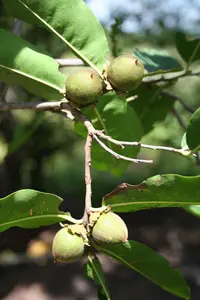
Its fleshy, plum-sized fruits are a critical food source for elephants, antelope, monkeys, and many other animals, which in turn disperse the seeds over long distances through their droppings.

Valuable dark heartwood

Mature trees develop very dense, dark brown to nearly black heartwood that has long been prized locally for durable tools, carvings, and high-wear objects due to its hardness and resistance to decay.

Botan icon

Did you know?

Large, old individuals of this species often form hollow trunks that serve as long-term shelters for wildlife such as hyenas, warthogs, and small carnivores, effectively turning living trees into multi-generation dens and refuges.

FAQs about ebony diospyros

This species is naturally slow-growing. In suitable outdoor conditions it may add 20–40 cm of height per year, sometimes more when young. Growth slows as the tree matures and invests more in trunk and root development.

Grow Healthy Plants with Botan Care

Keep your plants happy and healthy with plant identification, disease detection, and easy care guidance.

Botan plant care app — identify plants on mobile

Explore More Plants