Encourage Dense Foliage
Lightly pinch back or clip just the soft new growth tips in late spring to early summer to promote denser branching and a fuller outline without exposing old, bare wood that rarely re-sprouts.

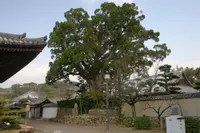
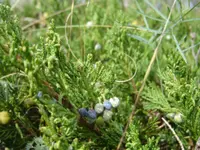
Chinese juniper (Juniperus chinensis) is an evergreen conifer widely used in gardens, bonsai, and as a structural shrub or small tree. It has fine, often prickly foliage in shades of gray-green to blue-green and naturally forms dense, upright or spreading shapes.
This species is native to East Asia, including China, Korea, and Japan, and adapts well to a range of temperate climates. It is valued for its durability, tolerance of pruning, and resistance to many pests.
Juniperus chinensis prefers full sun, well-drained soil, and relatively dry conditions, which makes it suitable for low-maintenance landscapes. Understanding how to care for Chinese juniper starts with providing strong light and avoiding waterlogged soil.

Care Difficulty
Easy Care

Light Preference
Full Sun

Water Requirements
Low Water

Temperature Preference
Cold Hardy

Hardiness Zone
4–9

Soil Texture
Sandy, Loamy, Rocky

Soil pH
Acidic (5.5–6.5), Slightly acidic (6.5–7.0)

Soil Drainage
Well-drained

Fertilization
Minimal (feed rarely)
Scan your plant to receive care tips personalized for your specific plant
Available on iOS and Android
This species thrives in full sun and needs strong light to stay dense and healthy.
Juniperus chinensis prefers infrequent, deep watering and drier soil between waterings.
This hardy conifer tolerates a wide temperature range but grows best in moderate conditions.
This species tolerates a wide humidity range and rarely needs special humidity management indoors or outdoors.
Juniperus chinensis prefers mineral-based, sharply drained soil that never stays waterlogged.
This species is suitable for container growing when the pot prioritizes fast drainage and root stability.
Juniperus chinensis grows well in lean soil and needs only modest, carefully timed feeding.
Pruning Juniperus chinensis is mainly about maintaining structure and removing problem growth without cutting back into bare wood.
This species is usually grown in the ground, so focus on careful transplanting and only occasional repotting for container or bonsai plants.
Juniperus chinensis is most often propagated by semi-hardwood cuttings, which root slowly but give clones of the parent plant.
This species is generally cold hardy, so most established landscape plants need minimal winter care.

Plant Health Check
Not sure what's wrong with your plant? Check your plant's health inside the app.
This species occurs naturally across a broad area from northern China and Mongolia to Japan and parts of Korea, where it grows on dry slopes, rocky ridges, and coastal hillsides that experience cold winters and hot summers.
Juniperus chinensis shows considerable variation in growth form, needle length, and crown shape across its range, which is why it has produced many distinct wild forms and horticultural cultivars, from tall columnar trees to low, spreading shrubs.
In urban plantings this species is valued for its tolerance of air pollution, wind, and compacted or poor soils, which reflects its natural adaptation to exposed, nutrient-poor sites in the wild.

In traditional Chinese and Japanese gardens, Juniperus chinensis has been used for centuries as a key species for bonsai, because its dense branching, fine foliage texture, and ability to respond well to pruning and wiring allow highly detailed, long-lived miniature trees that can be trained and refined over many decades.
Browning often results from root rot, chronic overwatering, or poor drainage. Winter burn, road salt, or intense reflected heat can also scorch foliage. Check roots, soil moisture, and site exposure, then adjust watering and protection accordingly.
Keep your plants happy and healthy with plant identification, disease detection, and easy care guidance.