Encourage Deep Rooting
During the first 2–3 years, water less often but for longer durations so moisture reaches 30–45 cm deep, which trains the root system to anchor well and withstand drought and wind.

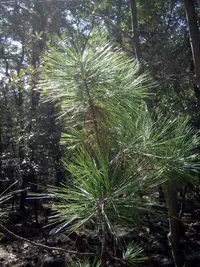
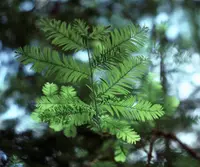
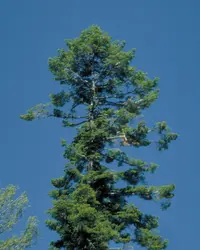
Arizona pine (Pinus arizonica) is a long-lived evergreen conifer, typically forming a tall, straight tree with a rounded to irregular crown and dense clusters of needles. Its bark becomes thick and rough with age, and mature trees develop strong horizontal branches that create a classic pine silhouette.
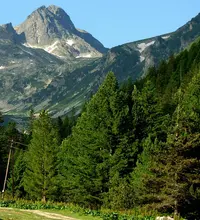
This species is native to high-elevation regions of Arizona, New Mexico, and northern Mexico, where it grows in dry, cool mountain forests. It is generally resilient once established but needs well-drained soil and open sun, so locations with heavy, soggy ground are not suitable. Those learning how to care for Arizona Pine usually find it manageable in climates with cold winters and relatively low humidity.

Care Difficulty
Moderate Care

Light Preference
Full Sun

Water Requirements
Low Water

Temperature Preference
Cold Hardy

Hardiness Zone
6–9

Soil Texture
Sandy, Loamy, Rocky

Soil pH
Acidic (5.5–6.5), Slightly acidic (6.5–7.0)

Soil Drainage
Well-drained

Fertilization
Minimal (feed rarely)
Scan your plant to receive care tips personalized for your specific plant
Available on iOS and Android
This high-elevation pine needs abundant direct sun to develop dense, healthy growth.
This species is drought-tolerant once established but still requires thoughtful moisture management.
This pine is adapted to mountain climates with cold winters and warm, dry summers.
This species prefers relatively dry air and rarely needs humidity adjustment outdoors.
Soil for Pinus arizonica should be loose, fast-draining, and slightly acidic to neutral.
This pine can be grown in containers for several years, but only if root space and stability are carefully managed.
This drought-adapted conifer usually needs minimal feeding in the ground, especially in native or lean soils.
Pruning Pinus arizonica is mainly corrective, aimed at safety, structure, and removal of weak wood rather than frequent shaping.
This pine is usually grown in the ground, so care focuses on correct transplanting rather than frequent repotting.
Propagation of Pinus arizonica is typically done from seed and is slower and more technical than many garden shrubs.
This species is generally cold hardy in its suitable climate range and needs minimal winter attention once established.

Plant Health Check
Not sure what's wrong with your plant? Check your plant's health inside the app.
This species is naturally adapted to mountain environments, most commonly found between roughly 1,500–2,700 m in the sky island ranges of Arizona, New Mexico, and northern Mexico, where it tolerates cold winters and strong sun better than many other pines.
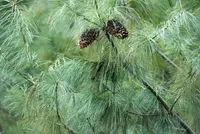
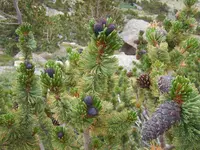
Its needles usually occur in bundles of 3 (sometimes mixed with 4 or 5), with relatively long, stiff, pale green needles that help distinguish it from nearby ponderosa pine, which typically has more uniformly long, yellow-green needles.
In parts of its range, especially where habitats overlap, this species is known to hybridize with closely related pines such as Pinus ponderosa, producing intermediate forms that complicate field identification but increase genetic diversity.

The tallest known individuals of this species can exceed 40 m in height in optimal mountain sites, forming part of the upper canopy in mixed-conifer forests and providing critical nesting and perching structure for large raptors such as hawks and eagles.
This conifer grows at a moderate rate, typically 30–60 cm per year under good conditions. Growth is faster in deep, well-drained soil with full exposure, and slower on compacted, dry, or very shallow sites.
Keep your plants happy and healthy with plant identification, disease detection, and easy care guidance.