creeping juniper Care (Juniperus horizontalis)

Also known as: Waukegan Juniper, American Savin, Shrubby Red Cedar
creeping juniper

About creeping juniper

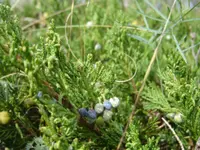
Creeping juniper, Juniperus horizontalis, is a low, spreading conifer often used as a groundcover in gardens and slopes. Its branches form dense mats covered with scale-like, aromatic foliage. Colors range from gray-green to blue-green, sometimes turning purple in cold weather, which adds seasonal interest. Small, berry-like cones appear on mature plants, feeding wildlife. The species is native to cold, open habitats in North America, especially rocky slopes and shores, so it tolerates wind, poor soil, and drought once established. These traits make it a relatively low-maintenance choice when you know how to care for creeping juniper, especially in sunny, well-drained sites.

Main Plant Requirements

Care Difficulty

Easy Care

Light Preference

Full Sun

Water Requirements

Low Water

Temperature Preference

Cold Hardy

Hardiness Zone

3–9

Soil Texture

Sandy, Loamy, Rocky

Soil pH

Slightly acidic (6.5–7.0), Neutral (7.0)

Soil Drainage

Well-drained

Fertilization

Minimal (feed rarely)

Get Personalized Care Plan

Scan your plant to receive care tips personalized for your specific plant

Available on iOS and Android

How to Care for the creeping juniper

Juniperus horizontalis performs best in open, sunny sites that match its natural habitat.

  • Provide 6–8 hours of direct sun daily; full sun promotes dense foliage and strong color in creeping juniper.
  • Tolerates light partial shade, especially with morning sun and light afternoon shade, but growth becomes looser and color less intense if shaded more.
  • In hot summers, avoid highly reflective spots that can scorch foliage; ensure winter sites are not deeply shaded by buildings or evergreen trees.

Juniperus horizontalis prefers infrequent, deep watering once established.

  • After planting, water deeply whenever the top 5–8 cm of soil is dry, then reduce frequency once roots spread into surrounding soil.
  • Use sharply drained soil or a sloped site so excess water runs off; persistent soggy soil or standing water leads to root rot and browning foliage.
  • In drought, watch for dull, slightly drooping branch tips as a cue to water, while yellowing on inner stems can signal chronic overwatering.

This species is a hardy groundcover that tolerates a wide range of outdoor temperatures.

  • Optimal growing temperatures are about 60–80°F (16–27°C) in spring and fall, when new shoots and root growth are strongest.
  • Mature plants typically survive down to about -30°F (-34°C) with snow cover, though exposed, windy sites can cause winter burn on foliage.
  • In hot regions, plants tolerate 90–100°F (32–38°C) if soil is well drained and roots are mulched, but prolonged heat plus drought can cause tip dieback.

This species prefers dry, outdoor air and usually does not need special humidity management.

Juniperus horizontalis prefers lean, mineral soils with sharp drainage and low to moderate fertility.

  • Use sandy or gravelly loam with 30–60% coarse sand or grit to keep the root zone airy and fast-draining.
  • Aim for slightly acidic to neutral pH around 6.0–7.0, avoiding strongly acidic or alkaline substrates that limit nutrient uptake.
  • Mix in a small amount of compost (10–20%) only for structure, not richness, to prevent excessive vigor and weak growth.
  • Avoid heavy clay, compacted, or water-retentive mixes; elevate beds or add grit if water stands longer than a few hours.

This low, spreading species can be grown in containers outdoors if the pot is managed to prevent chronic wetness and tipping.

  • Choose a wide, low container to accommodate the plant’s horizontal spread and lower the risk of wind tipping as foliage extends outward.
  • Select a gritty mix and a pot material like unglazed clay that allows evaporation, since this creeping juniper dislikes prolonged moisture around roots.
  • Raise the container on pot feet so drainage holes stay clear, letting excess water escape rapidly after heavy rain or irrigation.

Juniperus horizontalis has low nutrient demands and benefits from light, infrequent feeding in poor soils or containers.

  • Use a balanced slow-release fertilizer (for example, 10-10-10) or a thin layer of compost in early spring.
  • Feed once per growing season for in-ground plants; containers can receive 1–2 light applications.
  • Apply at half the label-recommended strength to avoid excessive, weak growth.
  • Skip or greatly reduce feeding in late fall and winter, when growth is minimal.

Pruning Juniperus horizontalis is mainly corrective, helping maintain a low, dense form without stressing the plant.

  • Best timing is late winter to early spring, before new growth starts.
  • Use clean, sharp hand pruners to remove dead, diseased, or storm-damaged stems.
  • Thin lightly where stems are crowded to improve air flow and keep a flat, spreading habit.
  • Avoid cutting back into old bare wood, as foliage may not regenerate on these sections.

This groundcover juniper is usually grown in the landscape, so care focuses on transplanting rather than frequent repotting.

  • Transplant in early spring or early fall, when temperatures are mild and soil moisture is stable.
  • Look for signs such as slow top growth, roots circling the root ball, or the plant lifting from the soil.
  • Dig a wide, shallow hole, keeping the root flare at soil level and disturbing roots as little as possible.
  • Water deeply after planting, then keep soil lightly moist for several weeks to limit transplant shock.

Juniperus horizontalis is commonly propagated from semi-hardwood cuttings, as seed-grown plants are variable and slower.

  • Take semi-hardwood cuttings in late summer, 8–12 cm long, from healthy, non-flowering shoots.
  • Strip lower foliage and wound the base slightly, then dip in rooting hormone to improve success.
  • Insert cuttings into a well-drained medium such as 1:1 sand and perlite, kept evenly moist.
  • Provide bright, indirect light and cool, stable temperatures; rooting may take several months.

This species is cold hardy in most temperate climates and usually needs minimal winter care outdoors.

  • Apply a 5–8 cm layer of mulch around the root zone in late fall, keeping it off the stems.
  • In very exposed sites, use a windbreak such as burlap fencing to reduce drying winter winds.
  • Container plants are more vulnerable; move them into an unheated garage or against a sheltered wall.
  • Caring for creeping juniper in winter mainly means avoiding waterlogged soil that can lead to root rot.

Care Tips

Control Spreading Edges

Once a year, slice along the mat edges with a sharp spade to keep the plant from creeping into paths or lawn, lifting and removing rooted runners where they are not wanted.

Maintain Air Gaps

When planting beside walls, rocks, or timbers, leave a 5–10 cm air gap so foliage can dry quickly and avoid fungal issues in dense groundcover mats.

Snow Load Management

In areas with heavy, wet snow, gently brush or shake accumulated snow off the branches to prevent breakage and bare patches in the carpet.

Targeted Weed Suppression

Before runners fully knit together, apply a 5–8 cm layer of clean, weed-free gravel or coarse mulch between young plants to reduce weeding and support healthy, even coverage when growing creeping juniper.

Root Collar Visibility

Keep the stem base just visible and free of piled mulch or soil so the root collar stays dry and less prone to rot in long-lived plantings.

Common Pests and Diseases

Juniper tip blight

This disease causes young shoots and branch tips to turn dull green, then reddish brown, often with a clear line between dead tips and healthy wood.

Solution

Prune out all blighted tips back into healthy tissue during dry weather and dispose of the debris, then improve air circulation by thinning dense growth. Avoid overhead watering, keep mulch away from the crown, and if infections are recurring, use a labeled fungicide for juniper tip blight in early spring as new growth begins, repeating as directed.

Juniper canker

This disease produces sunken, discolored lesions on stems and branches, leading to dieback that often starts on stressed or shaded plants.

Solution

Cut out affected branches several inches below visible cankers and discard them, sterilizing pruning tools between cuts. Reduce plant stress by avoiding overwatering and mechanical injury, maintaining good spacing, and in landscapes with a history of canker, select well-drained sites and keep plants vigorous to support long-term Juniperus horizontalis care.

Spider mites

These pests cause fine stippling, a dull gray or bronze cast to foliage, and delicate webbing between branchlets, especially in hot, dry weather.

Solution

Rinse foliage thoroughly with a strong but controlled stream of water every few days to knock mites off and reduce dust that favors them. If populations remain high, apply a horticultural oil or insecticidal soap labeled for mites, treating the undersides of foliage and repeating as needed while avoiding applications during extreme heat.

Juniper scale

These insects appear as tiny white or grayish bumps on needles and stems, causing yellowing, thinning foliage, and overall decline on heavily infested plants.

Solution

Prune out and discard heavily infested branches to reduce populations, then target the crawler stage in late spring with horticultural oil or insecticidal soap according to label directions. Encourage natural predators by avoiding broad-spectrum insecticides and keep plants healthy so they can better tolerate minor infestations.

Cedar-apple rust

This disease produces swollen, brown galls on stems that develop orange, jelly-like spore horns in wet spring weather, acting as a source of infection for nearby apples and crabapples.

Solution

Remove and dispose of galls from plants during dry weather before they produce spore horns, and if possible avoid planting susceptible apple or crabapple varieties nearby. In sites with a history of rust, use resistant cultivars when choosing new creeping juniper and maintain good air circulation to reduce humidity around the foliage.

Interesting Facts

Arctic shoreline specialist

This species naturally forms low mats along cold, windy shorelines around the Arctic and subarctic, where few woody plants can survive. Its prostrate habit and flexible branches help it withstand ice, snow, and strong coastal winds without breaking.

Natural sand stabilizer

The long, creeping branches root at many points along the ground, helping to bind loose, sandy or gravelly soils. In its native range, this growth pattern makes it an effective natural stabilizer on dunes, riverbanks, and rocky slopes.

High cold tolerance

Horizontal juniper tolerates extremely low winter temperatures and desiccating winds that damage many other conifers. Its scale-like leaves and tight, overlapping foliage help reduce water loss in frozen, drought-like winter conditions.
Botan icon

Did you know?

Genetic and field studies show that horizontal juniper often hybridizes with closely related juniper species in overlapping ranges, creating naturally occurring hybrid swarms that complicate identification and have been important for understanding evolution and gene flow within the genus Juniperus.

FAQs about creeping juniper

This species spreads slowly to moderately by low, trailing branches that root where they touch the soil. It forms dense mats over time but rarely behaves aggressively if planted with proper spacing and within its hardiness range.

Grow Healthy Plants with Botan Care

Keep your plants happy and healthy with plant identification, disease detection, and easy care guidance.

Botan plant care app — identify plants on mobile

Explore More Plants