Mulch Leaf Litter
Allow a thin layer of hardwood leaf litter to remain over the planting area each fall, as it mimics the plant’s native woodland duff and helps maintain even soil moisture while slowly improving soil structure.

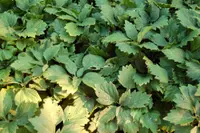
Allegheny-spurge, Pachysandra procumbens, is a low-growing, clump-forming perennial groundcover native to woodlands of the southeastern United States. It spreads slowly by underground stems, forming a dense, weed-suppressing carpet over time.
The plant has mottled, gray-green leaves that often remain semi-evergreen, and short spikes of fragrant, bottlebrush-like white flowers in early spring. It prefers shaded sites with moist, humus-rich soil.
This species is generally considered low-maintenance and tolerant of dry shade once established, which makes it suitable for naturalistic woodland gardens. Understanding how to care for Allegheny-spurge mainly involves providing consistent shade and reasonably well-drained, organic-rich soil.

Care Difficulty
Easy Care

Light Preference
Partial Shade

Water Requirements
Moderate Water

Temperature Preference
Cold Hardy

Hardiness Zone
5–9

Soil Texture
Loamy, Sandy, Organic-rich

Soil pH
Acidic (5.5–6.5), Slightly acidic (6.5–7.0)

Soil Drainage
Moist but well-drained

Fertilization
Minimal (feed rarely)
Scan your plant to receive care tips personalized for your specific plant
Available on iOS and Android
Pachysandra procumbens thrives as a woodland groundcover in low to moderate light.
Water needs focus on steady moisture in well-drained soil rather than strict schedules.
This species is a hardy groundcover that tolerates a wide range of outdoor temperatures.
This woodland groundcover tolerates a wide humidity range and usually does not need special humidity control outdoors or in unheated spaces.
This species prefers loose, humus-rich soil that stays evenly moist yet drains freely.
This species can be grown in containers, especially for shaded patios or small shade gardens.
This native groundcover needs modest feeding, with emphasis on soil health rather than heavy fertilizer use when caring for Allegheny-spurge.
Pachysandra procumbens benefits from light, periodic pruning to keep the groundcover dense and tidy.
This species is usually grown as a groundcover, so transplanting clumps is more common than container repotting.
Pachysandra procumbens is commonly propagated by division and stem or rhizome pieces rather than from seed for garden use.
This North American woodland groundcover is cold hardy in much of the US and usually needs minimal winter care outdoors.

Plant Health Check
Not sure what's wrong with your plant? Check your plant's health inside the app.
This species is one of the few groundcovers native to the southeastern US that forms dense colonies in deciduous woodlands, often coexisting with spring ephemerals like trilliums and bloodroot without smothering them.
Its evergreen to semi-evergreen leaves develop a distinctive gray-green mottling with age, a pattern that is especially visible in cool seasons and helps visually break up large patches in the landscape.
In late winter to early spring, it sends up short spikes of small, pale white to pinkish flowers close to the ground that are lightly fragrant and can attract early-season pollinators when few other plants are in bloom.

Unlike the more common Japanese pachysandra, this species naturally goes partially dormant and can thin out in hotter summer climates, with its underground stems (rhizomes) allowing it to re-leaf and persist for many years in the same woodland site.
This species spreads slowly to moderately by short underground stems, forming patches over several years rather than rapidly taking over. It is usually considered a polite woodland ground cover and rarely becomes a nuisance in managed gardens.
Keep your plants happy and healthy with plant identification, disease detection, and easy care guidance.