BotaN logo

water jasmine Care (Wrightia religiosa)

water jasmine

About water jasmine

Water jasmine, Wrightia religiosa, is a tropical shrub or small tree valued for its gracefully arching branches and hanging clusters of white, fragrant flowers. It is often grown as a bonsai or container specimen because it responds well to pruning and shaping.

In the wild, it occurs in warm, humid regions of Southeast Asia, usually in lowland forests and moist habitats. Its fast growth and strong scent make it attractive but require regular trimming and consistent moisture to look its best.

To care for water jasmine successfully, provide bright light, even soil moisture without waterlogging, and a well-draining, slightly acidic mix that allows the roots to breathe.

Main Plant Requirements

Care Difficulty

Moderate Care

Light Preference

Partial Sun

Water Requirements

Regular Water

Temperature Preference

Tropical / Frost Sensitive

Hardiness Zone

10–11

Soil Texture

Sandy, Loamy, Organic-rich

Soil pH

Acidic (5.5–6.5), Slightly acidic (6.5–7.0)

Soil Drainage

Moist but well-drained

Fertilization

Light (every 4–6 weeks)

Get Personalized Care Plan

Scan your plant to receive care tips personalized for your specific plant

Available on iOS and Android

How to Care for the water jasmine

This tropical shrub prefers bright, gentle light to support compact growth and heavy flowering.

  • Provide 4–6 hours of direct morning sun with bright, filtered light the rest of the day; avoid harsh, unshaded afternoon sun in hot summers.
  • Water jasmine tolerates light partial shade, but in very low light it produces fewer flowers, longer internodes, and sparse foliage.
  • In warm climates, give some extra shade during heat waves, while in cooler seasons allow more direct sun to compensate for shorter days.

This species prefers evenly moist, not soggy, soil and reacts quickly to extremes in watering.

  • Water when the top 2–3 cm of soil feels dry, applying enough to moisten the root zone, then allow excess to drain completely.
  • Use a well-draining mix or soil that does not stay waterlogged; persistent wetness causes yellowing leaves, soft stems, and root rot.
  • In hot, windy periods expect faster drying and more frequent watering, while in cooler months slow down if leaves stay firm and soil remains damp.

This warm-climate shrub grows best in stable, frost-free conditions.

  • Maintain active growth at 70–85°F (21–29°C); flowering is strongest in the warmer part of this range with consistent moisture and light.
  • Protect from temperatures below 45°F (7°C); brief dips near this level may cause leaf drop, while freezing conditions can kill young wood and roots.
  • In hot spells above 90°F (32°C), Wrightia religiosa tolerates heat if soil moisture is steady and the plant has some protection from intense afternoon sun.

This species prefers moderately high humidity and reacts quickly to very dry indoor air.

  • Aim for 50–70% humidity to keep foliage lush and flowering consistent for water jasmine.
  • Crisp leaf edges, slow bud development, and leaf drop during heating season indicate humidity stress.
  • Use a wide pebble tray under the pot or group plants closely instead of misting, which raises humidity only briefly.

This shrub grows best in loose, well-drained yet evenly moist soil that does not stay waterlogged.

  • Use a slightly acidic to neutral mix around pH 6.0–7.0, combining 2 parts peat or coco coir with 1 part compost and 1 part perlite or coarse sand.
  • Aim for a loamy structure that holds moisture but still feels springy and airy when squeezed, which supports fine feeder roots of Wrightia religiosa.
  • Increase drainage and aeration by adding extra perlite or small bark chips if water takes longer than 30 minutes to drain through the pot.
  • Avoid dense clay, compacted garden soil, or mixes heavy in fine sand that can suffocate roots and encourage root rot.

This species adapts well to container growing when the pot supports its woody root system and upright habit.

  • Select a pot that is wider than it is deep to allow lateral root spread and better stability for the branching canopy.
  • Choose a heavier material such as ceramic or clay if the plant is trained as a small tree, to reduce tipping in wind.
  • Ensure large, unobstructed drainage holes so water exits within seconds, preventing soggy zones that can damage fine roots near the pot base.

Wrightia religiosa responds well to modest, consistent feeding during its active growing season.

  • Use a balanced liquid NPK fertilizer at half strength every 3–4 weeks from spring to early fall.
  • Alternatively, apply a slow-release granular fertilizer or a thin layer of mature compost at the start of spring.
  • Reduce feeding to once in late fall or stop entirely in winter when growth slows.
  • Flush the soil with plain water every 4–6 weeks to prevent fertilizer salt buildup in containers.

Pruning Wrightia religiosa helps maintain a compact form and encourages heavy flowering.

  • Schedule main pruning after the heaviest bloom flush in late spring or early summer.
  • Remove dead, diseased, crossing, or inward-growing branches to improve airflow and light penetration.
  • Shorten overly long shoots to shape the canopy and stimulate new flowering side branches.
  • Use clean, sharp bypass pruners; make cuts just above outward-facing buds to guide growth.

Container-grown Wrightia religiosa benefits from periodic repotting to sustain vigor and root health.

  • Repot every 2–3 years in spring when roots circle the pot, emerge from drainage holes, or growth slows.
  • Choose a container 2–5 cm wider with drainage and use a well-drained, slightly acidic mix with added perlite or coarse sand.
  • Gently loosen circling roots, trim broken ones, and keep as much healthy root ball intact as possible.
  • Water thoroughly after repotting, then keep in bright, indirect light for 7–10 days to reduce transplant stress.

Wrightia religiosa is commonly propagated by semi-hardwood cuttings for predictable results.

  • Take 8–12 cm semi-hardwood stem cuttings in late spring or early summer from non-flowering shoots.
  • Remove lower leaves, lightly wound the base, and dip in rooting hormone to increase success.
  • Insert cuttings into a moist, free-draining mix of perlite and peat or coco coir.
  • Maintain high humidity and warmth (70–80°F) with bright, indirect light until roots form in 4–8 weeks.

This tropical shrub is frost-sensitive and needs careful winter management in cooler climates.

  • In regions below 30–32°F, grow Wrightia religiosa in containers and move indoors before first frost.
  • Provide bright light indoors and keep temperatures above 55°F to limit leaf drop and stress.
  • Reduce watering in winter, allowing the top soil layer to dry slightly between waterings.
  • For in-ground plants in marginal climates, mulch the root zone 5–8 cm deep to moderate soil temperature.

Care Tips

Root-pruning routine

For container plants, root-prune every 2–3 years by slicing off 1–2 cm of the outer root mass and repotting into fresh mix, which keeps plants compact and encourages fine feeder roots ideal for bonsai-style training.

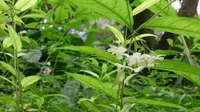
Bud-setting light shift

From late spring to early fall, slightly increase light exposure and avoid moving the plant frequently, as stable bright conditions help set more fragrant flower buds and reduce bud drop.

Controlled branch wiring

For structured shapes, use soft aluminum bonsai wire on semi-hardwood branches for 4–6 weeks, checking weekly to loosen or remove before the wire cuts into the bark.

Salt and fluoride management

If leaf tips brown despite good watering, switch to rainwater, distilled water, or filtered water low in salts and fluoride, and occasionally flush the pot thoroughly to reduce mineral buildup.

Cold-season protection

In regions with cool winters, move plants indoors or into a bright sheltered spot when night temperatures approach 50°F, and reduce drafts near windows to prevent stress that can cause leaf yellowing and drop when caring for water jasmine.

Common Pests and Diseases

Whiteflies

These insects feed on the undersides of leaves, causing yellowing, leaf drop, and a decline in overall vigor, especially in warm, still conditions often used for water jasmine indoor care. Symptoms include tiny white moth-like adults that fly up in a cloud when the plant is disturbed.

Solution

Manage by regularly checking leaf undersides, using a strong stream of water to dislodge nymphs, and placing yellow sticky traps near the plant to catch adults; for persistent infestations, apply insecticidal soap or neem oil thoroughly to leaf undersides every 5–7 days until populations drop.

Scale insects

This pest appears as small, brown or gray bumps on stems and leaf veins and feeds on plant sap, leading to weak growth and yellowing leaves. Symptoms include sticky honeydew on leaves and surfaces below the plant, sometimes followed by sooty mold growth.

Solution

Control by gently scraping or dabbing individual scales with cotton swabs dipped in 70% isopropyl alcohol, then spraying the plant with horticultural oil to suffocate remaining insects; repeat treatments every 7–10 days and prune heavily infested twigs if necessary.

Aphids

These insects cluster on new shoots, flower buds, and soft stems, sucking sap and causing curled, distorted new growth and reduced flowering. Symptoms include sticky honeydew and possible sooty mold on leaves below the infested areas.

Solution

Reduce populations by spraying shoots with a firm stream of water, pinching off heavily infested tips, and applying insecticidal soap or neem oil to growing tips and leaf undersides every few days until new growth appears clean.

Sooty mold

This disease is a fungal growth that develops on the sugary honeydew secreted by sap-feeding insects such as whiteflies, scale, or aphids, coating leaves and stems in a black, soot-like layer. Symptoms include leaves that look dirty or blackened, sometimes reducing photosynthesis and making the plant look dull and unhealthy.

Solution

Treat by first controlling the underlying insect problem, then gently wiping or rinsing leaves with water and a mild soap solution to remove fungal deposits; improve air circulation and light exposure so foliage dries faster after watering or rain.

Leaf spot

This disease shows as small brown, tan, or dark spots on leaves that may enlarge, merge, and cause premature leaf drop, especially under warm, humid conditions and poor air movement. Symptoms include older leaves yellowing around the spots while younger leaves may remain green initially.

Solution

Manage by promptly removing and discarding affected leaves, avoiding overhead watering so foliage stays dry, and improving spacing and airflow; for severe or recurrent cases, use a copper-based or other labeled ornamental fungicide according to directions and keep fallen debris away from the plant base.

Interesting Facts

Twice-blooming habit

In tropical and subtropical climates this species often flowers in multiple flushes across the warm season, rather than in a single brief period. The plant can carry flowers and developing seed pods at the same time on different parts of the crown.

Fragrant evening flowers

The small white blossoms release their strongest scent in the late afternoon and evening, which helps attract crepuscular pollinators such as moths. The fragrance is lighter and less noticeable during the brightest part of the day.

Bonsai and penjing favorite

Its naturally fine branching, small leaves, and ability to backbud on old wood make this shrub a standard subject in Southeast Asian bonsai and penjing. Many growers use it for miniature forest compositions because it tolerates regular pruning and wiring when healthy.

Botan icon

Did you know?

In parts of Southeast Asia, this species is traditionally planted near temples, shrines, and household spirit houses, where its white, pendant flowers are used as quiet, everyday offerings rather than for large public ceremonies.

FAQs about water jasmine

Lack of blooms often comes from insufficient light, heavy pruning at the wrong time, or low nutrients. Allow some older wood to remain, avoid cutting tips just before flowering season, and use balanced fertilizer sparingly.

Grow Healthy Plants with Botan Care

Keep your plants happy and healthy with plant identification, disease detection, and easy care guidance.

Botan plant care app — identify plants on mobile

Explore More Plants