Wind exposure training
If planting in a breezy site, avoid staking young plants too tightly so stems can flex in the wind and develop stronger, more self-supporting growth over time.

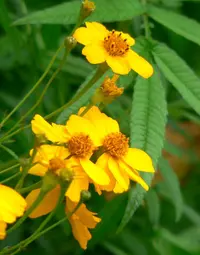
Lemmon's marigold (Tagetes lemmonii) is an evergreen shrub in the marigold family, grown mainly for its aromatic foliage and long-lasting, bright yellow flowers. It typically forms a loose, bushy mound with finely divided, fernlike leaves that release a strong citrus-pine scent when touched.
This species is native to higher, dry areas of Mexico and the southwestern United States, where it thrives in mild, low-frost climates. Its drought tolerance, fast growth, and resilience to poor, well-drained soils make it relatively easy for gardeners to manage.
Understanding how to care for Lemmon's marigold starts with providing plenty of sun, good drainage, and avoiding consistently wet conditions.

Care Difficulty
Easy Care

Light Preference
Full Sun

Water Requirements
Low Water

Temperature Preference
Warm Climate

Hardiness Zone
8–11

Soil Texture
Sandy, Loamy, Rocky

Soil pH
Slightly acidic (6.5–7.0), Neutral (7.0)

Soil Drainage
Well-drained

Fertilization
Minimal (feed rarely)
Scan your plant to receive care tips personalized for your specific plant
Available on iOS and Android
This sun-loving shrub thrives with strong light in mild to warm climates.
This drought-tolerant species prefers deep, infrequent watering once established.
This shrub performs best in warm, frost-free conditions typical of mild USDA zones.
This species handles typical home or outdoor humidity well, so humidity is rarely a limiting factor.
Soil for Tagetes lemmonii should be light, well-drained, and not overly rich.
This species is suitable for container growing when the pot is chosen to manage its woody base and spreading top growth.
This aromatic shrub performs well in lean soils, so fertilizing Lemmon's marigold should stay light and targeted.
Thoughtful pruning keeps Tagetes lemmonii compact, long-lived, and floriferous.
This shrub is more often planted in the ground than potted, so focus on careful transplanting of Tagetes lemmonii.
New plants are commonly produced from cuttings, which keeps Tagetes lemmonii traits consistent.
This species is frost-tender in colder regions and benefits from simple winter precautions.

Plant Health Check
Not sure what's wrong with your plant? Check your plant's health inside the app.
This species has strongly aromatic, resinous leaves that release a pungent scent when touched or warmed, often described as a mix of citrus, mint, and turpentine. The odor comes from high concentrations of essential oils produced in specialized glandular trichomes on the leaves and stems.
Unlike many ornamental marigolds that peak in summer, this shrub typically flowers in late fall to winter in mild climates, providing nectar when few other ornamentals bloom. Its extended flowering period supports late-season pollinators such as bees and butterflies.
The plant is native to rocky slopes and canyon habitats of Arizona and northern Mexico, where it experiences intense sun and seasonal drought. Its small, finely divided leaves and shrubby growth form help reduce water loss and withstand dry, exposed conditions.

This species is known to form natural hybrids with some related wild Tagetes in its native range, which has made its exact taxonomic limits and relationships a topic of discussion among botanists studying North American marigolds.
This species performs best outdoors in mild, low-frost climates, where it receives strong light, air movement, and space to form a shrub. Indoors it becomes leggy, prone to pests, and usually declines over time.
Keep your plants happy and healthy with plant identification, disease detection, and easy care guidance.