Virginia iris Care (Iris virginica)

Also known as: Virginia blue flag, southern blue flag, blue flag iris, Wild Iris
Virginia iris

About Virginia iris

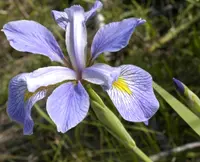
Virginia iris (Iris virginica) is a hardy, rhizomatous perennial native to wetlands, marsh edges, and damp meadows in eastern North America. It forms clumps of upright, sword-like green leaves and sends up sturdy stems topped with blue to violet flowers, often marked with yellow or white signals. The plant prefers consistently moist soil and full sun to light shade, which reflects its natural habitat along streams and ponds. Its toughness, winter hardiness, and tolerance of wet conditions make it a relatively straightforward choice for gardeners who want to care for Virginia iris in rain gardens or water-side plantings.

Main Plant Requirements

Care Difficulty

Easy Care

Light Preference

Full Sun

Water Requirements

Aquatic

Temperature Preference

Cold Hardy

Hardiness Zone

5–9

Soil Texture

Loamy, Clay, Organic-rich

Soil pH

Acidic (5.5–6.5), Slightly acidic (6.5–7.0)

Soil Drainage

Waterlogged tolerant

Fertilization

Minimal (feed rarely)

Get Personalized Care Plan

Scan your plant to receive care tips personalized for your specific plant

Available on iOS and Android

How to Care for the Virginia iris

This moisture-loving iris thrives in full sun but tolerates some light shade, especially in hotter regions.

  • Aim for 6–8 hours of direct sun daily; strong morning sun with light afternoon shade helps prevent leaf scorch in hot summers.
  • In cooler climates, full sun all day promotes stronger flowering and denser clumps for Virginia iris in garden beds or pond margins.
  • In areas with intense summer heat, provide filtered light during the hottest afternoon hours to reduce stress, pale foliage, and smaller blooms.

This species is adapted to wetlands and prefers consistently moist to saturated soil rather than intermittent drying.

  • Keep soil evenly moist; in garden beds do not allow the top 1–2 cm to dry completely, while plants at pond edges can sit in shallow standing water.
  • During hot, dry weather, increase watering so the soil feels damp at least a knuckle deep and foliage stays firm, not limp or browning at the tips.
  • Reduce extra watering in cool, rainy seasons, watching for yellowing, mushy rhizomes, or a sour smell as signs of poor drainage and overwatering in Iris virginica.

This hardy rhizomatous iris tolerates a wide temperature range but performs best with distinct warm and cool seasons.

  • Active growth and flowering are strongest at 65–80°F (18–27°C), especially when roots remain cool and moist in organic, water-retentive soils.
  • Rhizomes survive winter down to about -20°F (-29°C) in the ground with adequate soil cover, and repeated light frosts are generally not harmful.
  • In summer heat above 90°F (32°C), provide ample moisture and some afternoon shade to limit stress; foliage may tip-burn but plants usually recover once temperatures ease.

This wetland species prefers high humidity but usually adapts to typical outdoor conditions.

  • Aim for 50–80% humidity, which is naturally present near ponds, rain gardens, or consistently moist beds.
  • Plants in very dry, exposed sites may show browning leaf tips and slower growth as humidity stress increases.
  • Increase local humidity by mulching heavily around clumps and grouping plants near other moisture-loving species such as Virginia iris.

This species thrives in consistently moist to wet soil with high organic content.

  • Use a heavy loam or clay-loam enriched with 30–50% compost to mimic natural marshy conditions and support strong root anchoring.
  • Ensure slow drainage rather than fast run-off; soil should remain damp or even shallowly flooded for periods without becoming stagnant and foul-smelling.
  • Aim for slightly acidic to neutral pH, around 6.0–7.0, which supports nutrient availability and stable growth in Iris virginica.
  • Improve wet-site structure by mixing in composted leaf mold and fine bark, avoiding large amounts of sand that can cause uneven drying.

This species can grow in containers if the pot can hold consistently wet, heavy substrate without tipping.

  • Choose a wide, low container with substantial weight so saturated soil and tall foliage do not cause the pot to lean or fall.
  • Select non-porous materials such as glazed ceramic or plastic to slow evaporation and maintain a waterlogged or very wet profile.
  • Stand the container in a tray or outer tub that can hold several centimeters of water, allowing the soil to remain saturated between top-ups.

This wetland perennial benefits from modest, targeted feeding during the active growing season.

  • Apply a balanced, slow-release fertilizer (around 10-10-10) once in early spring as new growth appears.
  • In richer soils, use a light topdressing of compost instead of repeated synthetic feeding for Virginia iris.
  • If using liquid feed in containers, dilute to half strength every 4–6 weeks in spring–summer.
  • Stop feeding in late summer and do not fertilize during fall–winter dormancy.

Pruning Iris virginica is mainly about cleanup to support healthy growth and flowering next season.

  • Use clean hand pruners or scissors to remove spent flower stalks down to the base after blooming.
  • Cut back yellowing or diseased leaves during the season, leaving healthy fans to photosynthesize.
  • In late fall or very early spring, trim foliage to 5–10 cm to reduce pests and tidy the clump.
  • Thin out crowded fans every few years to improve air flow and maintain strong flowering.

This iris is most often grown in the ground or bog beds, so transplanting clumps matters more than container repotting.

  • Plan to lift and divide clumps every 3–4 years when flowering declines or growth becomes crowded.
  • Transplant in late summer to early fall, when flowering has finished and soil remains warm.
  • Gently wash or shake off soil, trim damaged roots, and replant rhizomes just below the surface.
  • Water thoroughly after planting and keep soil evenly moist to reduce root stress and re-establish growth.

Iris virginica is most reliably propagated by division, with seed used mainly for breeding or naturalizing.

  • Divide rhizomes in late summer to early fall after flowering has finished.
  • Lift the clump, cut healthy rhizomes into sections with at least 1 fan and several roots each.
  • Replant divisions at the same depth in moist soil, spacing 30–45 cm apart for good air flow.
  • For seed, sow fresh in cold-stratified conditions and keep evenly moist until germination.

This species is cold hardy in most temperate climates and usually needs only minimal winter care outdoors.

  • In zones colder than about USDA 4, apply a 5–7 cm mulch layer after the ground cools to insulate rhizomes.
  • Cut back dead foliage in late fall to reduce overwintering pests and disease spores.
  • For containers, move pots to a sheltered, unfrozen location or bury the pot to protect roots from deep freezes.

Care Tips

Rhizome Division Timing

Divide clumps every 3–4 years in early spring just as new growth starts, replanting outer, younger rhizome sections to keep stands vigorous and flowering well when growing Virginia iris.

Shallow Planting Depth

Set rhizomes only 2–3 cm below the soil surface and avoid piling mulch directly on top, which helps prevent rot in wet sites and encourages strong fan growth.

Water-Level Management

In water garden or pond edges, keep the crown just above constant water level and use bricks or shelves to adjust pot height so roots stay submerged but the rhizome does not sit underwater.

Clump Containment Strategy

In small gardens or near mixed beds, plant rhizomes inside a wide, bottomless container sunk into the soil to limit lateral spread while still allowing normal root penetration.

Targeted Flower Stalk Removal

After flowering, cut spent flower stalks down to the base without removing healthy leaves, which tidies the plant and directs energy into rhizome and root development rather than seed production.

Common Pests and Diseases

Iris borer

This pest is a caterpillar that tunnels into leaves and rhizomes, causing streaked foliage, mushy rhizomes, and sudden collapse of fans.

Solution

Remove and destroy any old foliage and plant debris in fall to eliminate overwintering eggs, and cut out and discard any visibly tunneled rhizome sections in spring. In regions with heavy pressure, apply a targeted Bacillus thuringiensis (Bt) spray to foliage when new shoots are 10–15 cm tall, following label directions and avoiding drift into water bodies, which is important when growing Virginia iris near ponds or streams.

Bacterial soft rot

This disease causes rhizomes to become soft, foul-smelling, and brown, often following injury or insect damage.

Solution

Dig up affected clumps, cut away all soft or discolored tissue with a clean knife, then allow healthy rhizome pieces to dry for a day before replanting in well-drained soil. Disinfect tools between cuts, avoid burying rhizomes too deeply, and prevent standing water directly over the crowns, especially in garden beds that do not have constant flowing water.

Leaf spot (Didymellina)

This disease produces small brown or purplish spots on leaves that can merge into larger blotches and cause premature leaf dieback.

Solution

Remove and discard infected leaves during the growing season and all dead foliage at the end of the season to reduce spores. Improve air circulation by thinning crowded clumps and, if spots are severe year after year, apply a labeled ornamental fungicide early in spring at the first sign of spotting, repeating as directed.

Rhizome crown rot

This disease leads to slow decline, yellowing foliage, and firm but dark, rotting tissue at the base of the fan, often in poorly drained or compacted soil.

Solution

Lift affected plants, cut out all dark and decayed areas, and replant only firm, healthy sections into soil with improved drainage using raised areas or coarse organic matter. Avoid chronic overwatering in garden situations and maintain moderate spacing between clumps to keep the soil surface drier around the rhizomes.

Aphids

These insects cluster on young leaves and flower stalks, sucking sap and causing distorted growth, sticky honeydew, and sometimes sooty mold on foliage.

Solution

Wash colonies off with a strong but controlled stream of water, repeating every few days as needed, and encourage natural predators such as lady beetles by avoiding broad-spectrum insecticides. For persistent infestations, spot-treat infested shoots with insecticidal soap or a light horticultural oil, coating the insects thoroughly but avoiding application during very hot or bright midday conditions.

Interesting Facts

Wetland water filter

This species commonly grows in marshes and along pond and stream margins in eastern North America, where its dense rhizomes and fibrous roots help stabilize muddy soils and slow water flow, trapping sediment.

Rhizomes tolerate flooding

Its thick horizontal rhizomes can survive long periods of saturated or shallowly flooded soils, an adaptation that allows the plant to persist where water levels fluctuate seasonally.

Native pollinator resource

The blue to violet flowers provide nectar and pollen for native bumblebees and other long-tongued bees, which are able to push past the floral segments to reach the nectar and pollinate the plant in the process.

FAQs about Virginia iris

Lack of flowers often comes from too much shade, crowded rhizomes, nutrient-poor or very dry soil, or recent division. Ensure enough sun, moderate fertility, consistent moisture, and divide clumps every few years to restore flowering.

Grow Healthy Plants with Botan Care

Keep your plants happy and healthy with plant identification, disease detection, and easy care guidance.

Botan plant care app — identify plants on mobile

Explore More Plants