Protect new flush
When a new ring of leaves emerges, shield it from strong wind and handling by placing a low, breathable barrier around the plant so the soft leaflets harden without being snapped or scarred.

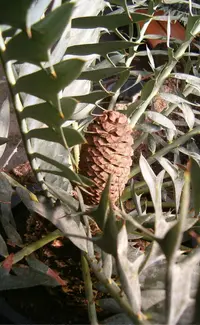
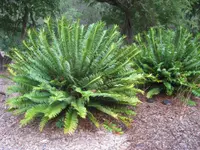
The Eastern Cape blue cycad, Encephalartos horridus, is a slow-growing evergreen cycad with a striking, architectural form. It forms a thick, woody trunk topped with stiff, arching leaves.
Its foliage is blue-gray to silvery, with sharply spined leaflets that give the plant a sculptural, almost prehistoric look. In nature, it grows in arid, rocky areas of South Africa’s Eastern Cape.
This species is long-lived but slow to establish, and it dislikes disturbance to its roots. It is considered challenging, so learning how to care for Eastern Cape blue cycad before purchase helps avoid losses.
It generally prefers bright light, excellent drainage, and careful watering that keeps the soil barely moist, especially in cooler or lower-light indoor conditions.

Care Difficulty
Hard Care

Light Preference
Full Sun

Water Requirements
Low Water

Temperature Preference
Warm Climate

Hardiness Zone
9–11

Soil Texture
Sandy, Loamy, Rocky

Soil pH
Slightly acidic (6.5–7.0), Neutral (7.0)

Soil Drainage
Well-drained

Fertilization
Minimal (feed rarely)
Scan your plant to receive care tips personalized for your specific plant
Available on iOS and Android
This species thrives in strong light with some protection from extreme midday sun.
This drought-tolerant cycad prefers deep, infrequent watering and fast-draining soil.
This cycad prefers warm, dry conditions and tolerates brief cold better than prolonged damp chill.
Humidity is a minor factor for Encephalartos horridus, which thrives in relatively dry air.
Encephalartos horridus prefers a very fast-draining, mineral-rich medium that mimics rocky native habitats.
This species adapts well to container growing when given a stable, deep, and very free-draining setup.
This slow-growing cycad needs modest feeding to support steady growth in containers or cultivated beds.
Pruning Encephalartos horridus is minimal and focuses on hygiene rather than shaping.
Container-grown plants and young landscape specimens of Encephalartos horridus prefer infrequent but careful repotting or transplanting.
Propagation of Encephalartos horridus is specialized and usually carried out by experienced growers or conservation programs.
This cycad tolerates light, brief frost but benefits from thoughtful winter management in colder regions.

Plant Health Check
Not sure what's wrong with your plant? Check your plant's health inside the app.
This species develops rigid, strongly recurved leaflets with sharp spines and a distinctive blue-gray coating caused by a waxy bloom that reduces water loss and reflects intense sunlight in its arid South African habitat.
It is a dioecious cycad, meaning individual plants are either male or female, each producing only pollen cones or seed cones, so seed production requires both sexes growing within pollination distance.
In the wild, pollination is carried out primarily by specialized beetles that visit the cones, a mutualistic relationship that is unusual compared with the wind pollination seen in many modern seed plants.

This species is listed as endangered in the wild due to habitat loss and illegal collection, and mature specimens can be so slow-growing that individual plants in cultivation may represent many decades of growth, which is a key reason why Encephalartos horridus care is often discussed in conservation contexts.
Brown leaves usually result from old fronds aging, intense sun scorch, or prolonged dryness around the roots. Remove fully brown fronds at the base and adjust light exposure and watering habits to prevent further damage.
Keep your plants happy and healthy with plant identification, disease detection, and easy care guidance.