Natal giant cycad Care (Encephalartos natalensis)

Also known as: Natal Cycad, Giant Cycad
Natal giant cycad

About Natal giant cycad

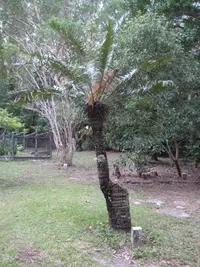
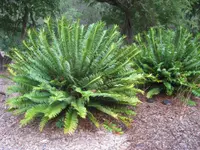
The Natal giant cycad, Encephalartos natalensis, is a prehistoric-looking evergreen gymnosperm with a thick trunk and bold, arching fronds. It forms a sculptural clump over time and grows slowly but steadily.

This species is native to subtropical regions of South Africa, where it often occurs on rocky hillsides and grasslands. Its tough leaves and drought tolerance make it relatively resilient once established, but seedlings and potted plants need consistent care.

It prefers bright light, good air circulation, and sharply draining, gritty soil to prevent root problems. Understanding how to care for Natal giant cycad mainly involves managing water carefully and avoiding prolonged cold or frost.

Main Plant Requirements

Care Difficulty

Moderate Care

Light Preference

Full Sun

Water Requirements

Low Water

Temperature Preference

Warm Climate

Hardiness Zone

9–11

Soil Texture

Sandy, Loamy, Rocky

Soil pH

Slightly acidic (6.5–7.0), Neutral (7.0)

Soil Drainage

Well-drained

Fertilization

Minimal (feed rarely)

Get Personalized Care Plan

Scan your plant to receive care tips personalized for your specific plant

Available on iOS and Android

How to Care for the Natal giant cycad

This cycad prefers bright, strong light that imitates open woodland or savanna conditions.

  • Provide 6–8 hours of direct sun daily, ideally with morning sun and light afternoon shade, especially in hot inland climates.
  • Young Natal giant cycad plants benefit from filtered light or 30–40% shade cloth to prevent leaflet scorch while they establish.
  • In cooler or coastal areas, gradual exposure to more midday sun is acceptable; weak, elongated growth signals insufficient light.

This species prefers deep, infrequent watering with fast drainage rather than constantly moist soil.

  • Water only when the top 5–8 cm of soil feels dry, then soak the root zone thoroughly and allow excess water to drain away.
  • During active growth in warmer months, increase watering frequency; in cooler seasons, reduce watering sharply to prevent root rot in Encephalartos natalensis.
  • Watch for yellowing, soft leaf bases as a sign of overwatering, and crisp, browning leaflet tips as a sign of prolonged drought stress.

This cycad is adapted to warm climates but needs protection from hard frost and extreme cold.

  • Best growth occurs around 70–86°F (21–30°C), with steady warmth and good airflow around the crown and roots.
  • The plant can briefly tolerate down to about 28–30°F (-2 to -1°C) if dry, but repeated frosts can damage fronds and the central growing point.
  • In very hot weather above 100°F (38°C), provide some afternoon shade and avoid reflected heat from walls or paving to limit leaf scorch.

This cycad tolerates a wide humidity range and rarely needs special humidity management indoors or outdoors.

  • Aim for 30–60% humidity; levels above 70% outdoors are acceptable if air movement is strong.
  • Dry indoor air is usually tolerated, but prolonged exposure below 25% can cause leaflet edges to brown.
  • Humidity stress appears as browning tips, crisp leaflets, and slowed new frond production.
  • Increase humidity only when air is very dry by grouping plants or placing a water tray nearby without letting roots sit in water.

Encephalartos natalensis prefers sharply drained, mineral-rich soil that mimics rocky, sandy habitats.

  • Use a gritty, sandy-loam mix such as 40% coarse sand, 30% pumice or perlite, and 30% composted bark or well-aged compost.
  • Ensure fast drainage so water runs through in seconds and the top 3–5 cm dry within 2–3 days after watering.
  • Keep pH slightly acidic to neutral, around 6.0–7.2, avoiding strongly acidic or alkaline substrates that limit nutrient uptake.
  • Avoid heavy clay, peat-heavy mixes, or compacted ground; improve existing soil with coarse sand, fine gravel, or pumice to increase aeration and reduce waterlogging risk.

This species can grow long term in containers if the pot is structured to support its heavy caudex and deep roots.

  • Choose a deep, heavy container that resists tipping as the crown enlarges and fronds lengthen.
  • Fill the pot with a very fast-draining, gritty mix so water clears quickly while roots anchor firmly.
  • Leave several centimeters between caudex and rim to allow top-dressing with gravel, which stabilizes the plant and keeps the crown drier.

This slow-growing cycad benefits from light, controlled feeding during the warm growing season.

  • Use a balanced slow-release fertilizer (around 10-10-10 or similar) or well-aged compost sprinkled over the root zone, avoiding contact with the trunk.
  • Feed Natal giant cycad 1–2 times during spring–summer only, as excessive nutrients can cause weak, lush growth.
  • Apply at half the label strength for container plants and water in thoroughly to prevent root burn.
  • Stop feeding in late summer to allow growth to harden and avoid stimulating soft tissue before cooler weather.

Encephalartos natalensis needs minimal pruning focused on hygiene rather than shaping.

  • Carry out pruning in late winter or early spring before strong new growth begins.
  • Remove only dead, yellowing, or diseased fronds at the base using clean, sharp pruners or a pruning saw for thick petioles.
  • Avoid cutting green, healthy fronds, as they store energy and support overall vigor and cone production.
  • Trim spent cone stalks once dry, taking care not to damage the crown or emerging new growth.

This cycad dislikes frequent disturbance, so repotting or transplanting should be infrequent and deliberate.

  • Consider moving the plant when roots circle the pot, growth slows noticeably, or the container becomes unstable from top weight.
  • Plan transplanting or repotting in late spring to early summer when soil is warm and the plant is actively growing.
  • Shift into a slightly larger container or planting hole with very free-draining, gritty soil to prevent waterlogging and root rot.
  • Handle the root ball gently, backfill firmly but not tightly, water once to settle soil, then keep slightly drier for several weeks to reduce stress.

This species is usually propagated slowly and carefully, primarily through offsets and seeds.

  • Use basal offsets (suckers) removed from mature plants, allowing the cut surface to dry and callus for several days before potting.
  • Carry out offset removal in warm late spring–summer, when active growth supports better root formation.
  • Sow fresh, cleaned seeds in a coarse, well-drained medium at 75–85°F, maintaining even moisture but never waterlogged.
  • Provide bright, indirect light and patience, as both sucker rooting and seed germination can take many months for Encephalartos natalensis plant care.

This subtropical cycad needs simple but consistent winter protection in cooler climates.

  • It is sensitive to hard frost; aim to keep temperatures above 28–30°F, especially for young plants.
  • Apply a dry mulch layer 5–10 cm thick around the root zone, keeping material away from the trunk to avoid rot.
  • Wrap the crown lightly with breathable fabric during freezing nights to shield emerging growth from ice damage.
  • Move container plants into a bright, cool, frost-free space and water sparingly during winter dormancy.

Care Tips

Protect central crown

Keep debris, mulch, and water from pooling in the crown, and after heavy rain gently shake or blow excess water from the center to reduce the risk of rot in new flushes of leaves.

Stabilize heavy caudex

As the trunk thickens, mound a firm but free-draining mix around the base and, in windy sites, use low discreet stakes or rock edging to keep the plant stable while roots anchor more deeply.

Manage offset pups

Remove basal pups only when they are at least 10–15 cm across and the parent is vigorous, using a clean, sharp tool and dusting the cut surfaces with a dry fungicidal powder before replanting.

Winter dryness strategy

In regions with cool, wet winters, provide a raised mound or slope and, if needed, a simple overhead rain shield so the root zone stays relatively dry while the plant is semi-dormant.

Monitor cone weight

When large seed cones develop, check that the stem is well supported and, if the cone leans, brace it gently with a padded prop to prevent mechanical damage to the crown while growing Natal giant cycad.

Common Pests and Diseases

Cycad aulacaspis scale

This pest forms dense white crusts on fronds, petioles, and sometimes roots, causing yellowing, frond dieback, and plant decline. Symptoms include heavy leaf drop and a powdery, encrusted appearance that is difficult to remove by hand.

Solution

Remove heavily infested fronds and dispose of them, then thoroughly wash remaining fronds and crowns with a strong stream of water and a soft brush to dislodge scale. Follow with repeated treatments of a suitable systemic insecticide or horticultural oil labeled for armored scale, making sure to cover leaf undersides and the crown; avoid spraying in full sun or high heat to limit leaf burn.

Cycad blue butterfly

These insects lay eggs on young flushes, and the green caterpillars feed between leaflet pairs, leaving notched, ragged fronds. Severe feeding can distort new growth and slow overall plant vigor.

Solution

Inspect new flushes frequently and hand-pick caterpillars or prune out heavily damaged young fronds. Where damage is recurring, apply a biological product containing Bacillus thuringiensis (Bt) or a targeted contact insecticide to new growth in the late afternoon, repeating as new flushes emerge while monitoring for beneficial insects.

Mealybugs

This pest hides in leaflet bases, crowns, and roots, leaving white cottony clusters, sticky honeydew, and sooty mold. Infestations can cause yellowing, stunting, and increased susceptibility to other stressors.

Solution

Use a firm spray of water and a soft brush to remove visible colonies from fronds and crowns, then treat remaining insects with a systemic insecticide or alcohol-dipped cotton swabs on accessible areas. For persistent or root-zone infestations, combine foliar treatments with a soil drench labeled for mealybugs and improve plant hygiene by removing leaf litter and avoiding overcrowding.

Fungal leaf blight

This disease causes brown to dark purplish spots or blotches on leaflets that may expand and merge, especially in warm, humid, stagnant air. Symptoms include premature browning of fronds and a patchy, scorched appearance.

Solution

Prune and discard affected fronds, avoiding overhead irrigation and watering only at soil level to keep foliage dry. Improve air movement around the plant by spacing and light pruning, then apply a suitable fungicide labeled for leaf spot or blight on cycads, repeating at intervals during wet, humid periods according to label directions.

Crown and caudex rot

This disease affects the central growing point and trunk-like caudex, often following mechanical damage or prolonged waterlogging, leading to soft, foul-smelling tissue and collapse of the central crown. Symptoms include yellowing or sudden collapse of new flushes while older leaves may remain green for a time.

Solution

At the first sign of soft, discolored tissue, carefully cut out all affected material from the crown and caudex with sterile tools, allowing the area to dry thoroughly. Dust or drench the exposed tissue and surrounding soil with a fungicide labeled for Phytophthora or Pythium if available, then adjust watering to keep the soil well-drained and avoid water collecting in the crown, which is critical for long-term Encephalartos natalensis care.

Interesting Facts

Distinctive spiraled cones

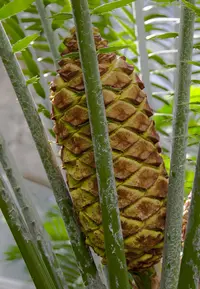
This species produces large, cylindrical cones with tightly spiraled scales, and male and female cones are carried on separate plants, a typical trait of cycads but with a particularly robust and massive cone form in this species.

Rocky grassland specialist

It naturally occurs on rocky slopes and grasslands in KwaZulu-Natal and nearby regions of South Africa, often forming scattered stands on well-drained, nutrient-poor soils where many other woody plants struggle to persist.

Fire-adapted growth form

The stout, often partly subterranean trunk and tough leaf bases help the plant withstand grassland fires, after which it can flush new fronds from the protected growing point.

Botan icon

Did you know?

In its native range, this cycad is primarily pollinated by specialized beetles that seek shelter and food in the cones, making successful reproduction dependent on a very specific plant–insect interaction.

FAQs about Natal giant cycad

Yellowing fronds usually result from natural aging, nutrient deficiency, root problems, or past overwatering. Remove only fully yellow, older lower fronds, check drainage and root health, and apply a balanced slow‑release fertilizer if nutrient deficiency is likely.

Grow Healthy Plants with Botan Care

Keep your plants happy and healthy with plant identification, disease detection, and easy care guidance.

Botan plant care app — identify plants on mobile

Explore More Plants