Nertera dichondrifolia Care

Nertera dichondrifolia

About Nertera dichondrifolia

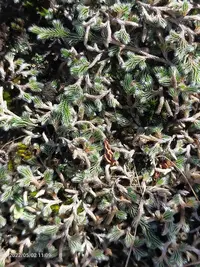
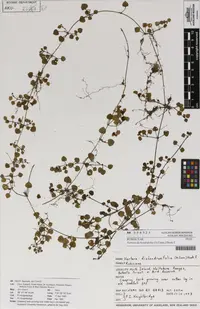
Nertera dichondrifolia, often sold as a tiny groundcover or dish plant, is a low, mat-forming perennial with very small, rounded leaves. It sometimes produces small, colorful berries that sit close to the foliage, giving a dense, beaded look.

This species is native to parts of Central and South America, where it grows in cool, moist, well-drained sites. In cultivation, it is considered moderately challenging because it dislikes drying out completely yet is sensitive to waterlogging and heat.

Those learning how to care for Nertera dichondrifolia should know it prefers bright, indirect light, consistently lightly moist soil, and protection from strong sun and hot, dry indoor air.

Main Plant Requirements

Care Difficulty

Hard Care

Light Preference

Bright Indirect Light

Water Requirements

Keep Soil Moist

Temperature Preference

Tropical / Frost Sensitive

Hardiness Zone

10–11

Soil Texture

Loamy, Peaty, Organic-rich

Soil pH

Acidic (5.5–6.5), Slightly acidic (6.5–7.0)

Soil Drainage

Moist but well-drained

Fertilization

Light (every 4–6 weeks)

Get Personalized Care Plan

Scan your plant to receive care tips personalized for your specific plant

Available on iOS and Android

How to Care for the Nertera dichondrifolia

This low, mat-forming plant needs bright, gentle light to color and fruit well.

  • Provide 3–5 hours of soft morning sun with bright, filtered light the rest of the day; avoid harsh midday and afternoon sun that can scorch leaves and berries.
  • Outdoors, site in light dappled shade under shrubs or open trees; indoors, place near an east or bright north window for reliable Nertera dichondrifolia indoor care.
  • Watch foliage color and density: pale, sparse growth indicates too little light, while crisped leaf edges and bleached berries indicate excess sun.

This species prefers consistently lightly moist soil, not wet or bone dry.

  • Water when the top 1–2 cm of soil feels just dry, then moisten thoroughly until excess drains, avoiding water pooling around roots.
  • Use a free-draining mix and containers or beds with good runoff; prolonged saturation leads to root rot, yellowing, and a sour smell from the soil.
  • In cooler seasons, allow the top layer to dry a bit more between waterings; in warm, active growth, watch for wilting or puckered berries as signs it needs water.

This plant favors cool to mild temperatures and dislikes extremes.

  • Aim for 55–70°F (13–21°C) for best growth and berry set; short periods at 45–50°F (7–10°C) are usually tolerated if soil is not waterlogged.
  • Protect from frost; exposure below 32°F (0°C) can kill foliage and berries, so move containers or provide cover before freezing nights.
  • In hot spells above 80°F (27°C), give extra shade and airflow, and keep roots cool; prolonged heat over 86°F (30°C) can cause poor berry retention and leaf scorch.

This species needs consistently moderate to high humidity to keep foliage and berries healthy.

  • Aim for 50–70% humidity; prolonged air below 40% leads to leaf edge browning and berry shriveling.
  • Keep the pot away from heating vents, fans, and drafty windows that dry air rapidly around Nertera dichondrifolia.
  • Increase humidity with a water-filled pebble tray under the pot or a nearby room humidifier instead of misting.

This plant prefers a moist, airy, and humus-rich substrate that drains freely yet never dries out completely.

  • Use a mix of 50–60% peat or coco coir, 20–30% compost, and 20–30% perlite or fine bark to keep the soil loose and moist-retentive.
  • Ensure water drains through within seconds; if it pools on the surface, lighten the mix with more perlite or fine bark for better aeration.
  • Keep pH slightly acidic to neutral, around 5.5–7.0, avoiding alkaline mixes that can lock up nutrients and cause pale growth.
  • Avoid heavy garden soil, pure sand, or compacted potting mixes that stay waterlogged or form hard clods around fine roots.

This species is well suited to shallow container growing due to its low, mat-forming habit.

  • Choose a wide, shallow pot so the spreading stems can root across the surface without deep, soggy soil beneath.
  • Select a slightly heavier ceramic or clay container to keep the light, wide plant stable and prevent tipping.
  • Empty saucers promptly after watering so the shallow root zone does not sit in standing water and develop rot.

This plant benefits from light, carefully controlled feeding to support berries and compact growth.

  • Use a balanced liquid fertilizer (for example 10-10-10 or 20-20-20) at 1/4–1/2 strength for Nertera dichondrifolia.
  • Feed every 4–6 weeks during active growth in spring and summer only.
  • Avoid organic compost-heavy mixes in pots, which can stay too wet and cause root issues.
  • Stop feeding in fall and winter to allow a natural rest period.

Pruning is mainly cosmetic and helps maintain a low, dense cushion of growth.

  • Best time for light pruning is after the main berry display has finished, usually late fall to early spring.
  • Snip off dead, discolored, or damaged stems with clean scissors to reduce disease risk.
  • Trim back overly long or sparse runners to keep a tight, even mound and encourage new shoots.
  • Avoid heavy cutting into the center mat; focus on tidying the outer edges instead.

This species prefers a shallow container and only occasional repotting to limit stress.

  • Check for crowded roots circling the pot, water running straight through, or slowed growth as signs repotting is needed.
  • Plan to repot every 2–3 years in early spring, just before active growth begins.
  • Move Nertera dichondrifolia into a shallow, slightly wider pot with fresh, free-draining mix, keeping the root ball mostly intact.
  • Water gently after repotting, keep in bright but indirect light, and maintain even moisture while roots re-establish.

Propagation is moderately straightforward and most reliable by division of established mats.

  • Divide the plant in early spring, separating small sections of the carpet with roots attached and replanting shallowly.
  • Use fresh, well-drained mix and keep humidity moderate to high until new growth appears.
  • Seed sowing is possible but slow; surface-sow fresh seed and maintain consistent moisture and gentle warmth (64–70°F).
  • Avoid drying out young divisions or seedlings, as fine roots are sensitive to water stress.

This plant is frost sensitive and needs protection in regions with cold winters.

  • In areas below 40°F, grow in containers and move indoors before first frost.
  • Provide a cool, bright spot indoors around 50–60°F to mimic natural winter conditions.
  • Reduce watering in winter, keeping the soil just slightly moist, never saturated.
  • Outdoors in mild climates, use a light mulch around the pot to buffer short cold spells.

Care Tips

Cool rest period

Provide a cool rest phase at 50–59°F for 8–10 weeks after the berries drop to encourage strong budding and heavier fruiting the next season.

Post-bloom renewal

Once most berries shrivel, trim back weak or bare stems and lightly top-dress with fresh mix instead of full repotting to keep the mat dense and compact.

Surface moisture check

Check moisture by gently lifting the moss-like mat and feeling 1–2 cm below the surface, as the top layer can look dry while the root zone is still wet.

Shallow, wide containers

Use a shallow, wide pot to match the plant’s very shallow root system and help prevent waterlogging in the center of the root mat.

Prevent berry rot

During heavy fruiting, water at the pot edge and avoid wetting the berries directly to reduce fungal spots and prolong their display when caring for Nertera dichondrifolia.

Common Pests and Diseases

Spider mites

This pest attacks fine foliage in warm, dry indoor air, causing tiny yellow speckling, dulled leaves, and fine webbing across the mat of stems. Symptoms include slow decline and a dusty appearance on the foliage and berries.

Solution

Rinse the plant thoroughly under a gentle, lukewarm shower, including the undersides of leaves and stems, then allow it to dry with good airflow. Repeat rinsing every few days and, if needed, follow with a ready-to-use insecticidal soap or neem oil spray labeled for indoor ornamentals, keeping the plant slightly cooler and the air a bit more humid to discourage reinfestation during ongoing Nertera dichondrifolia care instructions.

Mealybugs

These insects hide in the dense cushion of stems and at the soil line, appearing as white cottony clusters. This pest weakens the plant, distorts new growth, and may cause berries to shrivel or drop.

Solution

Isolate the plant, then dab visible mealybugs with cotton swabs dipped in isopropyl alcohol, taking care to reach into crevices between stems. Follow up with 2–3 treatments of insecticidal soap at 7–10 day intervals and, if infestation is heavy, consider cutting back the top growth to remove shelters where mealybugs hide, then allow the plant to regrow under clean conditions.

Botrytis blight

This disease develops in cool, humid, and stagnant air, leading to soft, water-soaked spots on leaves, stems, and berries that become covered with gray, fuzzy mold. Symptoms include rapid collapse of affected patches within the low mat of foliage.

Solution

Remove and discard all affected plant parts, including any moldy berries and fallen debris on the soil surface, and improve airflow by spacing plants and avoiding overhead watering. Keep the foliage dry, water at the base in the morning, and, in persistent cases, apply a fungicide labeled for Botrytis on ornamentals, ensuring the plant is kept slightly warmer and better ventilated during recovery.

Bacterial leaf spot

Symptoms include small, water-soaked translucent spots on leaves that enlarge, turn dark, and sometimes merge to form irregular patches, particularly in plants kept too wet or splashed frequently. This disease can lead to thinning of the dense mat as affected leaves yellow and drop.

Solution

Remove and discard affected leaves promptly, avoid wetting the foliage, and water at the soil level only when the top surface has just begun to dry. Improve air circulation, reduce crowding, and if the problem persists, consider restarting from healthy, clean stock while sterilizing tools and pots before replanting.

Interesting Facts

Bright but brief berries

The vivid orange berries typically last only a few weeks before shriveling, because the thin fruit skin and high surface area cause rapid moisture loss once fully ripe.

Cool-climate ground cover

In its native range from Central to South America and some Pacific islands, this species forms low, mat-like ground cover in cool, open habitats rather than in deep forest shade.

Shallow, fibrous roots

The plant has a dense, shallow root system adapted to thin soils, which helps it spread across rocky or compacted substrates but also makes it sensitive to drying out at the soil surface.

FAQs about Nertera dichondrifolia

This species performs best outdoors in mild, frost-free climates with cool summers and consistent moisture. Indoors it is short-lived and more difficult, so Nertera dichondrifolia indoor care is usually treated as temporary, decorative display rather than long-term culture.

Grow Healthy Plants with Botan Care

Keep your plants happy and healthy with plant identification, disease detection, and easy care guidance.


Botan plant care app — identify plants on mobile

Explore More Plants