Rotate For Symmetry
Turn the pot 90° every 2–3 weeks so all sides receive similar light, which keeps the canopy full and prevents the stems from leaning strongly to one side.

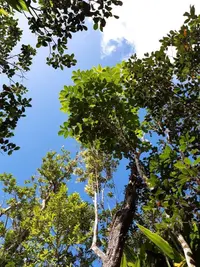
Polyscias repanda, often called the fernleaf aralia, is a woody, evergreen shrub grown mainly as an indoor foliage plant. It belongs to the Araliaceae family, the same family as schefflera.
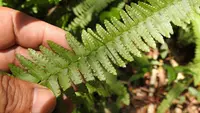
It has finely divided, fern-like leaves on upright, branching stems, giving it a light, airy look that suits bright living rooms and offices. In the wild it occurs in tropical regions of Southeast Asia and the Pacific.
This plant grows moderately fast and can be pruned to keep a compact, tree-like form. It is moderately easy to grow if given stable warmth, bright filtered light, and evenly moist but well-drained soil, and learning how to care for Polyscias repanda helps maintain a dense, attractive canopy.

Care Difficulty
Moderate Care

Light Preference
Bright Indirect Light

Water Requirements
Moderate Water

Temperature Preference
Tropical / Frost Sensitive

Hardiness Zone
11–12

Soil Texture
Loamy, Sandy, Organic-rich

Soil pH
Acidic (5.5–6.5), Slightly acidic (6.5–7.0)

Soil Drainage
Moist but well-drained

Fertilization
Light (every 4–6 weeks)
Scan your plant to receive care tips personalized for your specific plant
Available on iOS and Android
This shrub prefers bright, indirect light with brief gentle direct sun.
Watering should keep the root zone lightly moist but never saturated.
Stable, warm conditions support healthy growth and leaf retention.
This species prefers moderately humid air and reacts if conditions are too dry.
Provide a loose, well-draining, organic-rich substrate to protect the roots from suffocation and rot.
This species adapts well to container growing when stability and drainage are managed.
This shrub benefits from light, consistent feeding during the warm growing season but reacts poorly to excess salts.
Thoughtful pruning keeps Polyscias repanda dense, compact, and well-shaped indoors or in mild outdoor climates.
Most plants adapt well to modest containers, so repotting focuses on root health and stability rather than rapid size increase.
Stem cuttings provide the most practical method for home propagation, though success depends on warmth and humidity.
This species is frost-sensitive and needs protection in regions where temperatures drop near or below freezing.

Plant Health Check
Not sure what's wrong with your plant? Check your plant's health inside the app.
Polyscias repanda is native to coastal forests and thickets of eastern Australia and nearby Pacific regions, where it often grows in sheltered, humid sites close to the sea and tolerates salt-laden winds better than many other araliads.
This species shows strong leaf polymorphism, with leaves ranging from almost entire, roundish blades to deeply toothed or lobed forms, sometimes even on the same plant as it matures from juvenile to adult growth.
In its native habitat it can reach 4–6 m as a branching shrub or small tree, forming dense, layered foliage that provides understorey structure and shelter for small birds and invertebrates.

In parts of its native range, Polyscias repanda is used as a living hedge or windbreak around gardens and homesteads, because its dense branching and tolerance of coastal exposure allow it to form long-lasting, almost wall-like screens with relatively little pruning.
Brown leaf tips or edges usually come from low humidity, irregular watering, or excess fertilizer salts. Check soil moisture, flush the pot occasionally, and increase ambient humidity slightly to stabilize new growth and leaf margins.
Keep your plants happy and healthy with plant identification, disease detection, and easy care guidance.