Spiral flag Care (Costus pictus)

Spiral flag

About Spiral flag

Spiral flag (Costus pictus) is a tropical, rhizomatous perennial known for its upright, spiraling stems and lush green leaves. It belongs to the Costaceae family, related to ginger. The plant produces showy, cone-like flower spikes with yellow to orange tubular blooms, giving it strong ornamental value in warm, humid climates or greenhouses. Costus pictus is native to India and thrives in consistently warm, moist, and partially shaded environments. It prefers rich, well-drained soil and steady humidity. With stable indoor conditions and protection from cold drafts, it is moderately easy to care for Spiral flag for growers who understand its need for warmth and moisture.

Main Plant Requirements

Care Difficulty

Moderate Care

Light Preference

Partial Shade

Water Requirements

Keep Soil Moist

Temperature Preference

Tropical / Frost Sensitive

Hardiness Zone

10–11

Soil Texture

Loamy, Organic-rich

Soil pH

Acidic (5.5–6.5), Slightly acidic (6.5–7.0)

Soil Drainage

Moist but well-drained

Fertilization

Light (every 4–6 weeks)

Get Personalized Care Plan

Scan your plant to receive care tips personalized for your specific plant

Available on iOS and Android

How to Care for the Spiral flag

Costus pictus grows best in bright, filtered light that mimics dappled forest conditions.

  • Provide 3–5 hours of soft morning sun with light shade or filtered light the rest of the day, especially in warmer climates.
  • Allow partial shade in the afternoon; strong midday sun can scorch leaves, causing brown, dry patches and faded color.
  • In regions with dull winters, place plants where they receive as much indirect light as possible to prevent weak, stretched growth.

Costus pictus prefers evenly moist, never soggy soil throughout the active growing season.

  • Water when the top 2–4 cm of soil feels dry, using enough water to moisten the root zone while allowing excess to drain freely.
  • During warm, active growth, dry-down between waterings should be short; in cooler months, let the top layer dry a bit deeper before watering again.
  • Watch for yellowing, soft stems as a sign of overwatering and crisp, curling leaves as an indicator of underwatering.

This species thrives in consistently warm, frost-free conditions similar to a tropical understory.

  • Aim for 65–85°F (18–29°C) for active growth, with the best performance around 70–80°F (21–27°C).
  • Protect from cold; growth slows below 60°F (16°C) and the plant can be damaged near 40°F (4°C) and killed by frost.
  • In hot regions, short periods up to 90–95°F (32–35°C) are tolerated if soil moisture is stable and the plant is shielded from harsh afternoon sun.

This species prefers consistently moist air and reacts quickly to very dry indoor conditions.

  • Aim for 60–80% humidity for healthy foliage on Spiral flag.
  • Crisping leaf tips, rolled leaves, and stalled new growth indicate humidity stress rather than underwatering.
  • Increase humidity by grouping plants, placing pots on pebble trays with water below the pot base, or using a small room humidifier nearby.

This plant grows best in loose, organic-rich, slightly acidic to neutral soil that drains freely yet holds some moisture.

  • Use a mix of 50–60% peat or coco coir, 20–30% compost, and 20–30% perlite or fine bark to balance moisture retention and drainage.
  • Aim for pH around 6.0–7.0, which supports nutrient availability and root activity for Costus pictus.
  • Soil should feel springy and crumbly, never dense; add extra perlite or bark if it compacts after watering.
  • Avoid heavy clay-based mixes, unamended garden soil, or constantly soggy substrates, which encourage root rot and fungal problems.

This species is well suited to container growing when the pot supports its upright, rhizomatous growth habit.

  • Choose a wide, stable pot that resists tipping as the canes become taller and foliage weight shifts upward.
  • Select slightly porous materials like terra-cotta only if you can water more often, since they accelerate moisture loss from the mix.
  • Use a container depth that allows at least 10–15 cm of substrate below the rhizomes so new shoots can develop without crowding the base.

Costus pictus responds well to moderate, consistent feeding during its active warm-season growth.

  • Use a balanced liquid fertilizer (for example 10-10-10 or 20-20-20) diluted to 1/2–1/4 strength every 3–4 weeks in spring and summer.
  • Apply to moist soil, never to completely dry roots, to lower the risk of fertilizer burn.
  • Pause feeding in late fall and winter when growth slows or stems die back, especially in cooler climates.
  • For organic Spiral flag indoor care, incorporate a thin layer of compost or use a mild slow-release fertilizer at the start of the growing season.

Pruning helps Costus pictus stay compact, tidy, and focused on healthy new shoots.

  • Best time for structural pruning is late winter or early spring, just before strong new growth begins.
  • Cut dead, damaged, or pest-infested stems at the base using clean, sharp pruners to limit disease spread.
  • Thin out weak or crowded canes to improve light and air flow, encouraging stronger upright shoots and better flowering.
  • After flowering, lightly shorten overly tall or leaning stems to maintain shape and manageable height.

Repotting or transplanting supports strong clump development and prevents Costus pictus from becoming rootbound.

  • Check for roots circling the pot, pushing through drainage holes, or for slowed growth and quicker drying soil as signs it needs a larger container.
  • Plan repotting or outdoor transplanting in late spring, once temperatures are consistently warm and new shoots are emerging.
  • Move plants every 2–3 years into a container 1–2 in wider, using a loose, well-drained, organic-rich mix to support rhizome growth.
  • Water thoroughly after repotting, keep in bright but indirect light for 1–2 weeks, and avoid heavy fertilization until new growth looks firm and stable.

Costus pictus is most commonly propagated by division and stem cuttings taken in warm conditions.

  • Divide rhizomes in late spring, separating clumps with 2–3 healthy shoots and firm roots, then replant at the same depth in moist, well-drained soil.
  • Take 10–15 cm semi-ripe stem cuttings in late spring or summer, removing lower leaves and planting nodes in a light, airy medium.
  • Maintain high humidity (60–70%) and warm temperatures around 70–80°F, with bright, indirect light to support rooting and reduce stress.
  • Keep the medium just slightly moist, avoid waterlogging, and wait for firm new top growth before potting cuttings or divisions into larger containers.

Costus pictus is frost-sensitive and needs protection in regions with cold winters.

  • In USDA zones below 9, grow in containers and move plants indoors before temperatures reach 40°F, placing them in bright, indirect light.
  • Allow top growth to die back naturally in cool conditions, then keep the rhizomes in barely moist soil, never fully saturated.
  • In mild climates, add a 5–8 cm layer of dry mulch over the root zone to reduce temperature swings and conserve soil moisture.

Care Tips

Rotate Container Regularly

Turn the pot 90° every 1–2 weeks so the spiral stems develop evenly around the support and do not lean strongly toward the light source.

Use Vertical Support

Install a slim stake or moss pole close to the rhizome and loosely tie new shoots as they elongate to guide a tighter, neater spiral and reduce the risk of stems snapping near the base.

Rhizome Division Timing

Divide the rhizomes only when active growth starts in spring, keeping at least 2–3 healthy shoots or buds per division to maintain strong regrowth and minimize transplant shock.

Refresh Top Layer

Once or twice a year, carefully scrape away the top 2–3 cm of old potting mix and replace it with fresh, well-drained medium to improve aeration and reduce salt buildup around the rhizomes.

Check Undersides For Pests

Inspect the undersides of leaves and the leaf axils every 2–3 weeks for spider mites and scale, and rinse foliage under a gentle shower at the first sign of pests to keep growing Spiral flag vigorous.

Common Pests and Diseases

Spiral gingerscale

This pest is a soft scale insect that often settles along the spiral stems and leaf midribs, sucking sap and causing yellowing and sticky honeydew on Costus pictus. Symptoms include sooty mold growing on the honeydew and general decline in vigor.

Solution

Wipe stems and leaves with a soft cloth dipped in lukewarm soapy water, then rinse gently to remove residue. For persistent infestations, treat with horticultural oil or neem oil every 7–10 days, ensuring full coverage of stems and leaf undersides, and prune heavily infested stems to reduce population pressure while following general Costus pictus care to keep the plant vigorous.

Spider mites

These insects thrive on Costus pictus in warm, dry indoor or greenhouse air, causing fine stippling on leaves, bronzing, and delicate webbing along leaf edges. This pest can quickly weaken the plant if humidity is low and air circulation is poor.

Solution

Increase relative humidity around the plant, rinse foliage thoroughly with a strong but gentle stream of water, and repeat every few days to dislodge mites. If needed, apply insecticidal soap or neem oil to both leaf surfaces, and isolate the plant from others until new growth appears clean.

Leaf spot

This disease causes small water-soaked lesions on Costus pictus foliage that enlarge into brown or tan spots, sometimes with yellow halos. Symptoms include premature leaf drop on crowded, shaded, or frequently wet plants.

Solution

Remove and discard affected leaves, avoid wetting the foliage when watering, and improve spacing and airflow around the plant. If new spots continue to appear, use a copper-based or other labeled ornamental fungicide according to directions, and keep leaves dry, especially in the evening.

Rhizome rot

This disease affects the underground rhizomes, leading to soft, mushy tissue, stunted shoots, and yellowing or collapse of stems in Costus pictus grown in poorly drained soil. Symptoms include a sour smell from the potting mix and easy detachment of roots from the rhizome.

Solution

Unpot the plant, cut away all soft, discolored rhizome sections with a sterile knife, and discard severely affected pieces. Repot only firm, healthy rhizomes into fresh, free-draining mix, water lightly until new growth is established, and avoid letting the pot sit in water to help grow Costus pictus successfully.

Interesting Facts

Origin in southwestern India

This species is native to the moist, partially shaded understories of southwestern India, especially Kerala, where it grows along forest edges and stream banks.

Distinctive spiral stem

The plant develops upright, unbranched stems whose leaves are arranged in a tight spiral around the stem, a growth pattern that maximizes light capture in low, filtered light environments.

Edible tubular flowers

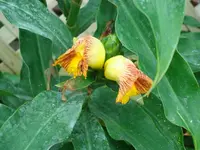
Its yellow, tubular flowers with red speckles are mildly sweet and are traditionally eaten fresh in parts of India, where they are commonly known as spiral ginger or insulin plant flowers.

Botan icon

Did you know?

In some regions of India and introduced areas such as southern India’s home gardens, this species has naturalized and often spreads vegetatively from stem cuttings and divisions, becoming a persistent component of semi-managed garden ecosystems.

FAQs about Spiral flag

Yellowing leaves usually result from overwatering, poor drainage, or low light, sometimes combined with nutrient deficiency. Check soil moisture first, improve drainage, remove standing water, then consider a balanced fertilizer if new growth also looks pale.

Grow Healthy Plants with Botan Care

Keep your plants happy and healthy with plant identification, disease detection, and easy care guidance.


Botan plant care app — identify plants on mobile

Explore More Plants