Manchurian crab apple Care (Malus mandshurica)

Manchurian crab apple

About Manchurian crab apple

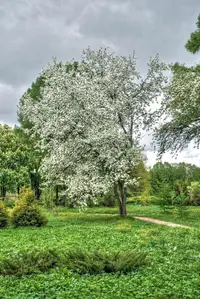
Manchurian crab apple, Malus mandshurica, is a hardy deciduous tree grown mainly for its white spring blossom and small colorful fruit. It usually has a rounded crown and dense branching, making it suitable for gardens, orchards, and windbreaks in cooler regions.

This species is native to northeast Asia, including parts of China, Korea, and the Russian Far East. It typically prefers full sun, moderately moist soil, and good drainage.

The tree is generally robust and tolerant of cold, but like many crab apples it can be prone to fungal diseases in humid climates. Basic knowledge of how to care for Manchurian crab apple makes it manageable for most home gardeners.

Main Plant Requirements

Care Difficulty

Moderate Care

Light Preference

Full Sun

Water Requirements

Moderate Water

Temperature Preference

Cold Hardy

Hardiness Zone

3–7

Soil Texture

Loamy, Sandy, Clay

Soil pH

Acidic (5.5–6.5), Slightly acidic (6.5–7.0)

Soil Drainage

Moist but well-drained

Fertilization

Minimal (feed rarely)

Get Personalized Care Plan

Scan your plant to receive care tips personalized for your specific plant

Available on iOS and Android

How to Care for the Manchurian crab apple

This temperate fruit tree needs abundant outdoor light for strong growth and flowering.

  • Provide full sun for 6–8 hours daily; morning sun with some light afternoon shade reduces leaf scorch in hot summers.
  • Young trees of Manchurian crab apple tolerate light partial shade, but flowering and fruiting decrease if sun drops below about 4–5 hours per day.
  • Avoid dense shade, which leads to weak, elongated shoots and poor bloom; in winter, unobstructed sun helps ripen wood and improves cold hardiness.

This species prefers evenly moist, well-drained soil rather than constantly wet or very dry conditions.

  • Water when the top 5–7 cm of soil feels dry, applying a slow, deep soak to reach the root zone instead of frequent light sprinkling.
  • During the first 2–3 growing seasons, Malus mandshurica benefits from consistent moisture; in mature trees, focus extra watering during prolonged droughts.
  • Improve drainage if water stands for more than 1–2 hours; yellowing leaves and soft, dark roots indicate overwatering, while drooping, crisp leaf edges suggest underwatering.

This hardy deciduous tree is adapted to cold winters and moderate summers in temperate climates.

  • Optimal growth occurs around 60–75°F (16–24°C) during the growing season, with cool nights supporting healthy bud and fruit development.
  • Trees tolerate winter lows near -20°F (-29°C) once established, but young plants benefit from protection from drying winds and sudden freeze-thaw cycles.
  • In hot spells above 90°F (32°C), stress increases; provide mulch to cool the root zone and avoid planting against heat-reflective walls that raise canopy temperature.

This species is adapted to outdoor conditions and does not have special humidity requirements in typical temperate climates.

Malus mandshurica prefers deep, well-structured mineral soil that stays evenly moist yet drains freely.

  • Use a loamy soil with a mix of sand, silt, and clay, enriched with 10–20% compost for organic matter.
  • Aim for slightly acidic to neutral pH around 6.0–7.0 to support nutrient availability and healthy root growth.
  • Improve drainage on heavier sites by incorporating coarse sand or fine gravel into the top 30–40 cm of soil.
  • Avoid compacted, waterlogged, or very shallow soils, which restrict roots and increase risk of root rot and nutrient deficiency.

This tree can be grown in containers when young, but long-term container culture is challenging and size-limited.

  • Choose a heavy, wide container to prevent tipping, as the canopy becomes top-heavy in wind.
  • Select a deep pot that allows a strong taproot and structural roots to develop without circling tightly.
  • Use a fast-draining, bark-based tree mix that holds moisture but does not stay saturated after rain or irrigation.

This hardy Manchurian crab apple usually needs modest feeding when grown in average garden soil.

  • Apply a balanced slow-release fertilizer (around 10-10-10) once in early spring as new growth starts.
  • Use compost or well-rotted manure as a light mulch over the root zone, keeping it off the trunk.
  • Avoid high-nitrogen products that push lush leafy growth at the expense of flowers and fruit.
  • Do not feed in late summer or winter; excess nutrients then can encourage tender growth that is vulnerable to cold.

Pruning Malus mandshurica focuses on structure, light penetration, and removing problem wood.

  • Carry out main pruning during late winter or very early spring while the tree is still dormant.
  • Remove dead, diseased, crossing, and inward-growing branches using clean, sharp bypass pruners or loppers.
  • Thin congested interior shoots to improve air flow and light, which supports flowering and reduces disease risk.
  • Limit cuts to smaller branches where possible to avoid large wounds and maintain a natural, open canopy form.

This crab apple is usually grown in the ground, so care focuses on planting and occasional transplanting of young trees.

  • Plan transplanting for late winter or early spring while dormant, before bud break in cool, workable soil.
  • Look for circling roots, root-bound containers, or poor vigor in nursery stock as signs it should be shifted.
  • Dig a wide planting hole, gently loosen encircling roots, and set the tree at the same soil level as in the pot.
  • Water deeply after planting, apply a 5–8 cm mulch ring, and keep soil evenly moist to limit transplant shock.

Propagation of Malus mandshurica is possible but more specialized than for many garden shrubs.

  • Sow fresh seed outdoors in fall or stratify in moist medium at 35–40°F for 3–4 months before spring sowing.
  • Use semi-hardwood cuttings in mid to late summer, placed in a well-drained medium under high humidity and bright shade.
  • Maintain gentle bottom warmth and consistent moisture, as crab apple cuttings root slowly and unevenly.
  • For named forms, graft scion wood onto compatible crab apple rootstocks in late winter using whip-and-tongue or similar techniques.

Malus mandshurica is a cold-hardy deciduous tree that generally requires minimal winter care in temperate climates.

  • Apply 5–8 cm of organic mulch over the root zone in late fall, keeping it a few cm away from the trunk.
  • Water well before ground freeze if autumn has been dry so roots enter winter fully hydrated.
  • For young or container-grown trees in colder areas, wrap the trunk with breathable tree guards to reduce bark injury.

Care Tips

Plan pollination partners

Plant at least one compatible crab apple or apple cultivar within 15–30 m to ensure reliable cross-pollination and heavier fruit set, especially if local wild Malus trees are not nearby.

Use structured training

In the first 3–5 years, select a strong central leader and 3–5 evenly spaced scaffold branches, then lightly weight or tie young shoots to widen narrow crotch angles to about 45–60° for stronger, storm-resistant limbs.

Manage root suckers

Inspect the base and root zone 2–3 times a year and cut root suckers flush with the root or trunk using clean, sharp pruners so they do not divert energy from the main tree canopy.

Time sanitation pruning

During late winter and again after flowering, remove mummified fruits, diseased twigs, and any cankered wood, then dispose of this material in the trash to reduce inoculum of common crab apple diseases such as apple scab and fire blight.

Optimize mulch zone

Maintain a 5–10 cm deep mulch ring that extends at least to the drip line, keeping mulch pulled back 5–8 cm from the trunk flare to protect fine feeder roots while reducing mower damage and helping with long-term Malus mandshurica care.

Common Pests and Diseases

Apple scab

This disease causes olive-brown, velvety spots on leaves and young fruit, which may crack or become deformed. Symptoms include early leaf drop that weakens Manchurian crab apple over time.

Solution

Remove and discard fallen leaves and mummified fruit to reduce spores, and avoid overhead watering to keep foliage dry. In areas with a history of scab, apply a labeled preventive fungicide at green tip through early fruit development and prune to improve airflow.

Fire blight

This disease leads to sudden blackening and wilting of blossoms and shoot tips, giving them a scorched appearance. Symptoms include shepherd’s crook bending of young shoots and cankers on branches.

Solution

Prune out infected shoots 20–30 cm below visible damage during dry weather, disinfecting tools between cuts, and remove severely blighted branches. Avoid high-nitrogen fertilization and heavy summer pruning, and in high-risk areas consider using a labeled blossom-protectant bactericide during bloom as part of broader Malus mandshurica care instructions.

Powdery mildew

This disease appears as white, powdery growth on young leaves, shoots, and flower buds, which can cause distortion and stunting. Symptoms include reduced flowering and thinner, less vigorous canopy growth.

Solution

Thin crowded branches to improve light and air movement, and avoid excessive nitrogen that promotes soft, susceptible growth. Remove heavily infected shoots during dormant pruning and, in repeatedly affected sites, use a suitable preventive fungicide at early leaf expansion if needed.

Codling moth

This pest is a small moth whose larvae tunnel into developing fruit, leaving frass-filled entry holes and causing premature fruit drop. Symptoms include internal browning and breakdown of the fruit around the core.

Solution

Collect and destroy infested and fallen fruit throughout the season to break the life cycle, and use corrugated cardboard bands on trunks to trap migrating larvae, removing and discarding bands regularly. In higher-pressure areas, apply targeted, timing-specific products such as granulosis virus or pheromone disruption according to local extension recommendations.

Aphids

These insects cluster on tender shoots and leaf undersides, sucking sap and causing curling, yellowing, and sticky honeydew that can lead to sooty mold. This pest can also weaken new growth and attract ants that protect colonies.

Solution

Spray infested shoots with a strong stream of water to dislodge colonies and prune heavily infested tips if practical. Encourage or introduce natural predators such as lady beetles, and when needed use horticultural soap or light horticultural oil, making thorough contact with leaf undersides and young stems.

Interesting Facts

Natural hybrid origin

Genetic and morphological studies indicate that this species likely arose as a natural hybrid between the Siberian crab apple (Malus baccata) and the common apple (Malus domestica), which helps explain its cold tolerance and small, brightly colored fruits.

Extreme cold hardiness

This crab apple is native to northeastern Asia and is adapted to very cold continental climates, tolerating winters in regions that are too harsh for many other ornamental and fruiting apples.

Important breeding parent

Plant breeders have used this species as a parent in apple and crab apple breeding programs to introduce improved cold hardiness, disease resistance, and ornamental flower and fruit traits into new cultivars.

Botan icon

Did you know?

In parts of its native range in the Russian Far East, this species forms mixed forest stands with other hardy woody plants, where its dense branching and abundant small fruits provide structural habitat and winter food for birds and small mammals, making it an important contributor to local forest biodiversity.

FAQs about Manchurian crab apple

This species performs best outdoors in full sun and seasonal cold. It needs winter chill, space for roots, and natural pollinators, so long-term indoor cultivation is not recommended beyond very short-term decorative use.

Grow Healthy Plants with Botan Care

Keep your plants happy and healthy with plant identification, disease detection, and easy care guidance.

Botan plant care app — identify plants on mobile

Explore More Plants