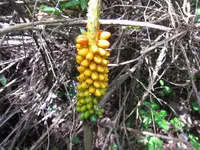
Early form training
In the first 3–5 years, select a single strong leader and 3–5 evenly spaced scaffold branches, removing steep, competing shoots in late winter to build a stable, open crown that resists breakage under fruit and snow.


European mountain ash (Sorbus aucuparia) is a small deciduous tree, often multi-stemmed, known for its clusters of white spring flowers and bright orange-red autumn berries. Its leaves are pinnate, giving a light, airy look, and the tree develops a rounded, open crown as it matures.
This species is native to much of Europe and parts of western Asia and adapts well to cool and temperate climates. It is generally hardy, wind-tolerant, and suitable for urban and rural gardens, which makes it relatively straightforward to grow.
It prefers full sun to light shade, moist but well-drained soil, and benefits from a cool root zone. Understanding how to care for European mountain ash mainly involves matching its need for light, drainage, and moderate moisture.

Care Difficulty
Easy Care

Light Preference
Full Sun

Water Requirements
Moderate Water

Temperature Preference
Cold Hardy

Hardiness Zone
3–7

Soil Texture
Sandy, Loamy, Clay

Soil pH
Acidic (5.5–6.5), Slightly acidic (6.5–7.0)

Soil Drainage
Moist but well-drained

Fertilization
Minimal (feed rarely)
Scan your plant to receive care tips personalized for your specific plant
Available on iOS and Android
This small tree prefers bright, open conditions to form dense foliage and good fruiting.
This species prefers evenly moist, free-draining soil, especially while young and establishing roots.
This hardy tree thrives in cool to temperate climates and tolerates significant winter cold.
Humidity is rarely a limiting factor for Sorbus aucuparia when grown outdoors in typical temperate climates.
Sorbus aucuparia prefers cool, moist, well-structured ground that drains freely yet does not dry out quickly.
This species is only moderately suitable for long-term container growing and usually performs better planted in the ground.
This tree usually grows well in average soil, but light feeding supports healthy growth and fruiting in Sorbus aucuparia.
Pruning Sorbus aucuparia is mainly done to maintain structure, safety, and fruit display rather than heavy size control.
European mountain ash is usually planted directly in the ground; container-grown trees are short term and then transplanted.
Propagation of Sorbus aucuparia is most reliable from seed, though vegetative methods are less common in home settings.
This species is cold hardy in most temperate climates and usually needs minimal winter care when established in the ground.

Plant Health Check
Not sure what's wrong with your plant? Check your plant's health inside the app.
The bright orange-red berries of this species are evolved to attract thrushes and other birds, which eat the fruits and later disperse the seeds in their droppings across long distances.
European mountain ash naturally ranges from lowlands to subalpine zones and tolerates severe winter frost, which is why it is common in cooler climates and at higher elevations across Europe and parts of Asia.
Its pinnate leaves often turn strong shades of yellow, orange, or red in autumn, and the intensity of this color change varies with factors such as sunlight, temperature swings, and soil conditions.
In traditional European folklore, especially in Celtic and Norse cultures, European mountain ash was commonly planted near homes and farmyards, where it was believed to offer protection and was often used to mark boundaries or sacred places.
This tree usually shows moderate growth, adding about 20–40 cm per year under good conditions. Young trees grow faster, then slow as they mature. Growth rate varies with climate, soil fertility, and moisture.
Keep your plants happy and healthy with plant identification, disease detection, and easy care guidance.