climbing dayflower Care (Commelina diffusa)

Also known as: Birdbill Dayflower, Creeping Day Flower, Spreading Dayflower, creeping spiderwort
climbing dayflower

About climbing dayflower

Climbing dayflower, Commelina diffusa, is a fast-growing, creeping to climbing herb often found in moist, warm regions across the tropics and subtropics. It commonly appears in lawns, gardens, fields, and along roadsides.

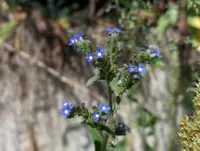
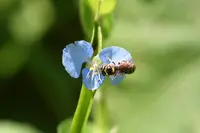
The plant has slender, trailing stems, soft green leaves, and small blue flowers that open for a short time during the day. It roots easily at stem nodes, which helps it spread quickly.

This species is generally tough and adaptable, tolerating a range of soils and some disturbance, which makes it easy to establish but sometimes weedy. It prefers consistent moisture and at least moderate light, so care for climbing dayflower usually focuses on managing its spread as much as supporting its growth.

Main Plant Requirements

Care Difficulty

Easy Care

Light Preference

Partial Sun

Water Requirements

Regular Water

Temperature Preference

Tropical / Frost Sensitive

Hardiness Zone

8–13

Soil Texture

Sandy, Loamy, Silty

Soil pH

Acidic (5.5–6.5), Slightly acidic (6.5–7.0)

Soil Drainage

Moist but well-drained

Fertilization

Minimal (feed rarely)

Get Personalized Care Plan

Scan your plant to receive care tips personalized for your specific plant

Available on iOS and Android

How to Care for the climbing dayflower

This species prefers bright, gentle light and tolerates some shade in warm climates.

  • Provide 3–6 hours of morning sun or bright filtered light; avoid harsh midafternoon sun in hot regions to prevent leaf scorch.
  • Climbing dayflower grows well in partial shade, especially where summers are hot, but growth becomes sparse in dense shade with fewer flowers.
  • In cooler seasons, slightly more direct sun is beneficial, while in summer, use taller plants or structures to cast light shade during the hottest hours.

This plant favors consistently moist, but not waterlogged, soil.

  • Irrigate when the top 2–3 cm of soil feel slightly dry, using enough water to moisten the root zone without leaving standing water.
  • In hot, dry weather, expect to water more often; in cool or rainy periods, extend intervals and rely more on natural rainfall when possible.
  • Wilting, dull leaves and dry soil indicate underwatering, while yellowing, soft stems or sour-smelling, soggy soil suggest excess moisture and poor drainage.

This species is a warmth-loving plant that grows fastest in mild to hot conditions without frost.

  • Aim for active growth in 70–90°F (21–32°C); it remains functional down to about 60°F (16°C) but growth slows noticeably.
  • Commelina diffusa is highly frost-sensitive; brief exposure near 32°F (0°C) can burn foliage, and hard freezes usually kill top growth or entire plants.
  • In very hot periods above 95°F (35°C), provide more shade and soil moisture to reduce heat stress, especially in exposed, shallow, or compacted soils.

This species handles a wide humidity range but grows best with moderate ambient moisture.

  • Aim for 40–60% humidity; it usually adapts to typical indoor air if watering is consistent.
  • Tolerates brief dry air, but edges may brown and new leaves may curl slightly when humidity stays very low.
  • Increase humidity by grouping plants, placing a tray of water and pebbles nearby, or growing climbing dayflower in a more sheltered, less drafty spot.

This plant prefers moist, loose soil that stays aerated yet never waterlogged.

  • Use a loamy mix with 40–50% organic matter such as compost or leaf mold to mimic naturally rich ground.
  • Ensure drainage by blending roughly 2 parts composted soil with 1 part coarse sand or perlite to reduce compaction.
  • Target a mildly acidic to neutral pH around 6.0–7.0, which supports nutrient availability for Commelina diffusa.
  • Avoid heavy clay, poorly drained, or constantly saturated substrates that encourage root rot and weak, pale growth.

This species is suitable for containers, especially shallow, wide pots that allow spreading stems to root along the surface.

  • Choose a stable, heavier pot material if trailing growth risks pulling over very light plastic containers outdoors in wind.
  • Leave a 2–3 cm gap below the rim so overhead watering does not wash the spreading stems and nodes out of the pot.
  • Elevate the container slightly on feet or bricks so drainage holes stay clear and creeping shoots do not sit in runoff.

Commelina diffusa grows well in average soils but responds to light feeding in poor or heavily containerized conditions.

  • Use a balanced, dilute liquid fertilizer (for example 10-10-10 at 1/4–1/2 strength) or thin compost during active growth.
  • Feed every 4–6 weeks in spring and summer if growth looks weak or foliage pales.
  • Skip or greatly reduce feeding in fall and winter when growth slows or plants die back.
  • Avoid heavy applications; excess nutrients encourage overly lush, weak stems and reduce drought tolerance.

Pruning Commelina diffusa is mainly used to control spread and maintain a tidy, dense mat of growth.

  • Best time for shaping is during active growth in spring and summer, once plants are established.
  • Snip back leggy or sprawling stems to a leaf node to encourage branching and fuller coverage.
  • Remove dead, yellowing, or damaged shoots with clean scissors or hand pruners to limit disease.
  • Thin crowded patches by cutting entire stems at the base where groundcover is too dense.

This species is more often transplanted in the ground than repotted, but container plants may need occasional attention.

  • Transplant or shift plants in spring when new growth begins and soil is workable.
  • Look for roots circling the pot, slow growth, or frequent wilting as signs a container is too small.
  • Move into a container 2–5 cm wider or a prepared bed, keeping the root ball just slightly disturbed to limit stress.
  • Water thoroughly after planting, then keep soil slightly moist and shaded for 3–7 days to help recovery.

Commelina diffusa spreads rapidly, and propagation is straightforward using vegetative and seed methods.

  • Take 8–12 cm stem cuttings in spring or summer, removing lower leaves and laying or inserting nodes on moist soil.
  • Provide bright, indirect light and evenly moist substrate; roots form quickly where nodes contact soil.
  • For layering, simply pin a low stem to the ground until rooted, then sever and transplant the new plant.
  • Collect and sow fresh seeds on the soil surface in warm conditions, keeping them lightly moist until germination.

In mild to warm climates this plant needs little winter care, but it is sensitive to hard frost.

  • In regions with light frost, a 2–5 cm mulch layer helps buffer soil temperature around the root zone.
  • Expect top growth to die back after freezing weather; regrowth often occurs from surviving roots in spring.
  • Move containers of climbing dayflower indoors or into a frost-free, bright area where temperatures stay above 40°F.

Care Tips

Groundcover management

In open beds, periodically edge or spade-cut around patches to keep the spreading stems from rooting beyond their intended area and outcompeting nearby shallow-rooted plants.

Targeted stem training

Pin or lightly bury flexible stems at selected points to encourage quick rooting where more coverage is desired, while pruning back or lifting stems from areas where you want to restrict spread.

Mulch gap control

Use a thin, uniform mulch layer and pull it back 5–8 cm from the main clumps to reduce accidental rooting of wandering stems while still suppressing weeds between patches.

Moisture-driven weeding

Inspect moist, shaded edges of paths, pots, and beds every 1–2 weeks and hand-pull unwanted seedlings or new runners while they are small, as they establish much faster in damp micro-sites.

Container culture strategy

For easier caring for climbing dayflower in small gardens, grow it in wide, shallow containers or hanging baskets so trailing stems can be enjoyed as a cascading effect while remaining easy to trim and confine.

Common Pests and Diseases

Spider mites

This pest often attacks plants in hot, dry conditions and can form fine webbing on stems and leaf undersides. Symptoms include tiny yellow speckling, dull foliage, and slow decline of shoots.

Solution

Rinse foliage thoroughly with a firm stream of water, focusing on leaf undersides, and repeat every few days until populations drop. For persistent infestations, use insecticidal soap or a ready-to-use horticultural oil, applied in the early morning or evening, and increase humidity around plants without leaving foliage constantly wet.

Aphids

These insects cluster on young tips and flower stems, sucking sap and causing curling, distortion, and sticky honeydew that can attract sooty mold. Symptoms include misshapen new growth and slowed spreading of the mat-forming stems.

Solution

Pinch or hose off heavily infested shoots, then wash remaining colonies from stems and leaves with water. If needed, apply insecticidal soap to tender growth every 5–7 days until populations are controlled, and limit excess nitrogen fertilization that encourages soft, aphid-prone growth when trying to grow Commelina diffusa in containers or beds.

Leaf spot

This disease causes small brown or dark purple spots on leaves that may enlarge and coalesce under warm, humid conditions. Symptoms include thinning foliage, premature yellowing, and reduced vigor of spreading patches.

Solution

Remove and discard affected leaves and any dense, matted growth to improve air movement through the planting. Avoid overhead watering, irrigate at soil level in the morning if possible, and if the plant is valuable in a mixed bed, consider a copper-based fungicide labeled for ornamental leaf spots, applied according to label directions.

Rust

This disease produces small orange, brown, or rust-colored pustules on leaf undersides, sometimes with pale or yellow areas on the upper surface. Symptoms include reduced photosynthesis, early leaf drop, and slower spread of the groundcover.

Solution

Cut back and dispose of heavily affected stems to remove most of the spores and open the stand to better airflow. Reduce leaf wetness by watering at soil level, avoid crowding with other moisture-loving plants, and where rust is persistent on ornamental plantings, use a labeled systemic or contact fungicide in rotation to limit resistance.

Southern blight

This disease, caused by the soil-borne fungus Sclerotium rolfsii, leads to sudden wilting and collapse of stems near the soil line, often with white fungal growth and small tan sclerotia on the surface. Symptoms include rapid dieback of patches, especially in hot, moist conditions and poorly drained sites.

Solution

Remove and discard infected plants with the surrounding soil, including visible fungal mats and sclerotia, and avoid moving contaminated soil to new areas. Improve drainage, reduce excess mulch around stems, and if the site is used for repeated ornamental plantings, consider solarizing the soil in hot weather or rotating to less susceptible species for several seasons.

Interesting Facts

Creeping stem roots

This species spreads by prostrate stems that root at the nodes, allowing a single plant to form dense mats that quickly cover bare, moist soil in tropical and subtropical climates.

Short-lived but persistent

Individual shoots are short-lived annuals or short-lived perennials, but they continuously replace themselves through rooting nodes and self-sown seed, so a population can persist for many years in the same site.

Dual seed strategy

It produces both open, insect-pollinated flowers and closed, self-pollinating flowers, a mixed reproductive strategy that ensures seed production even when pollinators are scarce.

Botan icon

Did you know?

In wet tropical agroecosystems, this species can act as a living refuge for beneficial predatory insects and spiders, which may help reduce populations of certain crop pests while the plant itself is managed as a low-growing weed.

FAQs about climbing dayflower

This species spreads quickly by creeping stems and self-seeding. In mild, moist climates it can form dense patches. Regular trimming and removing seed heads help control spread, especially near garden beds or natural areas where it may become weedy.

Grow Healthy Plants with Botan Care

Keep your plants happy and healthy with plant identification, disease detection, and easy care guidance.

Botan plant care app — identify plants on mobile

Explore More Plants