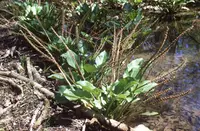
Manage Water Movement
Provide gentle, slow water circulation in ponds or tanks, as strong currents stress stems and cause mats to break apart, while slight movement keeps leaves clean and improves oxygen distribution.

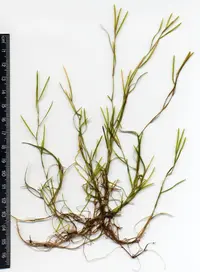
Lesser pondweed (Potamogeton pusillus) is a fine-leaved submerged aquatic plant commonly found in ponds, lakes, ditches, and slow-moving streams. It forms thin, flexible stems with narrow, grass-like leaves. The plant often grows in calm, shallow water and can create light underwater mats without usually crowding out other species. Its delicate structure and tolerance of varying water conditions make it relatively easy to establish where water quality is reasonable. Gardeners with wildlife ponds or naturalized water features may care for Lesser Pondweed as a low-maintenance oxygenating plant, provided the site offers full sun to light shade and consistently wet, nutrient-moderate conditions.

Care Difficulty
Moderate Care

Light Preference
Full Sun

Water Requirements
Aquatic

Temperature Preference
Cold Hardy

Hardiness Zone
3–10

Soil Texture
Sandy, Silty, Organic-rich

Soil pH
Slightly acidic (6.5–7.0), Neutral (7.0)

Soil Drainage
Waterlogged tolerant

Fertilization
Minimal (feed rarely)
Scan your plant to receive care tips personalized for your specific plant
Available on iOS and Android
This submerged aquatic plant needs stable light conditions to maintain healthy underwater growth.
Potamogeton pusillus is fully aquatic and depends on consistent water depth and quality rather than surface watering.
This species prefers cool to mild water but adapts to a wide temperature range in temperate climates.
This fully aquatic species relies on constant submersion in water rather than air humidity.
This aquatic plant anchors in submerged substrate rather than traditional potting soil.
This species can be grown in containers as a submerged aquatic in ponds or water gardens.
This aquatic native generally needs little feeding in nutrient-balanced ponds, but light supplementation can support growth in poor water.
Pruning Potamogeton pusillus is mainly about controlling density and keeping water flow open.
This species is usually established directly in natural or artificial ponds, so management focuses on careful transplanting rather than frequent repotting.
New stands of Potamogeton pusillus are commonly established by vegetative fragments rather than seed in managed ponds.
In most temperate climates this submerged aquatic is cold hardy and needs minimal dedicated winter care.

Plant Health Check
Not sure what's wrong with your plant? Check your plant's health inside the app.
This species has extremely narrow, threadlike submerged leaves, an adaptation that reduces drag in flowing water and allows it to flex rather than break in currents.
It reproduces both by small, inconspicuous underwater flowers that self-pollinate and by vegetative fragments and winter buds, which helps it persist in disturbed or variable freshwater habitats.
Lesser pondweed often thrives in mildly nutrient-enriched but still relatively clear waters, so its presence can give aquatic ecologists clues about moderate eutrophication without severe pollution.

This species is naturally cosmopolitan, occurring across much of Europe, Asia, North America, and parts of Africa, making it one of the most widely distributed fine-leaved pondweeds in the world and a useful model for studying how aquatic plants adapt to very different climates and water conditions.
This species spreads mainly by stem fragments and rhizomes, often forming dense underwater mats in still or slow-moving water. In small ponds it can become dominant, so regular thinning helps maintain open water and plant balance.
Keep your plants happy and healthy with plant identification, disease detection, and easy care guidance.