Rhizome Containment
Install a 20–30 cm deep root barrier or plant into a large, bottomless container sunk into the ground to limit the spread of underground rhizomes and keep clumps manageable for long-term maintenance.

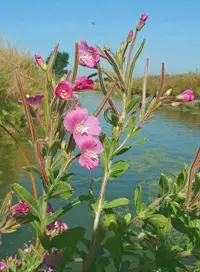
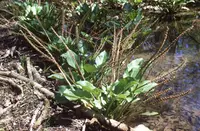
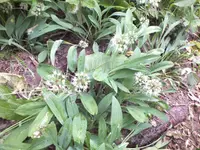
Great willowherb, Epilobium hirsutum, is a vigorous herbaceous perennial often found along streams, ditches, and wet meadows. It forms tall, upright clumps with softly hairy stems and narrow green leaves.
In summer it produces showy pink to purple flowers that attract bees and other pollinators. The plant spreads readily by rhizomes and seed, so it can naturalize quickly in suitable conditions.
This species prefers consistently moist soil and full sun to light shade, which makes it well suited to rain gardens and wildlife-friendly plantings. Gardeners who want to care for Great Willowherb should allow enough space and control spread where necessary.

Care Difficulty
Easy Care

Light Preference
Full Sun

Water Requirements
Keep Soil Moist

Temperature Preference
Cold Hardy

Hardiness Zone
4–9

Soil Texture
Loamy, Silty, Organic-rich

Soil pH
Slightly acidic (6.5–7.0), Neutral (7.0)

Soil Drainage
Waterlogged tolerant

Fertilization
Minimal (feed rarely)
Scan your plant to receive care tips personalized for your specific plant
Available on iOS and Android
This moisture-loving perennial thrives in open, bright conditions with consistent sun exposure.
This species prefers steady moisture and often grows naturally along streams and wet ground.
This hardy perennial tolerates a wide temperature range but grows best in mild conditions.
Humidity is not a major concern because this wetland perennial focuses more on soil moisture than on air humidity.
This species prefers consistently moist, fertile, fine-textured soil that does not dry out.
This species can be grown in containers if the pot is managed to stay consistently moist and stable.
This vigorous wild perennial usually needs little feeding, especially in fertile or moist soils.
Epilobium hirsutum responds well to moderate pruning to control spread and maintain tidy growth.
This species is more often transplanted in the ground than grown in containers, due to its strong, spreading root system.
This plant is commonly propagated to expand colonies or share with other gardeners.
This hardy perennial usually needs minimal winter care in most temperate climates.

Plant Health Check
Not sure what's wrong with your plant? Check your plant's health inside the app.
This species expands mainly through creeping rhizomes, forming dense colonies along riverbanks and ditches that can quickly dominate open, wet ground once established.
Its pink flowers are frequently visited by long-tongued bees and hoverflies, which can reach nectar deep in the floral tube, making the plant an important late-summer nectar source in riparian habitats.
Natural populations usually occur on wet soils such as marsh edges, stream margins, and damp meadows, so their presence in the wild often indicates consistently moist or periodically flooded ground.

In some parts of its native range, the wind-dispersed seeds of this species carry a dense tuft of silky hairs that was historically used as a fine stuffing material for items such as pillows, exploiting the same structure that helps the seeds travel long distances on air currents.
Poor flowering usually results from too much shade, dry soil, or overly rich nitrogen fertilizer. Ensure consistent moisture, moderate fertility, and at least some direct sun. Cutting back old stems in late winter can also improve flower production.
Keep your plants happy and healthy with plant identification, disease detection, and easy care guidance.