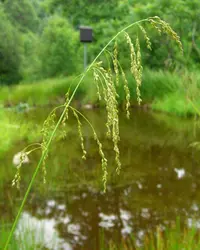
Streamside microhabitat
If grown near a pond or water feature, plant it where gentle surface water can occasionally wash over the crown, which mimics its natural river-edge habitat and helps keep foliage cleaner and less prone to fungal spotting.

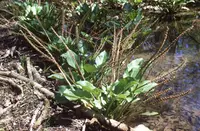
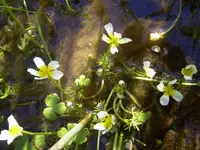
Heartleaf plantain (Plantago cordata) is a small, perennial wetland plant known for its rounded, heart-shaped leaves and slender flower spikes. It usually grows in clumps along slow-moving streams, river edges, and seeps.
This species is native to parts of North America and is often found in clean, cool, shallow water or saturated soils. Its need for steady moisture and unpolluted conditions makes it more challenging to grow than common garden plantains.
Those who want to care for heartleaf plantain should provide consistently damp, rich soil and gentle, filtered light, similar to a natural stream bank environment.

Care Difficulty
Hard Care

Light Preference
Partial Shade

Water Requirements
Aquatic

Temperature Preference
Cold Hardy

Hardiness Zone
4–8

Soil Texture
Loamy, Silty, Organic-rich

Soil pH
Acidic (5.5–6.5), Slightly acidic (6.5–7.0)

Soil Drainage
Waterlogged tolerant

Fertilization
Minimal (feed rarely)
Scan your plant to receive care tips personalized for your specific plant
Available on iOS and Android
This stream and wetland species prefers bright, indirect light with some protection from intense afternoon sun.
This species is adapted to consistently moist to saturated soils and does not tolerate drying out.
This cold-hardy wetland perennial tolerates a wide temperature range but grows best in mild conditions.
This semi-aquatic species has low sensitivity to ambient humidity when roots stay consistently moist.
This species prefers permanently moist, organic-rich, fine-textured soil that mimics slow stream edges or wetland margins.
This wetland species is only moderately suitable for container growing if consistently kept very moist or in a water garden setup.
This native wetland perennial grows well in nutrient-rich soils and usually needs only light feeding in containers or poor sites.
Pruning needs for Plantago cordata are minimal and focus on tidiness and plant health rather than shaping.
This species is more often transplanted in wetland gardens than repotted, but container plants may need occasional attention.
New plants are most reliably raised from division, with seed useful for larger restoration or naturalistic projects with Plantago cordata.
This cold-hardy perennial usually overwinters well in-ground with little intervention in most temperate climates.

Plant Health Check
Not sure what's wrong with your plant? Check your plant's health inside the app.
This species is native to North America and is strongly tied to clean, slow-moving streams and river margins with stable, sandy or gravelly substrates, making it much more habitat-specific than many other plantains.
Unlike the narrow leaves of many common Plantago species, this plant has broad, thick, heart-shaped leaves that can form small basal rosettes anchored firmly in shallow water or saturated soil.
Due to habitat loss, stream alteration, and water quality decline across its range, this species is considered rare or endangered in several U.S. states and is the focus of conservation and habitat protection efforts.

Plantago cordata can act as a living indicator of high-quality freshwater systems, since stable populations tend to occur only where stream channels, flow patterns, and water chemistry have remained relatively undisturbed over long periods.
This species is a perennial that regrows each year from its root system. Individual rosettes may look small, but the plant persists for many seasons if kept in consistently moist soil and protected from severe disturbance.
Keep your plants happy and healthy with plant identification, disease detection, and easy care guidance.