Waterlogged zone setup
When planting in a garden, sink a shallow, liner-lined basin or use a large saucer without drainage holes so the root zone can stay consistently saturated without flooding nearby, less water-tolerant plants.

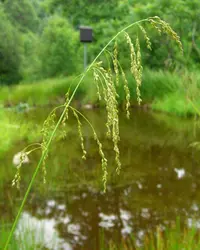
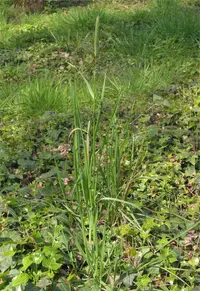
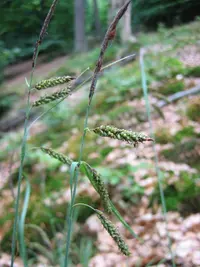
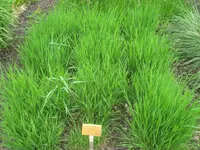
Fowl mannagrass (Glyceria striata) is a cool-season, clump-forming grass commonly found along streams, pond edges, and wet meadows. It is native to much of North America. The plant forms loose tufts of smooth, bright to medium green leaves with open, airy flower clusters that arch gracefully above the foliage. It often spreads by short rhizomes, creating soft, natural-looking patches. This species thrives in consistently moist to wet soils and tolerates shallow standing water, which makes it useful in rain gardens and naturalized wetland plantings. Light shade to full sun and cool to mild temperatures generally support healthy growth, and these traits also influence how to care for fowl mannagrass in garden settings.

Care Difficulty
Moderate Care

Light Preference
Partial Shade

Water Requirements
Aquatic

Temperature Preference
Cold Hardy

Hardiness Zone
3–8

Soil Texture
Loamy, Silty, Organic-rich

Soil pH
Acidic (5.5–6.5), Slightly acidic (6.5–7.0)

Soil Drainage
Waterlogged tolerant

Fertilization
Minimal (feed rarely)
Scan your plant to receive care tips personalized for your specific plant
Available on iOS and Android
This cool-season wetland grass prefers consistent light with protection from intense midday sun.
This species is naturally adapted to saturated soils and shallow standing water.
This hardy grass tolerates a wide temperature range but grows best in cool to mild conditions.
This wetland grass needs consistently high humidity to stay healthy in cultivation.
This species prefers saturated, organic-rich soil that mimics shallow marsh or stream margins.
This grass can grow in containers if the setup supports constantly wet conditions.
This wetland grass grows well in nutrient-rich soils and usually needs only modest feeding in managed plantings.
Glyceria striata benefits from simple cleanup pruning to maintain a tidy clump and encourage fresh growth.
This species is usually grown in the ground or in wetland plantings, so management focuses on dividing and transplanting clumps.
This grass is most commonly propagated by division, with seed used mainly for restoration or large-scale projects.
In much of its native range, this hardy wetland grass overwinters outdoors with minimal intervention.

Plant Health Check
Not sure what's wrong with your plant? Check your plant's health inside the app.
This species is strongly associated with cool, shallow freshwater habitats such as seeps, wet meadows, stream margins, and swamps, where it often forms loose colonies on saturated or seasonally flooded soils.
Its seeds and foliage are eaten by waterfowl, songbirds, and small mammals, and the dense tufted growth provides shelter and nesting cover in wetland ecosystems.
Glyceria striata commonly occurs in relatively unpolluted wetlands and is frequently used by ecologists as one of several plant indicators of intact, functioning freshwater habitats.

Unlike many grasses in disturbed wetlands, Glyceria striata is considered native and widespread across much of North America, and restoration practitioners deliberately include it in planting mixes to help stabilize saturated soils and rebuild structurally diverse wetland plant communities.
This species spreads by seed and short rhizomes, forming loose colonies in wet ground. It is not usually as aggressive as some invasive grasses, but can slowly dominate small, consistently moist areas if not occasionally thinned.
Keep your plants happy and healthy with plant identification, disease detection, and easy care guidance.