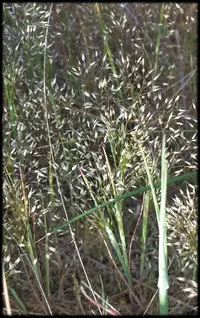
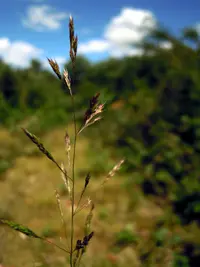
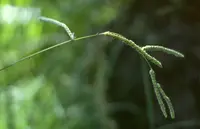
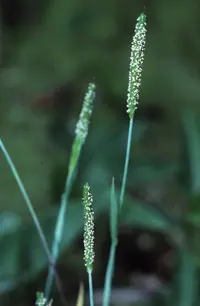
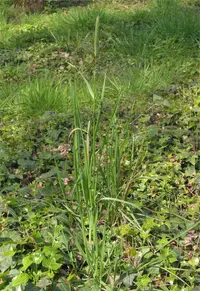
European slough-grass Care (Beckmannia eruciformis)

European slough-grass

About European slough-grass

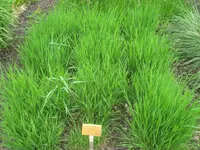
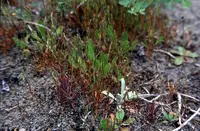
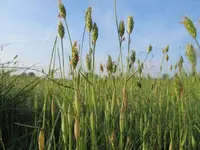
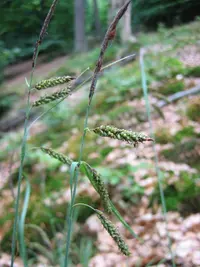
European slough-grass (Beckmannia eruciformis) is a cool-season perennial grass typically found in wet meadows, ditches, and along slow-moving water. It forms upright, tufted clumps with narrow leaves and seed heads carried on slender stems. Native to parts of Europe and western Asia, it often colonizes seasonally flooded or consistently damp soils. The species is valued mainly in restoration, wildlife habitat, and erosion control projects rather than as an ornamental lawn grass. It is generally easy to grow where moisture is reliable but declines in dry, compacted, or very shaded sites. Understanding how to care for European slough-grass starts with providing steady moisture and open, sunny exposure in fertile, moderately heavy soil.


Main Plant Requirements

Care Difficulty

Moderate Care

Light Preference

Full Sun

Water Requirements

Aquatic

Temperature Preference

Cold Hardy

Hardiness Zone

4–8

Soil Texture

Loamy, Silty, Organic-rich

Soil pH

Slightly acidic (6.5–7.0), Neutral (7.0)

Soil Drainage

Waterlogged tolerant

Fertilization

Minimal (feed rarely)

Get Personalized Care Plan

Scan your plant to receive care tips personalized for your specific plant

Available on iOS and Android

How to Care for the European slough-grass

This cool-season grass prefers bright, open conditions with consistent light exposure.

  • Provide full sun for 6–8 hours/day; it also tolerates light partial shade, especially in hot summers.
  • Site European slough-grass where it receives morning sun and only light afternoon shade to reduce heat stress in warm regions.
  • Watch for pale, weak stems as a sign of insufficient light, and for scorched, dry leaf tips if exposed to reflected or intense afternoon sun.

This species naturally grows in wet habitats and needs consistently moist conditions.

  • Aim for soil that stays moist to saturated, not stagnant; the surface should rarely dry more than 1–2 cm deep.
  • Increase water when daytime temperatures rise and rainfall is low, allowing ditches or low spots to stay damp through the growing season.
  • Reduce added water in cool, rainy periods to avoid foul odors, slimy roots, or lodging, which signal prolonged waterlogging without oxygen.

This grass is adapted to cool, temperate climates with cold winters and mild summers.

  • Optimal growth occurs around 59–77°F (15–25°C), with strongest tillering in the cooler part of this range.
  • Dormant plants tolerate winter lows near 5°F (-15°C) when soil is not subject to repeated freeze–thaw cycles.
  • During hot spells above 86°F (30°C), growth slows; maintain abundant soil moisture to limit heat stress and prevent premature senescence.

This cool-season wetland grass does not need special humidity control in outdoor conditions.

This semi-aquatic grass prefers consistently wet, heavy soils that stay saturated or shallowly flooded.

  • Use clay or silty loam with high organic matter, mimicking pond margins or slow-ditch edges.
  • Allow water to stand or move very slowly; avoid freely draining, sandy or gravelly substrates that dry out quickly.
  • A neutral to slightly alkaline pH around 6.5–7.5 suits Beckmannia eruciformis in most garden and restoration settings.
  • In managed sites, incorporate composted organic material to increase water-holding capacity and reduce surface cracking in dry spells.

This species can be grown in containers when treated like a marginal aquatic grass.

  • Choose a deep, heavy tub or pond basket so the saturated substrate and tall foliage do not tip the container in wind.
  • Use an inner pot with side slits or mesh to let water move through while still holding dense, muddy soil.
  • Stand the container in a tray or shallow pond zone that keeps the lower 5–10 cm of substrate submerged.

This cool-season grass usually needs minimal feeding, especially in fertile, moist soils where European slough-grass is typically grown.

  • If soil is poor, apply a light dressing of compost or a balanced slow-release NPK fertilizer at 0.5–1× label rate in early spring.
  • Repeat a light application once in midsummer only if growth appears pale or weak.
  • Avoid high-nitrogen lawn fertilizers that cause lush, floppy growth and increase lodging risk.
  • Do not feed in late fall or winter, when growth is naturally slow or dormant.

Pruning Beckmannia eruciformis is mainly about tidiness and managing stand density in wetland or meadow plantings.

  • Cut back dead or winter-burned foliage in late winter or very early spring before new shoots elongate.
  • During the growing season, use clean shears to remove damaged, diseased, or lodging stems at the base.
  • Thin crowded clumps by removing selected stems to improve air movement and reduce fungal issues.
  • After flowering, mow or cut seed heads if self-seeding needs to be limited or a neater appearance is desired.

This grass is usually grown in the ground; transplanting focuses on establishing or refreshing wet meadow or pond-edge plantings rather than container culture.

  • Transplant in early spring or early fall, when temperatures are cool and soil moisture is stable.
  • Move clumps if growth declines, centers die out, or plants are overtaken by stronger species nearby.
  • Lift with a spade, keeping a wide root ball, and replant at the same depth in consistently moist soil.
  • Water thoroughly after transplanting and maintain even moisture for several weeks to limit root stress and improve establishment.

Multiplying Beckmannia eruciformis is straightforward through seed or division under cool, moist conditions.

  • Sow fresh seeds in fall or very early spring on the soil surface; keep consistently moist for reliable germination.
  • For divisions, split healthy clumps in early spring while shoots are short and temperatures are mild.
  • Use a sharp spade or knife to cut sections with several shoots and a solid root mass, then replant promptly.
  • Maintain saturated to consistently moist soil and gentle light until new growth shows firm establishment.

This cool-season grass is generally cold hardy in temperate climates and needs little specialized winter care.

  • Established plants tolerate typical frosts and snow once roots are anchored in moist soil.
  • In exposed sites, leave some standing foliage over winter to catch snow and shield crowns.
  • Container-grown clumps benefit from placing pots against a sheltered wall or lightly mulching the container to reduce root freezing.

Care Tips

Rotational mowing

If used as a forage or habitat grass, mow or cut small test strips at different heights and timings in late spring to see how quickly plants regrow, then standardize a rotation that allows at least 3–4 weeks of recovery between cuts.

Water level management

In wet ditches, pond edges, or constructed wetlands, maintain shallow standing water or consistently moist soil around roots while avoiding deep, prolonged flooding above the crown, which reduces vigor and can thin out stands.

Targeted stand renewal

Every 2–3 years in dense, aging patches, lightly disk or rake 20–30% of the area in early spring to disturb the surface and encourage new seedling recruitment while leaving the rest of the stand intact.

Timely seed collection

For seed saving, monitor seed heads closely and harvest as soon as most spikelets turn tan and dry but before they shatter, then dry them in thin layers on breathable trays in a shaded, well-ventilated place.

Competition zoning

When growing European slough-grass in mixed plantings, keep a 15–30 cm vegetation-free or low-competition strip on the wettest edge so plants can exploit saturated soil without being overrun by taller, drier-site species.

Common Pests and Diseases

Leaf rust

This disease causes yellow to orange pustules on leaves and stems, leading to premature leaf death and reduced plant vigor.

Solution

Remove and destroy heavily infected foliage or entire plants at the margin of the patch, avoid overhead irrigation, and improve air movement through mowing or thinning. In production or restoration plantings, rotate away from dense grass monocultures and, if permitted, use a grass-safe fungicide labeled for rusts applied preventively during warm, humid periods.

Leaf spot complex

This disease produces tan to brown oval or elongated lesions on leaves, sometimes with darker borders, which can merge and cause large dead areas on blades.

Solution

Mow and remove clippings from infested stands to reduce inoculum, irrigate early in the day so foliage dries quickly, and avoid high nitrogen fertilization that encourages lush, soft growth. In seed or forage fields with repeated outbreaks, consider alternating with non-host cover crops and using a labeled foliar fungicide only if cultural measures are insufficient.

Stem and crown rot

This disease leads to browning and softening at the crown and lower stems, causing tillers to collapse and patches to thin, especially in wet, compacted soils.

Solution

Improve drainage, avoid prolonged flooding outside the plant’s normal wetland tolerance, and reduce soil compaction from machinery or foot traffic. Remove and destroy severely affected clumps and, when reestablishing stands, use clean seed and avoid replanting in the most waterlogged spots.

Aphids

These insects feed on sap of tender stems and leaves, causing curling or distortion and sometimes leaving shiny honeydew that can support sooty mold growth.

Solution

Spray colonies off with a strong stream of water on small plantings, or encourage natural predators such as lady beetles by minimizing broad-spectrum insecticide use. In seed production fields, monitor regularly and, if thresholds are exceeded, use a selective insecticidal soap or oil labeled for grasses, applied in the early morning for best coverage.

Grasshoppers

These insects chew irregular holes and notches in leaves and seed heads, which can significantly reduce stand density and seed yield in dry years.

Solution

Mow borders to reduce tall, weedy refuges, and encourage birds and other predators that feed on nymphs. In larger plantings, monitor nymph stages in early summer and, when necessary, use bait formulations or targeted insecticides along field edges rather than broadcast applications, as part of integrated Beckmannia eruciformis care instructions.

Interesting Facts

Specialist wetland grass

This species is naturally restricted to wet habitats such as marsh edges, wet meadows, ditches, and slow-draining floodplains, where its shallow but dense root system tolerates periodic waterlogging better than many other grasses.

One-year life strategy

It is usually an annual or short-lived biennial grass that invests heavily in rapid growth and seed production rather than long-term survival, which helps it take advantage of temporarily wet, disturbed ground.

Distinctive seed arrangement

The narrow flowering spikes carry spikelets in two clear rows along one side of the stem, giving the inflorescence a flattened, comb-like appearance that makes it relatively easy to distinguish from many other wetland grasses.

FAQs about European slough-grass

This species can spread by seed in consistently moist soils, forming loose colonies rather than dense, choking mats. In managed gardens, occasional seedhead removal and controlled watering usually keep it from becoming troublesome or dominating other wetland plants.

Grow Healthy Plants with Botan Care

Keep your plants happy and healthy with plant identification, disease detection, and easy care guidance.

Botan plant care app — identify plants on mobile

Explore More Plants