Mowing height management
Maintain a mowing height of 5–7.5 cm and avoid removing more than one-third of the leaf blade at a time to reduce stress and discourage the formation of coarse seedheads.

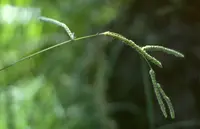
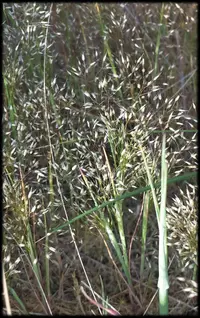
Dallisgrass (Paspalum dilatatum) is a warm-season perennial grass commonly seen in lawns, pastures, and roadsides. It forms coarse, upright clumps with thick, flat blades and seed heads held on tall stems.
Native to South America, it has naturalized widely in the southern United States and other warm regions. It spreads aggressively by seed and short underground stems, which makes it persistent and often considered a weed.
This grass tolerates heat, foot traffic, and varied soil, including compact or moderately wet sites. Due to its vigorous growth and seeding, many lawn owners focus more on how to care for dallisgrass as a plant to control rather than to cultivate.

Care Difficulty
Easy Care

Light Preference
Full Sun

Water Requirements
Regular Water

Temperature Preference
Warm Climate

Hardiness Zone
7–11

Soil Texture
Sandy, Loamy, Clay

Soil pH
Slightly acidic (6.5–7.0), Neutral (7.0)

Soil Drainage
Moist but well-drained

Fertilization
Minimal (feed rarely)
Scan your plant to receive care tips personalized for your specific plant
Available on iOS and Android
Paspalum dilatatum grows best in open, bright conditions with strong direct sun.
This warm-season grass prefers evenly moist, well-drained soil, especially during active summer growth.
This warm-season grass is adapted to mild winters and hot summers with a defined growing season.
Humidity is not a major factor for Paspalum dilatatum, which adapts well to typical outdoor air levels.
Paspalum dilatatum prefers moderately fertile, moisture-retentive but not waterlogged mineral soils.
This species can be grown in containers, mainly for controlled observation, breeding, or limiting spread.
This warm-season grass responds to modest feeding but does not need heavy fertilization for healthy growth.
Pruning Paspalum dilatatum focuses on keeping the clump tidy and maintaining healthy, vigorous shoots.
This species is usually grown in the ground, so care focuses on dividing and transplanting mature clumps rather than frequent repotting.
Paspalum dilatatum is commonly propagated by seed and by division of established clumps.
This warm-season grass is moderately cold tolerant and usually needs minimal winter care once established in suitable climates.

Plant Health Check
Not sure what's wrong with your plant? Check your plant's health inside the app.
This grass is largely self-incompatible, meaning a single plant cannot usually fertilize itself and relies on cross-pollination between different individuals to produce viable seed, which maintains high genetic diversity in populations.
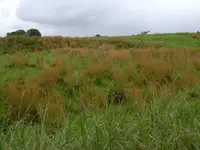
It commonly occupies periodically flooded pastures and drainage areas, where its robust rhizome and crown structure allow it to survive waterlogging better than many other temperate forage grasses.
Its seedheads are a frequent host of the ergot fungus Claviceps paspali, which produces toxic alkaloids that can cause nervous disorders in grazing livestock when heavily infected panicles are eaten.

This species was intentionally spread from its native range in South America to North America, Australia, and other warm-temperate regions in the late 19th and early 20th centuries as a high-yielding pasture grass, and it later became a troublesome invasive weed in many of these same agricultural systems.
This species spreads vigorously by both seeds and short rhizomes. Seedheads produce many viable seeds that germinate readily in disturbed or open soil, so it often forms dense clumps and can quickly dominate thin or poorly managed turf.
Keep your plants happy and healthy with plant identification, disease detection, and easy care guidance.

-200x150.webp)