Edge Containment
Install shallow plastic or metal edging 5–8 cm deep around beds or ponds to prevent creeping jenny from rooting into lawns and neighboring plantings, and check the barrier line twice a year to cut back any stems that jump it.

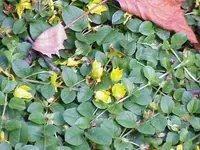
Creeping jenny, Lysimachia nummularia, is a low-growing perennial groundcover known for its rounded leaves and trailing stems that quickly form dense mats. It is often used to soften edges along paths, spill over containers, or cover moist slopes.
This plant is native to Europe and parts of Western Asia but is widely naturalized in North America, especially in damp areas near streams and ponds. It grows fast and can spread aggressively in suitable conditions, which makes it easy to establish but sometimes challenging to contain.
Creeping jenny prefers consistently moist soil, moderate light, and cool to mild temperatures. Understanding these preferences helps gardeners care for Creeping jenny without letting it overrun nearby plants.

Care Difficulty
Easy Care

Light Preference
Partial Sun

Water Requirements
Keep Soil Moist

Temperature Preference
Cold Hardy

Hardiness Zone
3–9

Soil Texture
Loamy, Clay, Organic-rich

Soil pH
Acidic (5.5–6.5), Slightly acidic (6.5–7.0)

Soil Drainage
Waterlogged tolerant

Fertilization
Light (every 4–6 weeks)
Scan your plant to receive care tips personalized for your specific plant
Available on iOS and Android
Lysimachia nummularia prefers bright conditions but tolerates a range of outdoor light exposures.
This species prefers consistently moist soil and reacts quickly to both drought and excess water.
This groundcover is cold-hardy yet grows most actively in mild temperatures.
This species handles a wide humidity range but prefers moderately moist air.
Lysimachia nummularia prefers consistently moist, rich, and slightly heavy soil that still drains freely.
This species is well suited to container growing, especially for trailing or cascading displays.
This trailing perennial responds well to light feeding during active growth but does not require heavy fertilization.
Pruning supports dense, tidy growth and keeps Lysimachia nummularia from overtaking nearby plants.
Container-grown plants and groundcover patches benefit from periodic transplanting to manage spread and vigor.
This species is commonly multiplied to expand groundcover or refresh older patches.
This hardy perennial usually overwinters well in the ground with minimal attention in most temperate regions.

Plant Health Check
Not sure what's wrong with your plant? Check your plant's health inside the app.
This species is naturally distributed across much of Europe, where it occurs in damp meadows, stream banks, and marshy ground, often forming low mats along water edges.
In full sun and moist soil it often develops bright yellow foliage, while in shadier or cooler sites it stays greener, showing clear phenotypic plasticity in leaf color and density.
Its stems root readily at the nodes wherever they touch moist soil, allowing it to spread quickly and sometimes escape cultivation into natural wetlands in parts of North America.

In some US states and Canadian provinces, this ornamental groundcover is monitored or listed as potentially invasive because escaped populations can form dense carpets that outcompete native shoreline and wet meadow plants.
This species spreads quickly by rooting at the nodes of its trailing stems. In mild, moist climates it can form dense mats and overrun nearby plants, so edging, containers, or regular trimming are important for control.
Keep your plants happy and healthy with plant identification, disease detection, and easy care guidance.