Rhizome Containment
Install a shallow root barrier 15–20 cm deep around planting areas to keep spreading rhizomes confined while still allowing the plant to form a dense, useful groundcover near water edges.

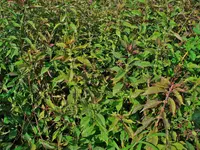
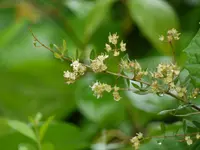
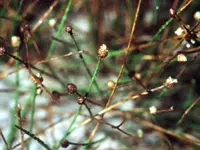
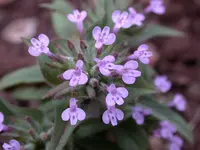
Virginia water horehound, Lycopus virginicus, is a moisture-loving perennial herb in the mint family, though it has little fragrance. It typically forms low, spreading clumps with upright square stems and narrow, toothed leaves. Small white flowers cluster around the stems, giving a beaded look in bloom. In nature it grows in wet meadows, stream banks, ditches, and other consistently damp sites across eastern North America. The plant is generally easy in gardens that can provide steady moisture and poorly drained or boggy soil. Understanding how to care for Virginia water horehound mostly comes down to matching its need for sun to light shade and reliably wet conditions.

Care Difficulty
Easy Care

Light Preference
Partial Shade

Water Requirements
Aquatic

Temperature Preference
Cold Hardy

Hardiness Zone
3–9

Soil Texture
Loamy, Clay, Organic-rich

Soil pH
Acidic (5.5–6.5), Slightly acidic (6.5–7.0)

Soil Drainage
Waterlogged tolerant

Fertilization
Minimal (feed rarely)
Scan your plant to receive care tips personalized for your specific plant
Available on iOS and Android
This wetland mint prefers consistent light levels that mimic open stream edges or pond margins.
This species is adapted to saturated soils and even shallow standing water, so it needs constant moisture.
This hardy wetland perennial tolerates a wide range of outdoor temperatures in temperate climates.
This moisture-loving perennial prefers consistently humid air but usually adapts to typical outdoor conditions near water.
This wetland species needs saturated, organic-rich soil that stays wet or very moist most of the time.
This species can grow in containers if the setup reliably maintains saturated, bog-like conditions.
This native wetland perennial usually grows well without extra feeding, so fertilizer is optional for Virginia water horehound in average garden soil.
Pruning Lycopus virginicus is mainly used for control and tidiness rather than plant health.
This moisture-loving species is more often transplanted in-ground than kept long-term in containers.
Lycopus virginicus is commonly propagated by division, cuttings, or seed in moist conditions.
This hardy perennial dies back above ground but usually needs little special winter care in most temperate climates.

Plant Health Check
Not sure what's wrong with your plant? Check your plant's health inside the app.
This species is strongly associated with shaded, saturated soils along small streams and seepage areas in eastern North American forests, often forming patches right at the water’s edge where flooding is frequent.
It expands locally through slender, creeping stems (stolons) that root at the nodes, allowing one genetic individual to form loose colonies in stable wet habitats.
Its small white flowers appear in late summer to early fall and provide nectar and pollen for a variety of late-season insects, including small bees and flies, when many other woodland plants are no longer blooming.

Lycopus virginicus typically has a distinctive purplish tinge on its square stems and sometimes on the underside of its leaves, which helps field botanists separate it from related water horehounds that stay fully green.
This species spreads by creeping rhizomes and self-seeding, especially in consistently moist soil. In garden settings it can form dense patches, so edging, root barriers, or periodic division help keep it within the desired area.
Keep your plants happy and healthy with plant identification, disease detection, and easy care guidance.