water hickory Care (Carya aquatica)

Also known as: sour hickory, bitter pecan
water hickory

About water hickory

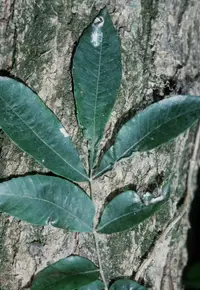
Water hickory, Carya aquatica, is a large deciduous tree native to wet bottomlands, floodplains, and river margins in the southeastern United States. It is typically tall and narrow with compound leaves and slender nuts that are bitter and mainly valued by wildlife rather than people.

The species grows best in full sun and consistently moist, poorly drained soils, which makes it unsuitable for typical small gardens or containers. For those who care for water hickory in larger landscapes, its need for wet conditions and substantial space is the main challenge.

It is mostly planted for habitat restoration, erosion control, and as a wildlife food source rather than as an ornamental feature.

Main Plant Requirements

Care Difficulty

Hard Care

Light Preference

Full Sun

Water Requirements

Aquatic

Temperature Preference

Cold Hardy

Hardiness Zone

6–9

Soil Texture

Loamy, Clay, Silty

Soil pH

Strongly acidic (4.5–5.5), Acidic (5.5–6.5)

Soil Drainage

Waterlogged tolerant

Fertilization

Minimal (feed rarely)

Get Personalized Care Plan

Scan your plant to receive care tips personalized for your specific plant

Available on iOS and Android

How to Care for the water hickory

This bottomland tree needs high light to grow well but tolerates some shade in wet habitats.

  • Provide full sun for best growth, aiming for 6–8 hours of direct light daily on open sites such as riverbanks or moist fields.
  • Tolerates light to moderate partial shade, especially with morning sun and dappled afternoon light, but dense shade slows growth and reduces nut production in water hickory.
  • In hot southern climates, young trees benefit from some protection from intense late-afternoon sun to reduce leaf scorch during drought or extreme heat.

This species is adapted to saturated soils and seasonal flooding but still suffers if soil conditions are extreme for too long.

  • In native or landscape settings, aim for consistently moist to wet soil; the surface may dry slightly, but the top 5–10 cm should not stay dry for long periods.
  • Choose deep, fine-textured or loamy soils that drain slowly yet do not hold standing water for many months, as stagnant conditions can promote root decline in Carya aquatica.
  • Watch for underwatering signs such as dull, drooping foliage in dry spells, and for overwatering problems when leaves yellow and growth stalls outside normal flood periods.

This hardy tree is adapted to warm, humid climates with mild winters and hot summers.

  • Active growth occurs best around 70–90°F (21–32°C), typical of long southeastern US summers in river bottoms and floodplains.
  • Dormant trees tolerate winter lows around 0–10°F (-18 to -12°C) once established, but young saplings are more vulnerable to sudden hard freezes without prior acclimation.
  • Mature trees endure short heat waves up to about 100–105°F (38–41°C) if soil moisture remains high, yet prolonged drought and heat together can cause leaf scorch and early leaf drop.

This species naturally grows in very humid bottomlands, so low atmospheric humidity rarely limits its performance outdoors.

  • Healthy water hickory usually tolerates 30–80% air humidity without special intervention.
  • Humidity stress is more likely from soil drying out than from dry air, showing as leaf scorch and premature leaf drop.
  • In unusually arid, windy sites, windbreaks and dense groundcover help reduce evaporative stress around young trees.

Carya aquatica is adapted to deep, moist alluvial soils but can be established in managed garden soil with careful preparation.

  • Use a deep, loamy to silty soil rich in organic matter that retains moisture yet does not stay stagnant or foul-smelling.
  • Target slightly acidic conditions around pH 5.0–6.5; mix in leaf mold, composted bark, or peat to acidify alkaline sites.
  • On heavier clays, improve structure and aeration by incorporating coarse sand and fine pine bark through at least the top 30–40 cm.
  • Avoid compacted subsoil, shallow hardpans, and constantly waterlogged areas where roots lack oxygen for extended periods.

This tree is generally unsuitable for long-term container growing and is best kept in pots only for short nursery stages.

Carya aquatica grows well in fertile, moist soils and usually needs only light, targeted feeding.

  • Use a balanced slow-release fertilizer (for example 10-10-10) or well-rotted compost in early spring before active growth.
  • Apply a light dose once per year for young trees; mature trees in rich soil often need no added fertilizer.
  • Reduce or skip feeding in late fall and winter, when growth is dormant and nutrient demand is low.
  • On poor soils, use half-strength granular or liquid fertilizer to avoid excessive, weak canopy growth.

Pruning Carya aquatica is mainly structural and corrective rather than frequent or heavy.

  • Carry out main pruning in late winter while the tree is dormant and branch structure is visible.
  • Remove dead, diseased, or storm-damaged limbs first, cutting back to healthy wood with clean, sharp tools.
  • Thin crossing or crowded branches to improve airflow and light penetration through the canopy.
  • Limit cuts on mature trees to maintain natural form and avoid stressing large structural limbs.

This species is usually field-grown, so focus on careful transplanting of young trees rather than ongoing repotting.

  • Transplant in late fall or early spring while the tree is dormant to reduce stress and water loss.
  • Look for circling roots in nursery containers or very slow growth as signals the tree has outgrown its pot.
  • Move up only 1–2 pot sizes or into a prepared ground site with deep, consistently moist soil.
  • Handle the root ball gently, keep roots shaded and moist, then water thoroughly and mulch lightly after planting.

Propagation of Carya aquatica is typically done from seed and is relatively slow, especially for timber or restoration uses.

  • Collect fully mature nuts in fall and remove husks before storage or sowing.
  • Provide cold stratification at about 34–41°F for 90–120 days to break seed dormancy and improve germination.
  • Sow seeds 2–4 cm deep in deep containers or nursery beds with well-drained, consistently moist soil.
  • Protect seedlings from rodents and drought during the first 1–2 years to support strong taproot development.

This deciduous tree is cold hardy in much of its native range and usually needs minimal winter care once established.

  • Young or newly transplanted trees benefit from 5–8 cm of mulch over the root zone, kept away from the trunk.
  • In very cold or exposed sites, wrap the lower trunk with a breathable guard to limit bark injury.
  • Container-grown plants in colder climates should be moved to a sheltered, frost-free but cool location.

Care Tips

Floodplain site choice

Plant on a low, periodically flooded area near a slow-moving water body to match its natural habitat and improve long-term stability and vigor.

Root zone protection

Keep heavy machinery, vehicles, and frequent foot traffic away from the drip line to prevent soil compaction that restricts deep rooting and water uptake.

Wind firmness training

Allow some natural swaying in young trees by using flexible, low-tension staking only when necessary so the trunk develops strong taper and anchoring roots.

Nut debris management

Regularly collect fallen husks and nuts during late season to reduce habitat for weevils and other nut pests and to keep the area safe for mowing and walking.

Seasonal flood monitoring

Monitor duration and depth of standing water, and if flooding persists unusually long beyond leaf-out, improve drainage channels slightly downstream rather than disturbing soil directly around the trunk when growing water hickory.

Common Pests and Diseases

Hickory shuckworm

This pest is the larva of a small moth that tunnels into developing nuts, feeding on the shuck and reducing nut fill and quality. Symptoms include premature nut drop and nuts that appear small, light, or poorly filled.

Solution

Monitor trees from late spring through nut development and collect and destroy fallen, infested nuts to break the life cycle. In larger plantings, use pheromone or light traps to time targeted insecticide sprays, and keep the area under trees clean of debris that can harbor overwintering larvae.

Pecan weevil

This pest is a beetle whose grubs feed inside ripening nuts, causing nuts to drop early or be hollow and damaged at harvest. Symptoms include small exit holes in shells and nuts that are light and poorly filled or completely ruined.

Solution

Shake or jar trees in late summer to detect emerging adults and collect fallen nuts frequently to reduce larval survival. In larger plantings, use trunk banding or soil-applied controls timed to adult emergence, and avoid leaving unharvested nuts on the ground, which sustain the local population.

Hickory bark beetles

These insects bore into the bark and outer wood, especially on stressed or weakened trees, disrupting water movement and weakening branches or entire trees. Symptoms include fading foliage, branch dieback, small round exit holes, and fine boring dust on bark crevices.

Solution

Reduce tree stress with consistent watering during drought, mulching the root zone, and avoiding trunk injury. Prune and destroy infested or dead branches, remove severely infested trees that act as reservoirs, and consider professional application of preventive trunk sprays on high-value trees during peak beetle flight periods.

Hickory anthracnose

This disease is a fungal leaf spot commonly affecting hickories in warm, humid conditions, leading to irregular brown spots, blotches, and sometimes premature leaf drop. Symptoms include distorted or tattered foliage, especially in the lower and inner canopy where humidity is highest.

Solution

Rake and remove fallen leaves to reduce fungal spores, and promote airflow by selective thinning of crowded branches and nearby vegetation. On high-value trees with a history of severe infection, timed fungicide sprays in spring as leaves expand can reduce symptoms, combined with good overall Carya aquatica care to maintain vigor.

Hickory canker

This disease causes sunken, cracked, or dead patches on branches and trunks, often following mechanical injury or stress, and can lead to dieback above the affected area. Symptoms include rough, discolored bark with elongated lesions and sparse, yellowing foliage on affected branches.

Solution

Prune out cankered branches several inches below visible symptoms during dry weather and disinfect pruning tools between cuts. Avoid wounding the trunk, improve tree vigor through proper watering and mulching, and remove severely cankered trees that pose a hazard or serve as a source of infection for nearby hickories.

Interesting Facts

Specialized flood tolerance

This bottomland tree is adapted to seasonal flooding and can survive weeks of standing water that would kill many other hardwoods, thanks to its ability to function in low-oxygen soils.

Nuts for waterfowl

Although its nuts are small and very bitter to humans, they are important food for ducks and other waterfowl that forage in flooded forests of the southeastern United States.

Key alluvial species

Water hickory is a characteristic component of alluvial floodplain forests, where it helps stabilize wet soils and contributes to complex habitat structure for fish, amphibians, and invertebrates when floodwaters rise.

Botan icon

Did you know?

Water hickory naturally hybridizes with the closely related pecan (Carya illinoinensis) in overlapping ranges, creating wild hybrids that can complicate field identification and hickory taxonomy.

FAQs about water hickory

This species grows moderately fast for a hardwood tree, often adding 30–60 cm in height per year in favorable, moist conditions. Growth slows in drier or compacted soils and in areas with shorter growing seasons.

Grow Healthy Plants with Botan Care

Keep your plants happy and healthy with plant identification, disease detection, and easy care guidance.

Botan plant care app — identify plants on mobile

Explore More Plants