Deep root training
In the first 2–3 years, water less often but in larger volumes to encourage a deep taproot, which improves long‑term drought tolerance and stability when growing shea tree in dry regions.

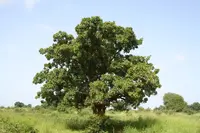
The shea tree, Vitellaria paradoxa, is a slow-growing evergreen tree native to the dry savannas of West and Central Africa. It forms a dense, rounded crown with thick, leathery leaves and produces fleshy green fruits containing the fat-rich shea nut.
In its natural habitat it can live for many decades and reach impressive sizes, so it is rarely suitable as a long-term indoor plant. It prefers full sun, seasonal dry periods, and deep, well-drained soils.
These needs, along with its slow growth and sensitivity to excess moisture, make it challenging outside its native climate. Gardeners who want to learn how to care for shea tree should understand its origin in warm, dry woodland conditions.

Care Difficulty
Hard Care

Light Preference
Full Sun

Water Requirements
Low Water

Temperature Preference
Tropical / Frost Sensitive

Hardiness Zone
11–12

Soil Texture
Sandy, Loamy, Clay

Soil pH
Acidic (5.5–6.5), Slightly acidic (6.5–7.0)

Soil Drainage
Well-drained

Fertilization
Minimal (feed rarely)
Scan your plant to receive care tips personalized for your specific plant
Available on iOS and Android
Vitellaria paradoxa thrives in high light typical of dry tropical savannas, but young trees benefit from some protection.
Vitellaria paradoxa is drought-tolerant once established, but young trees need carefully managed moisture.
This savanna tree prefers consistently warm to hot conditions and reacts poorly to cold extremes.
This savanna tree manages well in relatively dry household air but benefits from moderate humidity when young in pots.
Vitellaria paradoxa prefers deep, well-drained mineral soils that do not stay waterlogged.
This species can be grown in containers when young, mainly for nursery or experimental cultivation rather than long-term display.
Vitellaria paradoxa benefits from modest, targeted feeding in cultivation, especially in poor soils or containers.
Pruning Vitellaria paradoxa is mainly corrective and structural rather than frequent or heavy.
Vitellaria paradoxa is usually field-grown, so care focuses on careful transplanting of young trees rather than frequent repotting.
Vitellaria paradoxa is mainly propagated from fresh seeds, which can be slow and require specific conditions.
Vitellaria paradoxa is a tropical tree with very low frost tolerance and needs protection in climates with cold winters.

Plant Health Check
Not sure what's wrong with your plant? Check your plant's health inside the app.
Its seeds contain a high proportion of solid fat at room temperature, known as shea butter, composed mainly of stearic and oleic fatty acids that give it a firm yet melt-on-skin consistency valued in food and cosmetics.
This species is native to the Sudano-Sahelian savannas of Africa, grows very slowly, and typically needs many years before first fruiting, which makes sustainable management of wild stands particularly important.
The tree’s dense canopy, flowers, and long-hanging fruits provide shelter and food resources for many savanna animals, including birds, bats, and small mammals, making it an important structural and nutritional component of its ecosystem.

Individual trees can live for well over a century and continue producing fruit for generations, so traditional communities often manage and protect the same shea parklands used by their grandparents and great-grandparents.
Growth is slow, especially in the first years. Seedlings often add only 10–30 cm per year. In good conditions, older trees may grow slightly faster, but this remains a very long-term planting choice.
Keep your plants happy and healthy with plant identification, disease detection, and easy care guidance.