Mycelium-Friendly Harvest
Cut the mushroom cleanly at the stem base with a knife instead of pulling it out, which helps protect the underground mycelium so it can fruit again in the same area.

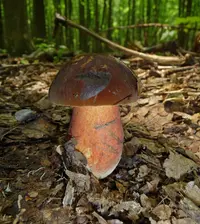
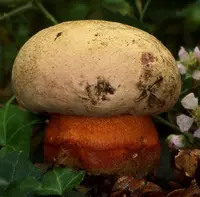
The dotted stem bolete, Neoboletus erythropus, is a fleshy, mycorrhizal fungus that forms a partnership with tree roots rather than growing as a typical garden plant. It produces stout, brown caps with yellow pores that bruise blue and a thick, dotted stem in red and yellow tones.
This species is native to woodlands across parts of Europe and Asia and is sometimes encountered in similar climates elsewhere. It relies on specific tree partners and natural forest soils, which makes it difficult to cultivate at home.
For those exploring how to care for Dotted Stem Bolete, it is usually best appreciated in its natural habitat, where consistent moisture, shade, and undisturbed leaf litter support its growth.

Care Difficulty
Moderate Care

Light Preference
Partial Shade

Water Requirements
Regular Water

Temperature Preference
Cool Climate

Hardiness Zone
Unknown

Soil Texture
Loamy, Peaty, Organic-rich

Soil pH
Strongly acidic (4.5–5.5), Acidic (5.5–6.5)

Soil Drainage
Moist but well-drained

Fertilization
Minimal (feed rarely)
Scan your plant to receive care tips personalized for your specific plant
Available on iOS and Android
This ectomycorrhizal mushroom prefers woodland light conditions rather than open sun.
This forest fungus depends on steady natural soil moisture rather than direct watering of the fruiting bodies.
This species is adapted to temperate woodland climates with cool to mild conditions.
Humidity is not a major factor for Neoboletus erythropus, as it grows in natural outdoor forest conditions.
This ectomycorrhizal mushroom requires undisturbed, natural forest soil rather than a constructed potting mix.
This forest-dwelling ectomycorrhizal fungus is not suitable for container growing, as it relies on complex root partnerships in natural soil.
This mycorrhizal fungus partners with trees and normally needs no additional fertilizer in natural soil.
Neoboletus erythropus does not require pruning, only basic removal of fruiting bodies when needed.
This wild ectomycorrhizal fungus is not suited to conventional repotting and is usually left undisturbed.
Reproducing Neoboletus erythropus is complex and mainly occurs naturally through spores and root associations.
This woodland fungus is generally cold hardy in its native range and needs no active winter care in the ground.

Plant Health Check
Not sure what's wrong with your plant? Check your plant's health inside the app.
The red to orange pores of this bolete rapidly stain dark blue when handled or cut, due to oxidation of pulvinic acid derivatives in the flesh. This color change is reversible in early stages and is a key diagnostic feature used by field mycologists.
This species forms ectomycorrhizae with various broadleaf and conifer trees, especially beech, oak, and spruce, exchanging mineral nutrients and water for sugars from the host roots. Its presence often indicates relatively undisturbed, mature woodland with healthy tree partners.
The raw mushroom contains thermostable compounds that can cause significant gastrointestinal upset if eaten uncooked, yet thoroughly cooked fruiting bodies are considered edible and are traditionally collected in parts of Central and Eastern Europe. Confusion with toxic red-pored boletes, however, makes correct identification essential.

Genetic and microscopic studies have led to several taxonomic changes for this mushroom, and many modern authors now place it in the genus Suillellus rather than Neoboletus, illustrating how DNA-based research continues to reshape bolete classification.
This mushroom is considered edible when thoroughly cooked, but raw flesh can cause digestive upset. Correct identification is critical, since some similar red-pored boletes stain blue and may be toxic. Local foraging guidance is strongly recommended.
Keep your plants happy and healthy with plant identification, disease detection, and easy care guidance.