

Sterilize growing medium
Before inoculating with spawn, pasteurize or sterilize the substrate (such as hardwood sawdust or a sawdust–straw mix) to reduce competing fungi and bacteria that can quickly overrun slow-colonizing Leucopaxillus tricolor.

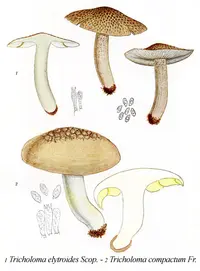
Leucopaxillus tricolor is a terrestrial fungus, not a typical green plant. It produces sturdy, fleshy fruiting bodies with broad caps and thick stems, often forming small groups on the ground. The cap can show subtle color zoning, which gives rise to the name tricolor.
This species is usually found in woodland or forest habitats, often among leaf litter or moss, in temperate regions. It is not commonly cultivated at home, and conditions suitable for typical houseplants do not apply. For those interested in how to care for Leucopaxillus tricolor, it is more practical to focus on conserving or observing its natural woodland environment than to attempt active cultivation.

Care Difficulty
Moderate Care

Light Preference
Partial Shade

Water Requirements
Keep Soil Moist

Temperature Preference
Cool Climate

Hardiness Zone
Unknown

Soil Texture
Loamy, Silty, Organic-rich

Soil pH
Acidic (5.5–6.5)

Soil Drainage
Moist but well-drained

Fertilization
Minimal (feed rarely)
Scan your plant to receive care tips personalized for your specific plant
Available on iOS and Android
This woodland fungus prefers dappled, forest-like light rather than intense open sun.
Moist but not waterlogged soil best supports this ground-dwelling fungus.
This species favors cool to mild conditions typical of temperate woodlands.
Humidity plays a minor role for Leucopaxillus tricolor, which copes well in typical outdoor conditions.
Leucopaxillus tricolor develops best in loose, moist, organic-rich ground with steady drainage.
This species is generally unsuitable for container growing because it relies on extensive mycelial spread through open ground.
This ectomycorrhizal fungus does not need direct fertilization and performs best in naturally nutrient-poor, undisturbed soil.
Leucopaxillus tricolor does not require horticultural-style pruning, but small interventions can keep the fruiting area tidy and safe.
This species is not suited to conventional container culture, so management focuses on minimal-disturbance transplanting of colonized substrate.
Practical home propagation of Leucopaxillus tricolor is challenging, since it depends on complex mycorrhizal relationships with trees.
This fungus is naturally cold hardy in temperate climates and usually needs no special winter care.

Plant Health Check
Not sure what's wrong with your plant? Check your plant's health inside the app.
The fruiting body typically shows three color zones on the cap, shifting from whitish to ochre or brown toward the center as it ages, which is a key diagnostic feature separating it from similar white mushrooms in the field.
Mature specimens often emit a pronounced mealy or cucumber‑like smell, known as a farinaceous odor, which mycologists use as an additional identifying character in combination with cap color and spore traits.
The mushrooms can grow quite large with thick, fleshy caps and robust stems that decay slowly, so old fruiting bodies often remain visible on the forest floor long after spore release.
This fungus is generally regarded as inedible due to its tough texture and lack of culinary value. Identification of wild mushrooms is complex, and consumption of misidentified specimens can be dangerous, so it should not be eaten.
Keep your plants happy and healthy with plant identification, disease detection, and easy care guidance.

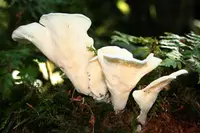
angel's wings
Pleurocybella porrigens
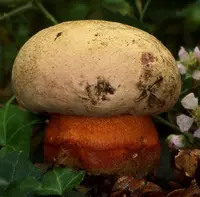
Satanas
Rubroboletus legaliae
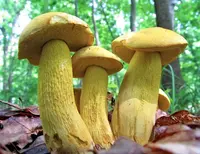
Ornate-stalked bolete
Retiboletus ornatipes
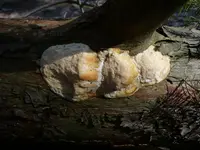
Diplomitoporus flavescens
Diplomitoporus flavescens
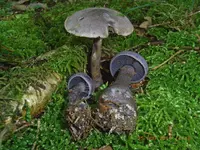
Cortinarius harcynicus
Cortinarius harcynicus
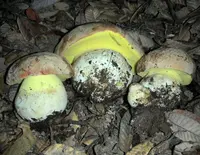
Brown Butter Bolete
Butyriboletus persolidus
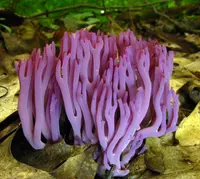
violet coral fungus
Clavaria zollingeri
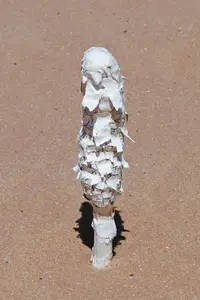
Desert Shaggymane
Podaxis pistillaris