Satanas Care (Rubroboletus legaliae)

Satanas

About Satanas

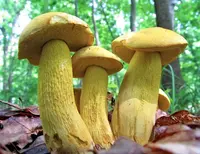
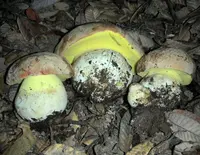
Rubroboletus legaliae, sometimes called Satanas, is a large bolete fungus, not a typical houseplant. It forms stout, fleshy fruiting bodies with a pale cap, vivid red pores, and a thick, often reddish stem. The flesh commonly stains blue when cut or bruised.

This species occurs in woodlands of central and southern Europe, forming mycorrhizal partnerships with broadleaf trees such as oaks and beeches. It is rare in cultivation because it depends on living tree roots and specific soil fungi. As a result, attempts to care for Satanas at home are generally unsuccessful.

In nature it prefers warm, calcareous, well-drained soils and stable moisture, making it a specialist rather than an easy species for beginners to manage outdoors.

Main Plant Requirements

Care Difficulty

Moderate Care

Light Preference

Partial Shade

Water Requirements

Moderate Water

Temperature Preference

Cool Climate

Hardiness Zone

Unknown

Soil Texture

Loamy, Sandy, Organic-rich

Soil pH

Acidic (5.5–6.5)

Soil Drainage

Moist but well-drained

Fertilization

Minimal (feed rarely)

Get Personalized Care Plan

Scan your plant to receive care tips personalized for your specific plant

Available on iOS and Android

How to Care for the Satanas

Rubroboletus legaliae is a mycorrhizal fungus that fruits best in bright woodland conditions with dappled light rather than direct, open sun.

  • Aim for 2–5 hours of gentle morning sun filtered through tree canopies, avoiding harsh midday and afternoon sun that can dry the forest litter too quickly.
  • It tolerates partial to deep shade, but fruiting bodies are more frequent where leaf litter gets speckled light rather than dense, continuous shade.
  • Like its relative Satanas, it benefits from stable light patterns across seasons, with deciduous woodland offering brighter spring light and more shaded summer conditions.

Water conditions for Rubroboletus legaliae focus on maintaining evenly moist, well-drained forest soil rather than a specific watering schedule.

  • Soil should feel moist 2–5 cm down but never waterlogged; excessive standing water leads to rotting mycelium and a sharp, sour smell in the litter layer.
  • Increase moisture during warm, dry periods by providing light, infrequent irrigation that mimics rainfall, allowing the surface to drain fully between events.
  • Reduce supplemental water in cool seasons; signs of underwatering include brittle, dry leaf litter, while overwatering shows as slimy organic matter and persistent puddling.

This species develops and fruits best in mild, temperate conditions and is sensitive to both hard frost and prolonged extreme heat.

  • Optimal fruiting typically occurs around 59–72°F (15–22°C), when soil stays cool to slightly warm and retains steady moisture under tree cover.
  • Growth slows markedly below 45°F (7°C), and repeated frosts can damage emerging fruiting bodies and reduce activity of the underground mycelium.
  • It tolerates short heat spells up to about 82–86°F (28–30°C) if shaded and moist, but extended hotter, dry periods suppress fruiting and can desiccate surface mycelium.

Humidity is not a meaningful factor for this ectomycorrhizal fungus, which relies on outdoor soil moisture rather than air humidity.

Rubroboletus legaliae depends on specific outdoor woodland soil rather than prepared potting mixes.

  • Prefers undisturbed, well-drained, aerated forest soil with a mix of mineral particles and leaf litter over compacted or waterlogged ground.
  • Typically associates with slightly acidic to neutral soils around pH 5.0–7.0, often under broadleaf trees such as oaks or beeches.
  • Avoid fertilizer-amended, heavily limed, or construction-disturbed substrates, which disrupt the fine root and fungal network this species needs.
  • Retain surface leaf litter and small woody debris to maintain structure, moisture buffering, and organic inputs instead of clearing the ground bare.

This species is not suitable for container growing, including attempts at controlled cultivation.

Rubroboletus legaliae is a wild ectomycorrhizal fungus and should not be fertilized directly, since nutrient enrichment can disrupt its tree partner and habitat.

Rubroboletus legaliae fruiting bodies are not pruned like ornamental plants; only minimal handling is appropriate.

This fungus forms symbiotic associations with trees and is not suited to typical container culture or frequent transplanting.

  • Transplanting is usually limited to moving colonized host trees or soil blocks rather than individual fruiting bodies.
  • If relocation is attempted, do it in cool, moist weather to reduce stress on tree roots and fungal mycelium.
  • Maintain similar soil type, pH, and drainage at the new site to support continued mycorrhizal function.
  • Disturb roots as little as possible and water the host tree deeply after transplanting to stabilize the soil.

Propagation of Rubroboletus legaliae is specialized and rarely attempted in home settings.

Outdoor populations of Rubroboletus legaliae in suitable climates handle normal winter conditions without targeted care.

  • Avoid disturbing leaf litter and topsoil around host trees, as this layer insulates the fungal mycelium.
  • Do not apply de-icing salts near known colonies, since salts damage both tree roots and fungal partners.
  • Container-grown host trees with this species should overwinter in a cold, frost-exposed but sheltered spot to maintain its natural cycle while limiting wind desiccation.

Care Tips

Mycorrhizal partnership

When establishing this bolete, leave surrounding fine tree roots and native soil undisturbed so the essential mycorrhizal partnership between the fungus and host tree can form and support long-term fruiting.


Host tree selection

Plant or maintain suitable ectomycorrhizal host trees such as oaks or beeches nearby, since fruiting bodies will only develop where compatible roots are present and healthy.

Minimal soil disturbance

Avoid digging, tilling, or compacting the soil in the fruiting zone, and use light foot traffic paths so the underground mycelium network remains intact and productive.

Leaf litter management

Allow a thin layer of leaf litter to remain as a natural mulch that conserves moisture and provides organic material, but remove thick, matted piles that could smother emerging fruiting bodies.

Fruiting body handling

When collecting or observing mushrooms, cut them cleanly at the base rather than pulling them up, so the belowground mycelium is left as intact as possible for future cropping and easier caring for Satanas in the same site.

Common Pests and Diseases

mycophagous insects

These insects feed directly on the fruiting bodies, creating tunnels, pits, or hollow stems and hastening decay. Symptoms include rapid softening, discolored galleries in the cap or stem, and small emergence holes.

Solution

Harvest fruiting bodies promptly when mature and remove and discard any mushrooms showing tunneling or heavy damage so larvae do not complete their life cycle. In managed collections, avoid leaving old fruiting bodies on the ground, and reduce nearby decomposing organic piles that attract fungus gnats and beetles.

slugs and snails

These mollusks graze on the soft cap surface and pore layer, leaving irregular holes, slime trails, and shredded tissue. Damage often appears overnight, especially in damp, shaded conditions.

Solution

Hand-remove slugs and snails around fruiting areas and use physical barriers such as copper tape or rough mulch rings to limit access. Reduce dense groundcover and excess debris that provide daytime shelter, and if necessary, use iron phosphate slug baits placed away from non-target wildlife.

competitive saprophytic fungi

These fungi colonize aging or weakened fruiting bodies, leading to rapid softening, surface mold growth, and collapse. Symptoms include fuzzy or powdery coatings, off odors, and loss of the characteristic firm texture.

Solution

Collect and remove overmature or collapsing fruiting bodies to limit inoculum buildup on the forest floor around host trees. Avoid disturbing the soil and leaf litter excessively near known Rubroboletus legaliae sites, as stable microhabitats favor healthier mycorrhizal development and reduce stress that invites secondary colonizers.

bacterial soft rot

This disease causes rapid tissue breakdown, slimy surfaces, and a sour smell, often starting where the fruiting body is bruised or waterlogged. Symptoms include watery lesions and collapse from the base upward.

Solution

Handle fruiting bodies gently and avoid harvesting or moving them when very wet to reduce bruising and surface damage. Remove and discard any soft, foul-smelling specimens promptly and improve air movement at ground level by avoiding dense, wet mulch directly around host tree trunks.

environmental desiccation

This abiotic disorder results from hot, dry, or windy conditions that dehydrate the fruiting body, causing cracking, brittleness, and premature cessation of spore production. Symptoms include pale, shriveled caps and hardened pore surfaces.

Solution

Maintain a stable, moderately moist microhabitat under host trees with natural leaf litter rather than bare soil, which dries quickly. In cultivated arboretum or garden settings where growing Satanas is encouraged, avoid raking away organic debris excessively and, during prolonged drought, use gentle, infrequent irrigation to keep the soil and litter slightly moist without waterlogging.

Interesting Facts

Toxic skin bluing

When the flesh is cut or bruised, it rapidly turns blue due to oxidation of boletols, yet this species is still considered poisonous and should not be eaten despite the dramatic color change.

Restricted European range

This species is native to Europe and is considered rare or threatened in several countries, often appearing on regional red lists due to habitat loss and changes in woodland management.

Oak and beech partner

It forms ectomycorrhizal associations with broadleaf trees, especially oaks (Quercus) and beeches (Fagus), exchanging mineral nutrients and water from the soil for sugars produced by the host tree.

Botan icon

Did you know?

The species was named in honor of French mycologist Hélène Léglise (legaliae meaning "of Légale"), reflecting its original description from European material and the tradition of commemorating scientists in fungal nomenclature.

FAQs about Satanas

This mushroom is considered poisonous and must not be eaten, even if cooked. It can cause severe gastrointestinal symptoms. Similar edible boletes exist, so accurate identification by an experienced mycologist is essential before any wild mushroom consumption.

Grow Healthy Plants with Botan Care

Keep your plants happy and healthy with plant identification, disease detection, and easy care guidance.

Botan plant care app — identify plants on mobile

Explore More Plants