Brown Butter Bolete Care (Butyriboletus persolidus)

Brown Butter Bolete

About Brown Butter Bolete

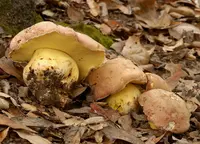
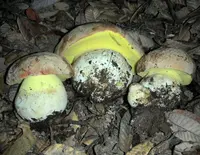
Brown butter bolete, Butyriboletus persolidus, is a fleshy, mycorrhizal mushroom rather than a leafy plant. It forms a symbiotic relationship with tree roots, helping trees absorb water and nutrients while receiving sugars in return. The cap is typically smooth and brownish, with a thick, pale to yellowish stem and pores instead of gills on the underside. This species usually appears on soil in woodlands, often with conifers or mixed forests, in temperate regions. It can be challenging to cultivate at home because it depends on specific tree partners and soil fungi communities. For those studying how to care for Brown Butter Bolete, understanding its need for living tree hosts and undisturbed, well-drained woodland soil is essential.

Main Plant Requirements

Care Difficulty

Hard Care

Light Preference

Partial Shade

Water Requirements

Keep Soil Moist

Temperature Preference

Cool Climate

Hardiness Zone

Unknown

Soil Texture

Loamy, Silty, Organic-rich

Soil pH

Acidic (5.5–6.5)

Soil Drainage

Moist but well-drained

Fertilization

Minimal (feed rarely)

Get Personalized Care Plan

Scan your plant to receive care tips personalized for your specific plant

Available on iOS and Android

How to Care for the Brown Butter Bolete

This ectomycorrhizal mushroom prefers bright woodland light rather than full, exposed sun.

  • Provide dappled or filtered light under trees, with roughly 2–4 hours of gentle morning sun and shade or broken light the rest of the day.
  • Avoid full, direct midday or afternoon sun, which can dry the soil surface quickly and stress Brown Butter Bolete fruiting bodies.
  • In summer, rely on canopy shade or light understory cover; in early spring or fall, slightly increased sun exposure is acceptable as long as soil stays moist.

This forest-dwelling fungus depends on consistently moist, but not saturated, soil around its tree partners.

  • Aim for soil that feels uniformly moist 5–8 cm deep; if the top 2–3 cm are dry and crumbly, recent rain or irrigation is usually needed.
  • Ensure the site drains well; standing water, sour smell, or slimy mycelium indicate overwatering and increased risk of rot.
  • During hot, dry periods, increase irrigation frequency, while in cool or rainy seasons, rely mostly on natural rainfall for Butyriboletus persolidus.

This species fruits best in cool to mild conditions typical of temperate forests.

  • Optimal fruiting usually occurs around 55–70°F (13–21°C), with steady soil moisture and moderate humidity.
  • Mycelium in the soil can tolerate down to about 25–30°F (-4 to -1°C), but hard, prolonged freezes may reduce fruiting the following season.
  • Sustained heat above 80–85°F (27–29°C) tends to shorten fruiting periods; provide shade and soil moisture to buffer temperature swings.

Humidity level is not a key factor for Butyriboletus persolidus, which grows outdoors in natural forest conditions rather than in controlled indoor air.

Butyriboletus persolidus prefers moist, airy forest soil with plenty of decomposing organic matter.

  • Use a loose, crumbly mix combining loam, leaf mold, and well-rotted wood or bark chips to mimic woodland conditions.
  • Ensure rapid drainage so water does not pool, but retain consistent moisture with a thick organic mulch layer over the substrate.
  • Aim for slightly acidic to neutral pH around 5.5–7.0, avoiding limed or strongly alkaline ground that suppresses fungal activity.
  • Avoid compacted, heavily tilled, or waterlogged soils, which limit oxygen around the mushroom’s mycelium and can cause decline.

This species is not suitable for container growing, as it relies on complex mycorrhizal associations with tree roots in open soil.

This wild mycorrhizal fungus gains most nutrients from its tree partner and usually does not need fertilization.

Butyriboletus persolidus requires no true pruning, only careful harvesting of fruiting bodies.

This species is typically not container-grown; focus on gentle transplanting of associated tree seedlings or soil blocks if cultivation is attempted.

  • Move only during cool, moist weather in spring or fall to limit stress on the fungal–root partnership.
  • Transplant with a generous, intact plug of native soil around the tree roots to preserve mycelium.
  • Avoid disturbing or washing roots; keep the root–soil mass shaded and evenly moist during and after planting.
  • Limit transplanting frequency, since repeated disturbance can weaken the mycorrhizal network and slow establishment.

Propagation of Butyriboletus persolidus is complex and rarely attempted outside research or advanced cultivation, so home methods are limited.

This ectomycorrhizal fungus is cold hardy in its native range and generally needs no special winter care once established in the ground.

Care Tips

Spore-friendly habitat

Leave a portion of mature caps unharvested in productive patches so they can release spores and gradually thicken future flushes in the same area.

Mycelium-safe harvesting

Cut mushrooms cleanly at the base with a sharp knife instead of pulling, which helps protect the underground mycelium and maintains long-term productivity when caring for Brown Butter Bolete.

Minimal soil disturbance

Avoid raking, digging, or compacting soil under host trees where fruiting occurs, as intact leaf litter and loose topsoil help maintain the fungal network and moisture balance.

Host tree monitoring

Regularly assess the health of associated trees (often pines or other conifers) and maintain proper tree care, since a vigorous host tree directly supports stronger and more reliable fruiting.

Clean collection practice

Brush off debris and remove visibly damaged or infested portions in the field to reduce the spread of pests and pathogens within the patch and keep the local population healthier.

Common Pests and Diseases

Mycophagous insects

These insects feed directly on the fruiting bodies, creating pits, tunnels, and rapid decay in caps and stems. Symptoms include soft, discolored flesh and small entry holes with frass-like debris.

Solution

Harvest fruiting bodies promptly at maturity, remove and discard heavily infested mushrooms, and use fine mesh netting over fruiting areas to physically exclude adult insects. Keeping collection areas clean of old, decomposing mushrooms helps reduce future insect pressure and supports practical Brown Butter Bolete care instructions in the field.

Slug and snail damage

These mollusks rasp away mushroom tissue, leaving irregular holes, surface scraping, and slime trails on caps and stems. Symptoms include missing sections of the cap margins and moist, chewed areas that decay quickly.

Solution

Hand-pick slugs and snails in the evening or early morning and remove nearby debris, boards, or dense groundcover that provide hiding spots. Where allowed, use barriers such as copper tape around small cultivation beds and apply iron phosphate pellets according to label directions to reduce feeding pressure.

Bacterial soft rot

This disease causes the mushroom tissue to become water-soaked, slimy, and foul-smelling, often starting at damaged areas or along the pore surface. Symptoms include rapid collapse of caps and stems and greasy, discolored patches.

Solution

Discard affected fruiting bodies immediately and avoid collecting mushrooms with visible damage or bruising, which increases infection risk. Keep harvested mushrooms dry, cool, and well-ventilated, and clean knives or tools between collections to limit bacterial spread.

Mold contamination

This disease appears as white, gray, green, or bluish fuzzy growth on caps, pores, or cut surfaces, especially in warm, humid, stagnant air. Symptoms include surface spotting, off-odors, and premature decay of the fruiting body.

Solution

Remove and discard contaminated mushrooms and improve airflow in storage baskets or containers. Store harvests in breathable containers at cool temperatures, avoid washing until just before cooking, and do not stack mushrooms deeply to limit moisture buildup that favors mold growth.

Interesting Facts

Mycorrhizal pine partner

This bolete forms ectomycorrhizal associations with conifer roots, especially pines, exchanging mineral nutrients and water from the soil for sugars produced by the tree through photosynthesis.

Firm, dense flesh

Compared with many related boletes, its fruiting bodies are noted in field studies for having unusually solid, compact flesh, a trait reflected in the epithet persolidus, meaning very solid or thoroughly solid.

Yellow pores and context

The cap undersurface has a yellow pore layer instead of gills, and the internal flesh (context) is also yellow, which helps distinguish it from similar brown-capped boletes that show different color changes when cut or bruised.

FAQs about Brown Butter Bolete

This species is considered an edible wild mushroom when correctly identified and well cooked, but look-alikes can be toxic. Only forage with an experienced mycologist, and never eat any specimen you are not completely certain about.

Grow Healthy Plants with Botan Care

Keep your plants happy and healthy with plant identification, disease detection, and easy care guidance.

Botan plant care app — identify plants on mobile

Explore More Plants